


The utility of the surprise question: A useful tool for identifying patients nearing the last phase of life? A systematic review and meta-analysis
- PMID: 35769037
- PMCID: PMC10941345
- DOI: 10.1177/02692163221099116
The utility of the surprise question: A useful tool for identifying patients nearing the last phase of life? A systematic review and meta-analysis
Erratum in
-
Corrigendum.Palliat Med. 2022 Jul;36(7):NP1. doi: 10.1177/02692163221121217. Epub 2022 Sep 6. Palliat Med. 2022. PMID: 36068701 Free PMC article. No abstract available.
Abstract
Background: The surprise question is widely used to identify patients nearing the last phase of life. Potential differences in accuracy between timeframe, patient subgroups and type of healthcare professionals answering the surprise question have been suggested. Recent studies might give new insights.
Aim: To determine the accuracy of the surprise question in predicting death, differentiating by timeframe, patient subgroup and by type of healthcare professional.
Design: Systematic review and meta-analysis.
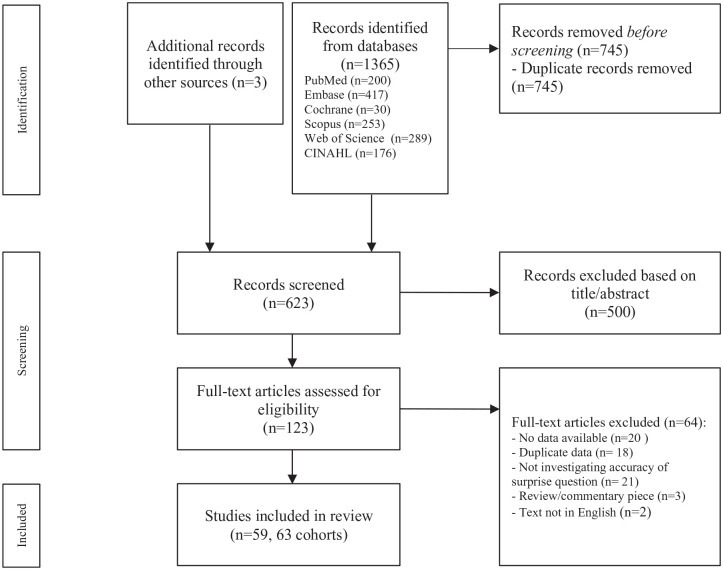
Data sources: Electronic databases PubMed, Embase, Cochrane Library, Scopus, Web of Science and CINAHL were searched from inception till 22nd January 2021. Studies were eligible if they used the surprise question prospectively and assessed mortality. Sensitivity, specificity, negative predictive value, positive predictive value and c-statistic were calculated.
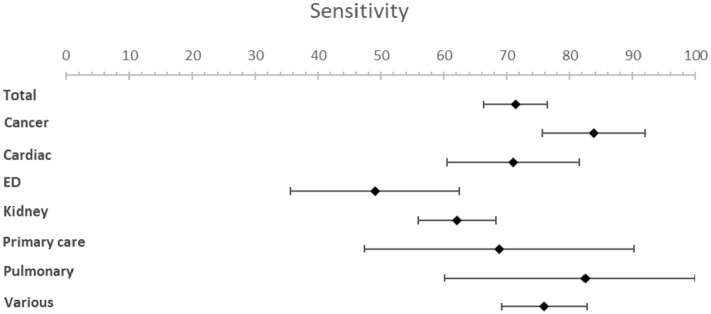
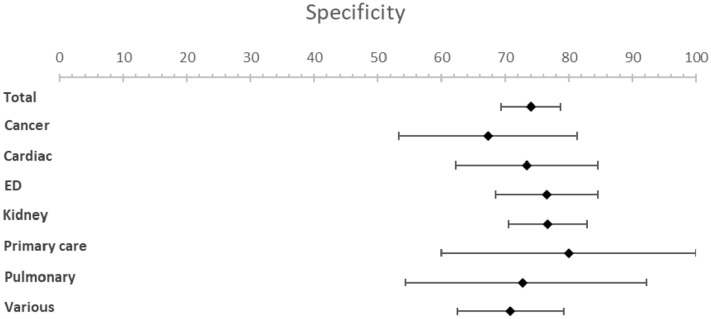
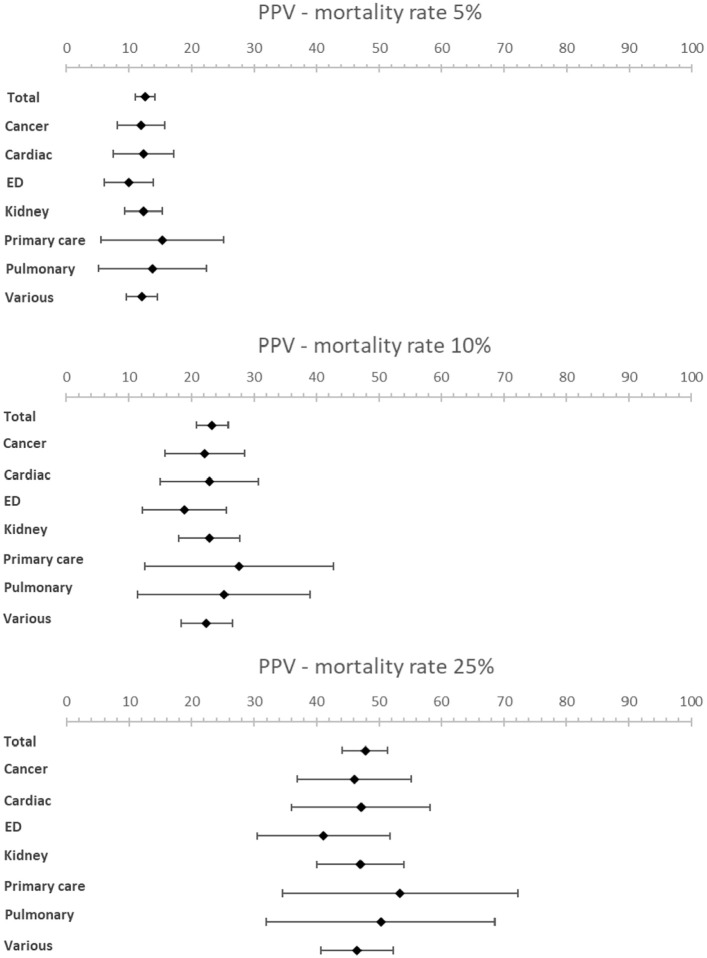
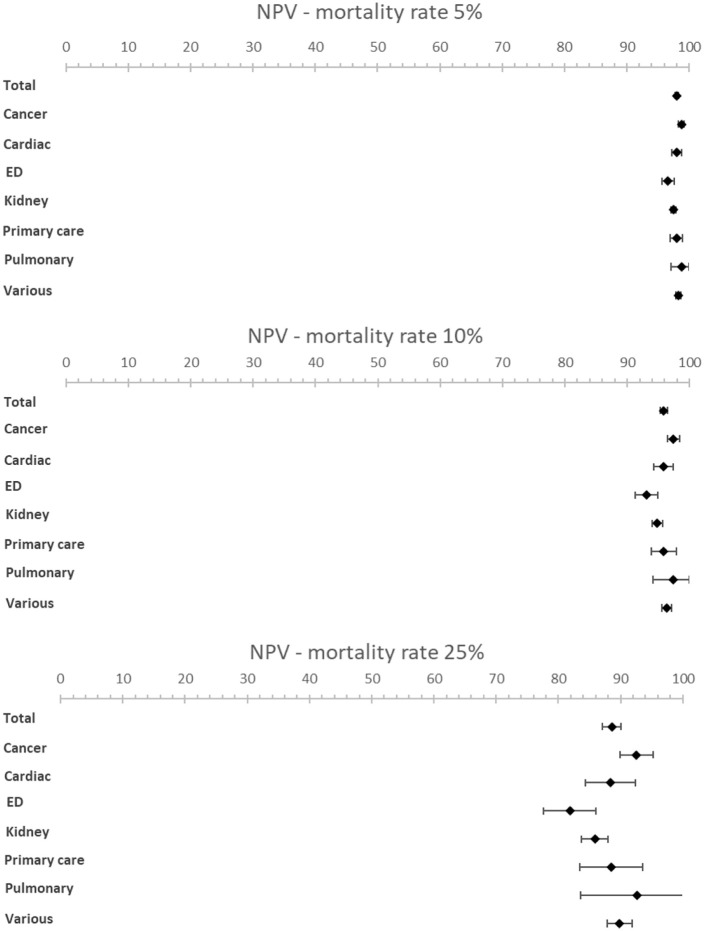
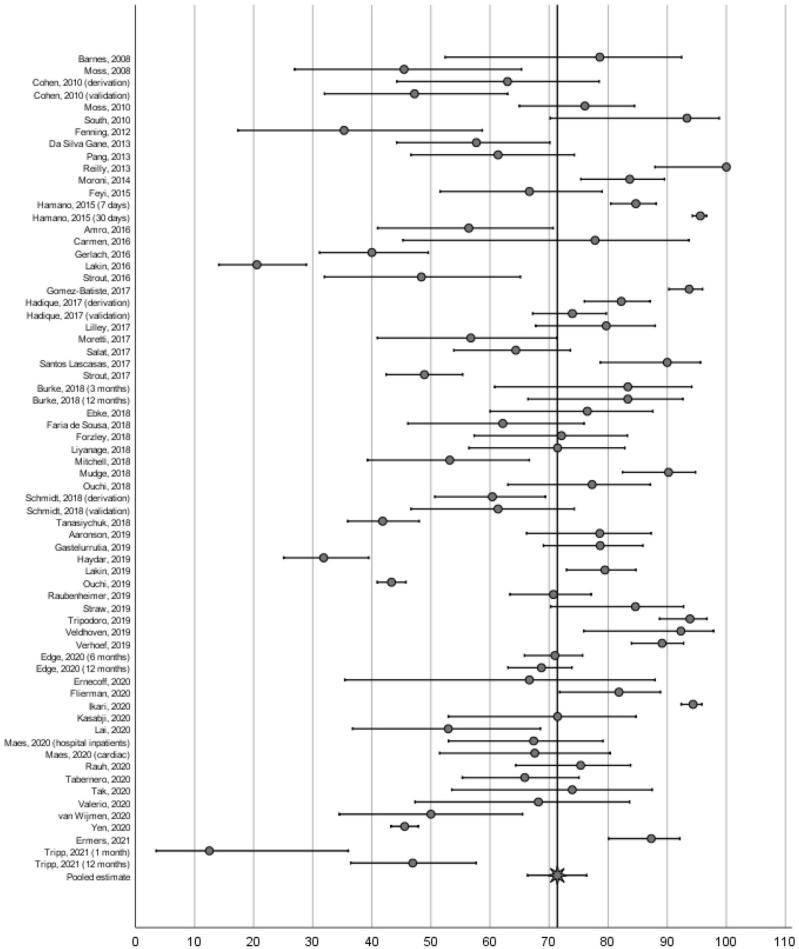
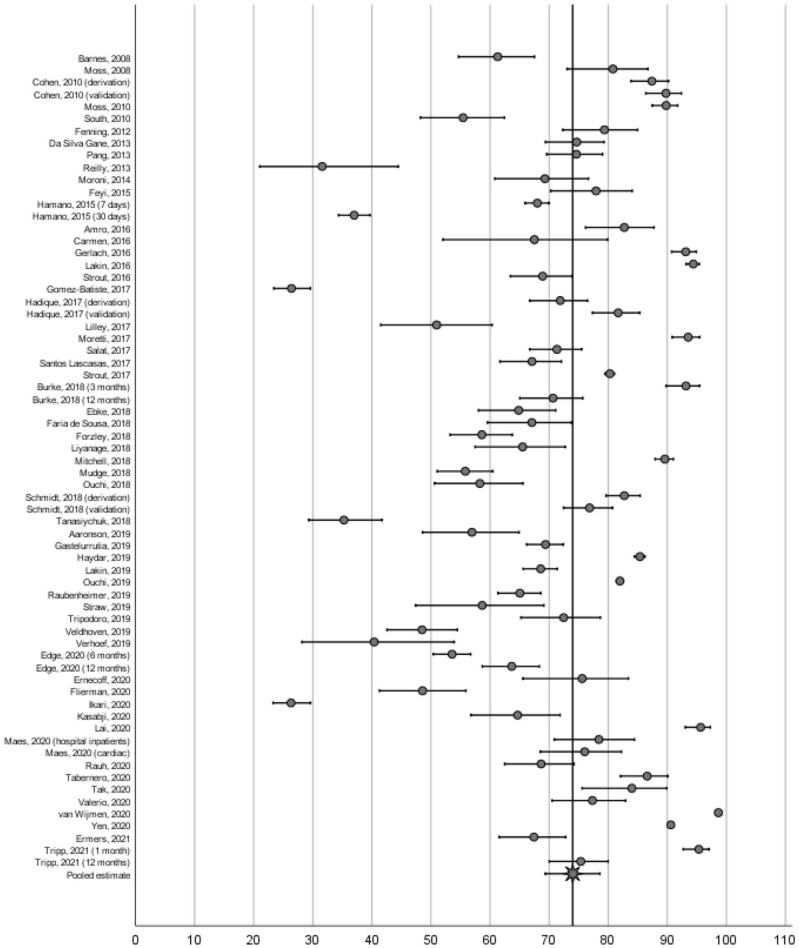
Results: Fifty-nine studies met the inclusion criteria, including 88.268 assessments. The meta-analysis resulted in an estimated sensitivity of 71.4% (95% CI [66.3-76.4]) and specificity of 74.0% (95% CI [69.3-78.6]). The negative predictive value varied from 98.0% (95% CI [97.7-98.3]) to 88.6% (95% CI [87.1-90.0]) with a mortality rate of 5% and 25% respectively. The positive predictive value varied from 12.6% (95% CI [11.0-14.2]) with a mortality rate of 5% to 47.8% (95% CI [44.2-51.3]) with a mortality rate of 25%. Seven studies provided detailed information on different healthcare professionals answering the surprise question.
Conclusion: We found overall reasonable test characteristics for the surprise question. Additionally, this study showed notable differences in performance within patient subgroups. However, we did not find an indication of notable differences between timeframe and healthcare professionals.
Keywords: Surprise question; advance care planning; meta-analysis; palliative care; systematic review.
Conflict of interest statement
The author(s) declared no potential conflicts of interest with respect to the research, authorship, and/or publication of this article.
Figures
References
-
- WHO. Palliative care, https://www.who.int/health-topics/palliative-care (accessed 18 May 2021).
-
- Lynn J, Schall MW, Milne C, et al. Quality improvements in end of life care: insights from two collaboratives. Jt Comm J Qual Improv 2000; 26: 254–267. - PubMed
Publication types
MeSH terms
LinkOut - more resources
Full Text Sources
Miscellaneous
