


Dialectical Thinking: A Proposed Foundation for a Post-modern Psychology
- PMID: 35769743
- PMCID: PMC9235839
- DOI: 10.3389/fpsyg.2022.710815
Dialectical Thinking: A Proposed Foundation for a Post-modern Psychology
Abstract
For the authors, the way from a modern to a post-modern psychology requires dialectical thinking. Dialectical thinking recognizes the importance of contradiction, change, and synthesis; it also includes recognition of the value as well as limits of modern epistemological approaches. The article describes foundations for both ongoing efforts to understand and research the ontogeny of dialectical thinking and for appreciating the scope of dialectical thinking and its relevance for establishing a bridge from modern to post-modern psychology.
Keywords: dialectical thinking; limits of relativistic analyses; limits of universalistic-formal analyses; ontogeny; post-modern psychology; psychotherapy integration.
Copyright © 2022 Veraksa, Basseches and Brandão.
Conflict of interest statement
The authors declare that the research was conducted in the absence of any commercial or financial relationships that could be construed as a potential conflict of interest.
Figures
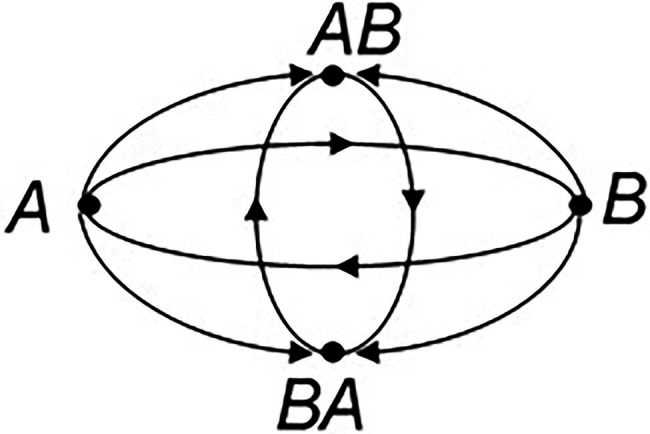
References
-
- Adorno T. W., Horkheimer M. (1979). Dialectic of Enlightenment. London: NLB.
-
- Allport G. W. (1937). Personality: A psychological interpretation. New York: Holt, Rinehart, and Winston.
-
- Andreev I. D. (1985). Dialectical Logic. Мoscow: Visshaya Shkola.
-
- Basseches M. (1978). Beyond closed-system problem-solving: A study of metasystematic aspects of mature thought. Doctoral Dissertation, Harvard University, University Microfilms, Ann Arbor, MI, USA.
-
- Basseches M. (1980). Dialectical schemata: a framework for the empirical study of the development of dialectical thinking. Hum. Dev. 23, 400–421. doi: 10.1159/000272600 - DOI
Publication types
LinkOut - more resources
Full Text Sources
