


Neurobiological Alterations in Females With PTSD: A Systematic Review
- PMID: 35770056
- PMCID: PMC9234306
- DOI: 10.3389/fpsyt.2022.862476
Neurobiological Alterations in Females With PTSD: A Systematic Review
Abstract
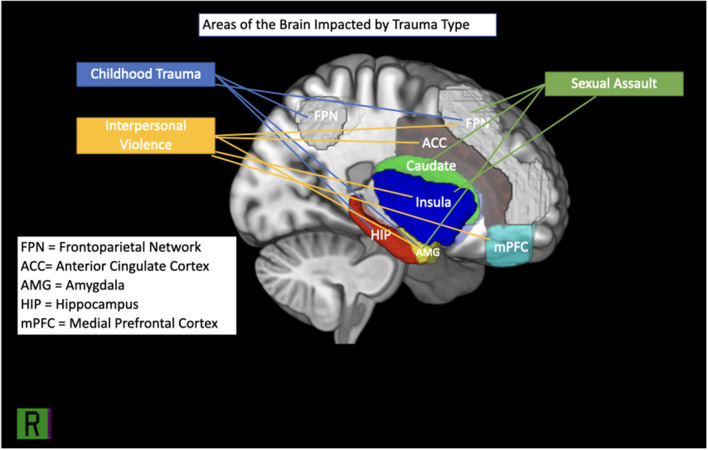
Most females experience at least one traumatic event in their lives, but not all develop PTSD. Despite considerable research, our understanding of the key factors that constitute risk for PTSD among females is limited. Previous research has largely focused on sex differences, neglecting within group comparisons, thereby obviating differences between females who do and do not develop PTSD following exposure to trauma. In this systematic review, we conducted a search for the extent of existing research utilizing magnetic resonance imaging (MRI) to examine neurobiological differences among females of all ages, with and without PTSD. Only studies of females who met full diagnostic criteria for PTSD were included. Fifty-six studies were selected and reviewed. We synthesized here findings from structural MRI (sMRI), functional MRI (fMRI), diffusion tensor imaging (DTI), and resting state functional connectivity (rs-FC MRI) studies, comparing females with and without PTSD. A range of biopsychosocial constructs that may leave females vulnerable to PTSD were discussed. First, the ways timing and type of exposure to trauma may impact PTSD risk were discussed. Second, the key role that cognitive and behavioral mechanisms may play in PTSD was described, including rumination, and deficient fear extinction. Third, the role of specific symptom patterns and common comorbidities in female-specific PTSD was described, as well as sex-specific implications on treatment and parenting outcomes. We concluded by identifying areas for future research, to address the need to better understand developmental aspects of brain alterations, the differential impact of trauma types and timing, the putative role of neuroendocrine system in neurobiology of PTSD among females, and the impact of social and cultural factors on neurobiology in females with PTSD.
Keywords: MRI; PTSD; females; neuroimaging; sex differences.
Copyright © 2022 Eder-Moreau, Zhu, Fisch, Bergman, Neria and Helpman.
Conflict of interest statement
The authors declare that the research was conducted in the absence of any commercial or financial relationships that could be construed as a potential conflict of interest.
Figures
References
-
- Chalavi S, Vissia EM, Giesen ME, Nijenhuis ER, Draijer N, Barker GJ, et al. Similar cortical but not subcortical gray matter abnormalities in women with posttraumatic stress disorder with versus without dissociative identity disorder. Psychiatry Res. (2015) 231:308–19. 10.1016/j.pscychresns.2015.01.014 - DOI - PubMed
Publication types
Grants and funding
LinkOut - more resources
Full Text Sources
Miscellaneous
