


Circulating proteomic profiles associated with endometriosis in adolescents and young adults
- PMID: 35770801
- PMCID: PMC9801982
- DOI: 10.1093/humrep/deac146
Circulating proteomic profiles associated with endometriosis in adolescents and young adults
Abstract
Study question: What are the systemic molecular profiles of endometriosis diagnosed in adolescents and young adults?
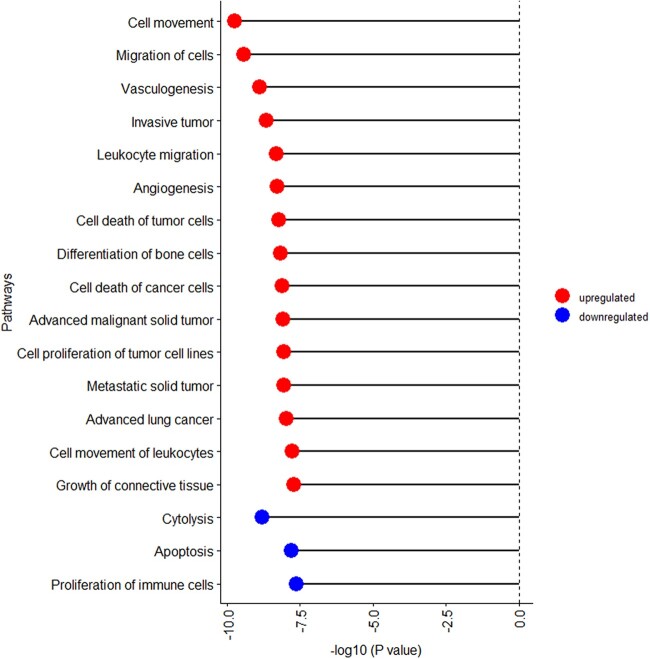
Summary answer: Significant enrichment and increased activation of proteins related to angiogenesis and cell migration pathways were observed in endometriosis cases compared to controls (P-value < 2.4 × 10⁻⁸).
What is known already: Little is known about the pathophysiology of adolescent endometriosis despite the fact that over 50% of adults with endometriosis report onset of severe pelvic pain during adolescence.
Study design, size, duration: A cross-sectional analysis using data on 142 laparoscopically confirmed endometriosis cases and 74 controls from the observational longitudinal cohort of Women's Health Study: From Adolescence to Adulthood (A2A).
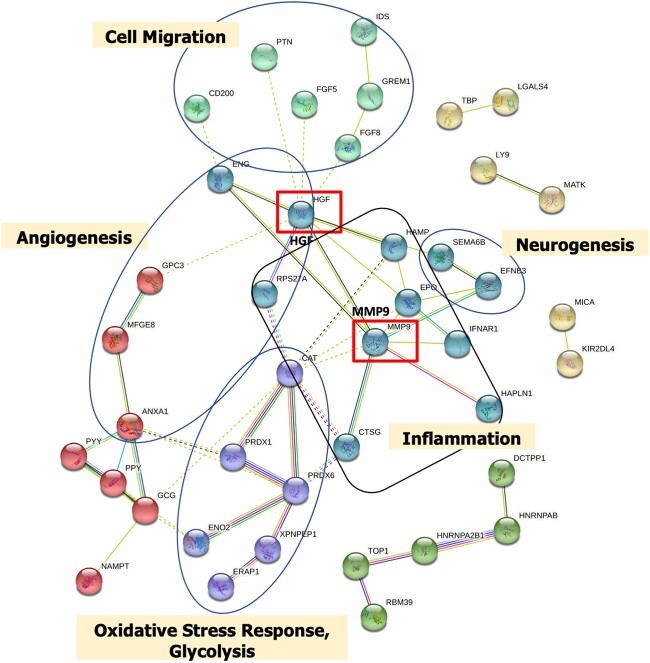
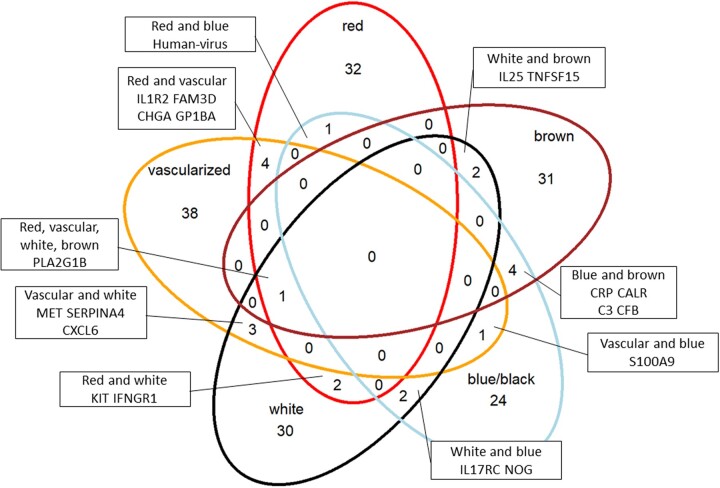
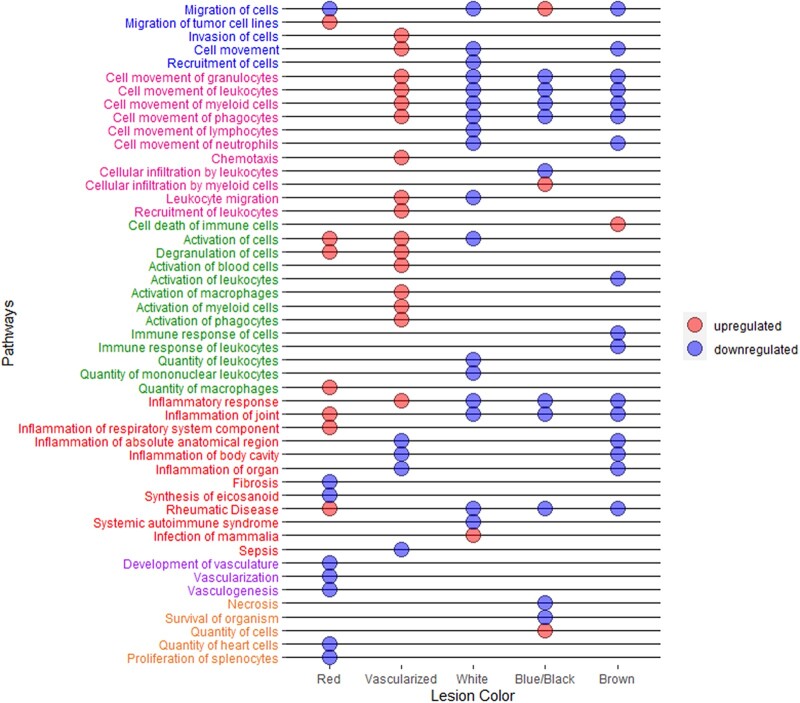
Participants/materials, setting, methods: We measured 1305 plasma protein levels using the validated, multiplex aptamer-based proteomics discovery platform, SOMAscan. We calculated odds ratios and 95% CIs using logistic regression adjusting for age, BMI, fasting status and hormone use at blood draw for differentially expressed proteins (P < 0.05). Ingenuity Pathway Analysis and STRING analysis were performed to identify biological pathways and protein interactions. We also examined proteins and pathways associated with superficial peritoneal lesion colors (i.e. red, vascularized, white, blue/black, brown).
Main results and the role of chance: Average age at blood draw was 18 years for endometriosis cases and 22 years for controls. We identified 63 proteins associated with endometriosis with type-I error set at 0.05, and absolute fold change >1.2, revealing significant enrichment of dysregulated proteins in biological pathways associated with endometriosis. Increased activation of pathways related to angiogenesis and cell migration was observed in plasma from endometriosis cases compared to controls (P-value < 2.4 × 10⁻⁸). Furthermore, when we examined proteins and pathways associated with lesion colors, vascularized lesions were associated with upregulation of pathways related to immune cell migration/activation and inflammation, whereas white, blue/black and brown lesions were associated with downregulation of these pathways.
Limitations, reasons for caution: Validation of our results in independent datasets and mechanistic studies are warranted to further our understanding of the pathophysiological characteristics of this common but understudied patient population.
Wider implications of the findings: To our knowledge, this was the first study to comprehensively examine circulating proteins in predominantly adolescents and young adult women with and without endometriosis. Results from this study provide novel biological insight that will build toward further research to elucidate endometriosis pathophysiology during the earlier course of the disease trajectory.
Study funding/competing interest(s): This study was supported by the Department of Defense (W81XWH1910318) and the 2017 Boston Center for Endometriosis Trainee Award. Financial support for establishment of and data collection within the A2A cohort were provided by the J. Willard and Alice S. Marriott Foundation. N.S., A.F.V., S.A.M., K.L.T. have received funding from Marriott Family Foundation. S.A.M. and K.L.T. are supported by NICHD (R01 HD94842). S.A.M. serves as an advisory board member for AbbVie and Roche; neither are related to this study. The authors report no conflict of interest.
Trial registration number: N/A.
Keywords: adolescents; angiogenesis; endometriosis; lesion color; proteomics.
© The Author(s) 2022. Published by Oxford University Press on behalf of European Society of Human Reproduction and Embryology. All rights reserved. For permissions, please email: journals.permissions@oup.com.
Figures
References
-
- Adamson GD, Kennedy S, Hummelshoj L.. Creating solutions in endometriosis: global collaboration through the World Endometriosis Research Foundation. J Endometr 2010;2:3–6.
-
- Asante A, Taylor RN.. Endometriosis: the role of neuroangiogenesis. Annu Rev Physiol 2011;73:163–182. - PubMed
-
- Barlow SE. Expert committee recommendations regarding the prevention, assessment, and treatment of child and adolescent overweight and obesity: summary report. Pediatrics 2007;120(Suppl 4):S164–S192. - PubMed
-
- Becker CM, Laufer MR, Stratton P, Hummelshoj L, Missmer SA, Zondervan KT, Adamson GD; WERF EPHect Working Group. World Endometriosis Research Foundation Endometriosis Phenome and Biobanking Harmonisation Project: I. Surgical phenotype data collection in endometriosis research. Fertil Steril 2014;102:1213–1222. - PMC - PubMed
-
- Chang JH, Au HK, Lee WC, Chi CC, Ling TY, Wang LM, Kao SH, Huang YH, Tzeng CR.. Expression of the pluripotent transcription factor OCT4 promotes cell migration in endometriosis. Fertil Steril 2013;99:1332–1339.e5. - PubMed
Publication types
MeSH terms
Grants and funding
LinkOut - more resources
Full Text Sources
Medical
Research Materials
Miscellaneous
