


Racial variations of adverse perinatal outcomes: A population-based retrospective cohort study in Ontario, Canada
- PMID: 35772371
- PMCID: PMC9246499
- DOI: 10.1371/journal.pone.0269158
Racial variations of adverse perinatal outcomes: A population-based retrospective cohort study in Ontario, Canada
Abstract
Introduction: Racial differences in adverse maternal and birth outcomes have been studied in other countries, however, there are few studies specific to the Canadian population. In this study, we sought to examine the inequities in adverse perinatal outcomes between Black and White pregnant people in Ontario, Canada.
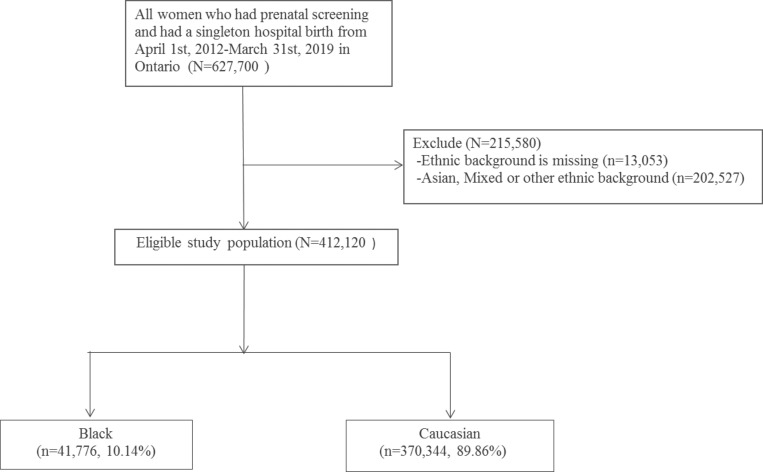
Methods: We conducted a population-based retrospective cohort study that included all Black and White pregnant people who attended prenatal screening and had a singleton birth in any Ontario hospital (April 1st, 2012-March 31st, 2019). Poisson regression with robust error variance models were used to estimate the adjusted relative risks of adverse perinatal outcomes for Black people compared with White people while adjusting for covariates.
Results: Among 412,120 eligible pregnant people, 10.1% were Black people and 89.9% were White people. Black people were at an increased risk of gestational diabetes mellitus, preeclampsia, placental abruption, preterm birth (<37, <34, <32 weeks), spontaneous preterm birth, all caesarean sections, emergency caesarean section, low birth weight (<2500g, <1500g), small-for-gestational-age (<10th percentile, <3rd percentile) neonates, 5-minute Apgar score <4 and <7, neonatal intensive care unit admission, and hyperbilirubinemia requiring treatment but had lower risks of elective caesarean section, assisted vaginal delivery, episiotomy, 3rd and 4th degree perineal tears, macrosomia, large-for-gestational-age neonates, and arterial cord pH≤7.1, as compared with White people. No difference in risks of gestational hypertension and placenta previa were observed between Black and White people.
Conclusion: There are differences in several adverse perinatal outcomes between Black and White people within the Ontario health care system. Findings might have potential clinical and health policy implications, although more studies are needed to further understand the mechanisms.
Conflict of interest statement
The authors have declared that no competing interests exist.
Figures
References
Publication types
MeSH terms
Grants and funding
LinkOut - more resources
Full Text Sources
Miscellaneous
