


Sleep disorders, mental health, and dry eye disease in South Korea
- PMID: 35773440
- PMCID: PMC9247087
- DOI: 10.1038/s41598-022-14167-0
Sleep disorders, mental health, and dry eye disease in South Korea
Abstract
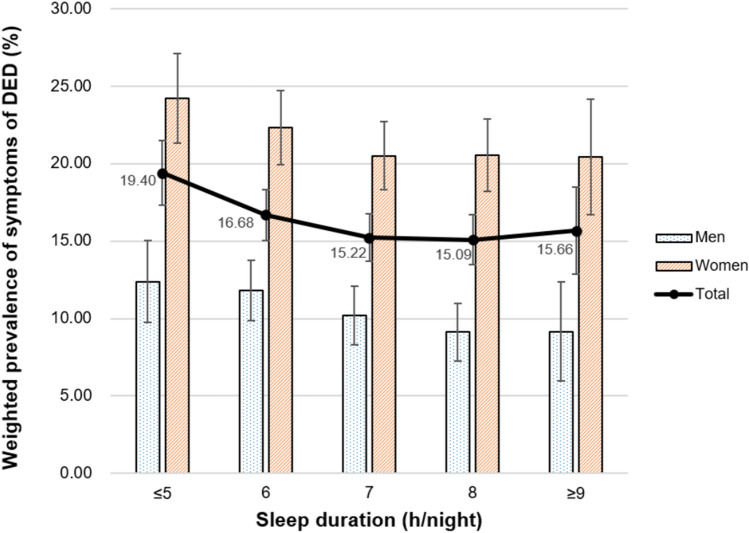
Dry eye disease (DED) is a multifactorial disease of the ocular surface causing severe discomfort, mild ocular irritation, fatigue, pain, visual disturbance, and foreign body sensation. Stress, depression, and sleep disorders are risk factors for DED. We aimed to investigate the association between DED symptoms and composite factors related to mental health (combined sleep duration, psychological stress perception, and history of depressed mood) in Korean adults aged ≥ 20 years in a population-based study using the 2010-2012 Korea National Health and Nutrition Examination Survey data. Symptoms of DED and data on mental health were obtained using questionnaires. Multiple logistic regression analysis was conducted to examine the association between mental health and DED, and adjusted for possible covariates. Subjects with symptoms of DED were more likely to experience short sleep duration, psychological stress perception, and a history of depressed mood [odds ratio (OR) = 1.42, 95% confidence interval (CI) 1.06-1.90; OR = 1.71, 95% CI 1.37-2.14; and OR = 1.37, 95% CI 1.06-1.77, respectively] even after correcting for demographic factors, lifestyle factors, and medical factors. Additionally, participants with symptoms of DED were more likely to experience composite factors related to mental health (OR = 1.91, 95% CI 1.07-3.39). Therefore, ophthalmologists may report difficulties in both sleep and mental health in patients with DED.
© 2022. The Author(s).
Conflict of interest statement
The authors declare no competing interests.
Figures



References
MeSH terms
LinkOut - more resources
Full Text Sources
Medical
