


Differences in clinical features and mortality in very old unvaccinated patients (≥ 80 years) hospitalized with COVID-19 during the first and successive waves from the multicenter SEMI-COVID-19 Registry (Spain)
- PMID: 35773622
- PMCID: PMC9244878
- DOI: 10.1186/s12877-022-03191-4
Differences in clinical features and mortality in very old unvaccinated patients (≥ 80 years) hospitalized with COVID-19 during the first and successive waves from the multicenter SEMI-COVID-19 Registry (Spain)
Abstract
Background: Old age is one of the most important risk factors for severe COVID-19. Few studies have analyzed changes in the clinical characteristics and prognosis of COVID-19 among older adults before the availability of vaccines. This work analyzes differences in clinical features and mortality in unvaccinated very old adults during the first and successive COVID-19 waves in Spain.
Methods: This nationwide, multicenter, retrospective cohort study analyzes unvaccinated patients ≥ 80 years hospitalized for COVID-19 in 150 Spanish hospitals (SEMI-COVID-19 Registry). Patients were classified according to whether they were admitted in the first wave (March 1-June 30, 2020) or successive waves (July 1-December 31, 2020). The endpoint was all-cause in-hospital mortality, expressed as the case fatality rate (CFR).
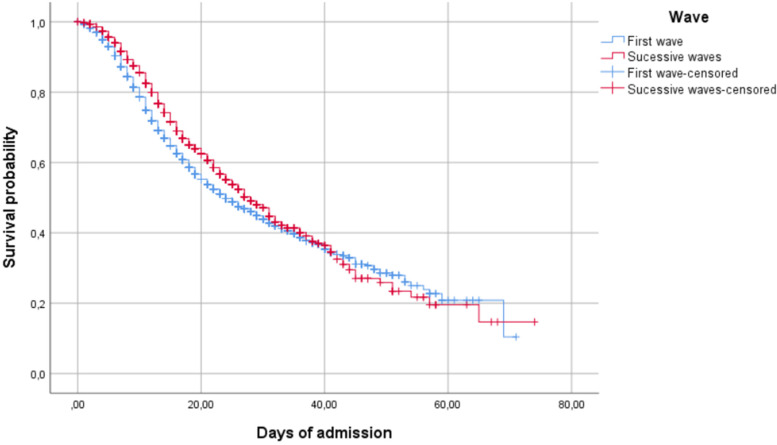
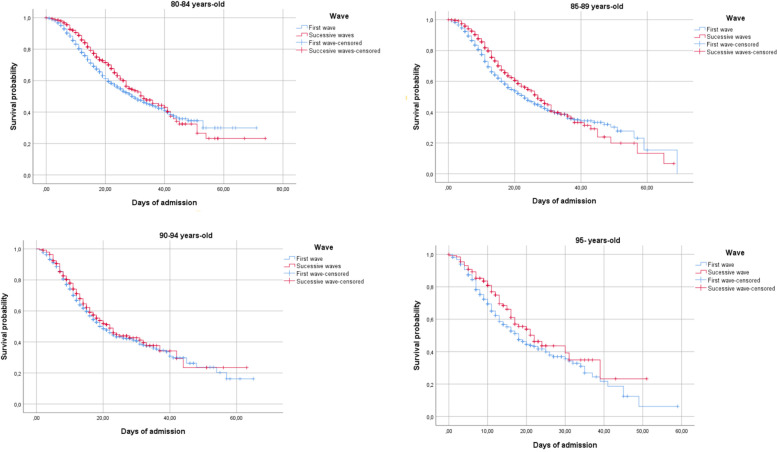
Results: Of the 21,461 patients hospitalized with COVID-19, 5,953 (27.7%) were ≥ 80 years (mean age [IQR]: 85.6 [82.3-89.2] years). Of them, 4,545 (76.3%) were admitted during the first wave and 1,408 (23.7%) during successive waves. Patients hospitalized in successive waves were older, had a greater Charlson Comorbidity Index and dependency, less cough and fever, and met fewer severity criteria at admission (qSOFA index, PO2/FiO2 ratio, inflammatory parameters). Significant differences were observed in treatments used in the first (greater use of antimalarials, lopinavir, and macrolides) and successive waves (greater use of corticosteroids, tocilizumab and remdesivir). In-hospital complications, especially acute respiratory distress syndrome and pneumonia, were less frequent in patients hospitalized in successive waves, except for heart failure. The CFR was significantly higher in the first wave (44.1% vs. 33.3%; -10.8%; p < 0.001) and was higher among patients ≥ 95 years (54.4% vs. 38.5%; -15.9%; p < 0.001). After adjustments to the model, the probability of death was 33% lower in successive waves (OR: 0.67; 95% CI: 0.57-0.79).
Conclusions: Mortality declined significantly between the first and successive waves in very old unvaccinated patients hospitalized with COVID-19 in Spain. This decline could be explained by a greater availability of hospital resources and more effective treatments as the pandemic progressed, although other factors such as changes in SARS-CoV-2 virulence cannot be ruled out.
Keywords: 80 and over; Aged; COVID-19; Comorbidity; Complications; Epidemiology; Morbidity; Mortality; SARS-CoV-2; Spain.
© 2022. The Author(s).
Conflict of interest statement
The authors declare that they have no competing interests.
Figures
References
-
- COVID-19 Map - Johns Hopkins Coronavirus Resource Center. https://coronavirus.jhu.edu/map.html. Accessed 22 May 2022
