


Associations between loneliness and frailty among older adults: Evidence from the China Health and Retirement Longitudinal Study
- PMID: 35773656
- PMCID: PMC9247968
- DOI: 10.1186/s12877-022-03044-0
Associations between loneliness and frailty among older adults: Evidence from the China Health and Retirement Longitudinal Study
Abstract
Background: Previous studies have demonstrated the associations between loneliness and frailty in late life. However, there is a lack of consensus on the direction of the relationship. The present study aimed to examine the interdependencies between loneliness and frailty over time.
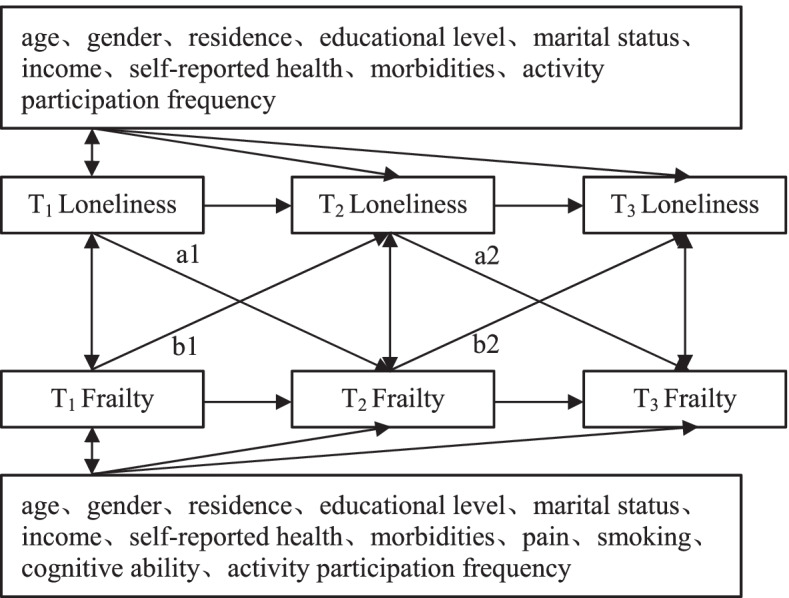
Methods: Data on participants aged 60 years old and above were collected from the 2011, 2013, and 2015 samples of the China Health and Retirement Longitudinal Study (CHARLS). Loneliness was measured by a single question from the Centre for Epidemiological Studies Depression scale, and frailty was assessed by the Physical Frailty Phenotype (PFP) scale. Cross-lagged panel models were utilized to examine the potential bidirectional relationship between loneliness and frailty.
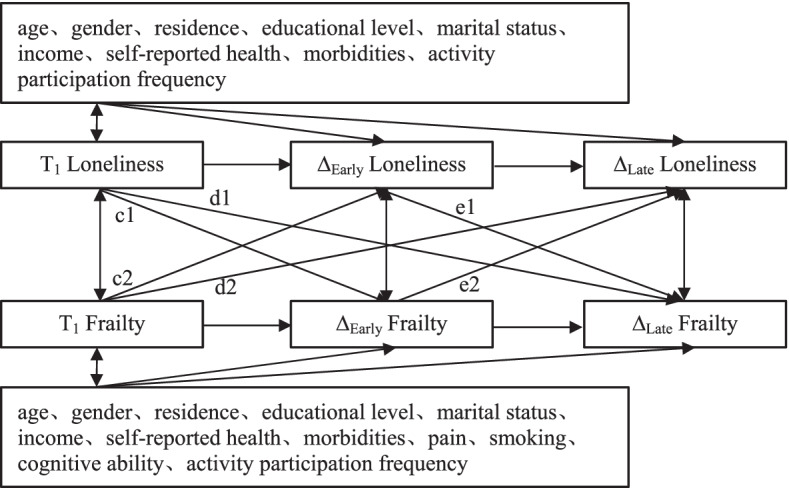
Results: Reciprocal associations were found between loneliness and frailty. Furthermore, we found that baseline frailty and early change in frailty had a significant predictive effect on late change in loneliness. Higher baseline loneliness in older adults may create a potentially vicious cycle that influenced early change in frailty and continued to cause late change in loneliness.
Conclusion: A bidirectional relationship may exist between loneliness and frailty among older Chinese adults over 60 years old. Lonely older adults should be alerted to the potential self-reinforcing cycle of loneliness that affects their health.
Keywords: Cross-lagged analysis; Frailty; Loneliness; Older adults.
© 2022. The Author(s).
Conflict of interest statement
The authors declare no competing interests.
Figures
References
-
- WHO: China country assessment report on ageing and health. Switzerland: WHO Press. 2015
Publication types
MeSH terms
LinkOut - more resources
Full Text Sources
