


Viable SARS-CoV-2 Delta variant detected in aerosols in a residential setting with a self-isolating college student with COVID-19
- PMID: 35774447
- PMCID: PMC9217630
- DOI: 10.1016/j.jaerosci.2022.106038
Viable SARS-CoV-2 Delta variant detected in aerosols in a residential setting with a self-isolating college student with COVID-19
Abstract
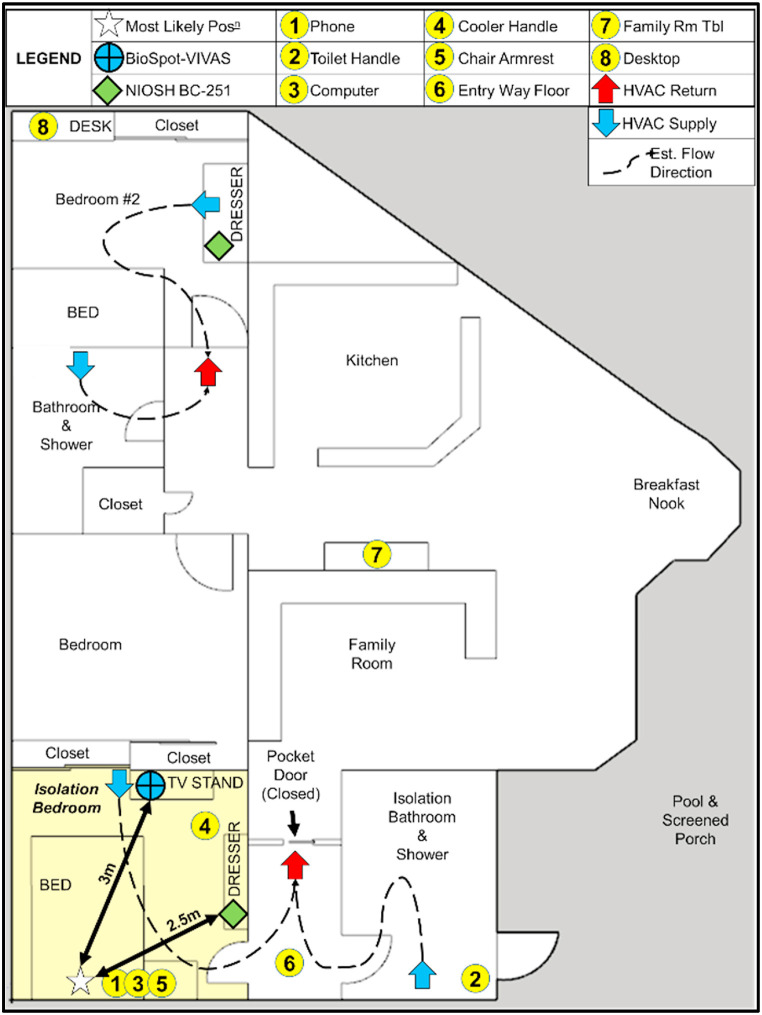
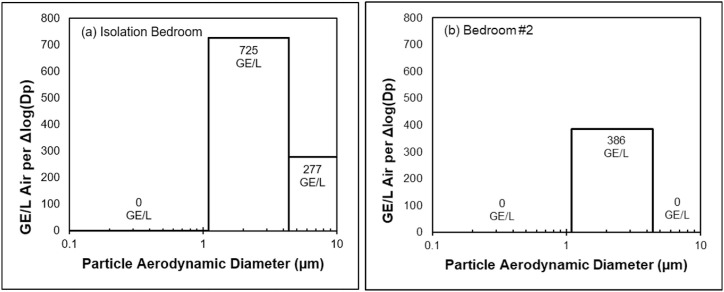
The B.1.617.2 (Delta) variant of SARS-CoV-2 emerged in India in October of 2020 and spread widely to over 145 countries, comprising over 99% of genome sequence-confirmed virus in COVID-19 cases of the United States (US) by September 2021. The rise in COVID-19 cases due to the Delta variant coincided with a return to in-person school attendance, straining COVID-19 mitigation plans implemented by educational institutions. Some plans required sick students to self-isolate off-campus, resulting in an unintended consequence: exposure of co-inhabitants of dwellings used by the sick person during isolation. We assessed air and surface samples collected from the bedroom of a self-isolating university student with mild COVID-19 for the presence of SARS-CoV-2. That virus' RNA was detected by real-time reverse-transcription quantitative polymerase chain reaction (rRT-qPCR) in air samples from both an isolation bedroom and a distal, non-isolation room of the same dwelling. SARS-CoV-2 was detected and viable virus was isolated in cell cultures from aerosol samples as well as from the surface of a mobile phone. Genomic sequencing revealed that the virus was a Delta variant SARS-CoV-2 strain. Taken together, the results of this work confirm the presence of viable SARS-CoV-2 within a residential living space of a person with COVID-19 and show potential for transportation of virus-laden aerosols beyond a designated isolation suite to other areas of a single-family home.
Keywords: Air sampling; Infectious; Virus culture; rRT-qPCR.
© 2022 Elsevier Ltd. All rights reserved.
Conflict of interest statement
The authors declare that they have no known competing financial interests or personal relationships that could have appeared to influence the work reported in this paper.
Figures
References
-
- Ahlawat A., Wiedensohler A., Mishra S.K. An overview on the role of relative humidity in airborne transmission of sars-cov-2 in indoor environments. Aerosol and Air Quality Research. 2020;20(9):1856–1861. doi: 10.4209/aaqr.2020.06.0302. - DOI
-
- Allen H., Vusirikala A., Flannagan J., Twohig K.A., Zaidi A., Chudasama D., Lamagni T., Groves N., Turner C., Rawlinson C., Lopez-Bernal J., Harris R., Charlett A., Dabrera G., Kall M., The Covid-19 Genomics UK (COG-UK Consortium) Household transmission of COVID-19 cases associated with SARS-CoV-2 delta variant (B.1.617.2): National case-control study. The Lancet Regional Health - Europe. 2021 doi: 10.1016/j.lanepe.2021.100252. - DOI - PMC - PubMed
Grants and funding
LinkOut - more resources
Full Text Sources
Miscellaneous