


Incidence Trends and Epidemiology of Staphylococcus aureus Bacteremia: A Systematic Review of Population-Based Studies
- PMID: 35774691
- PMCID: PMC9239286
- DOI: 10.7759/cureus.25460
Incidence Trends and Epidemiology of Staphylococcus aureus Bacteremia: A Systematic Review of Population-Based Studies
Abstract
Objectives: To determine incidence trends of Staphylococcus aureus bacteremia (SAB) from population-based studies from multiple countries.
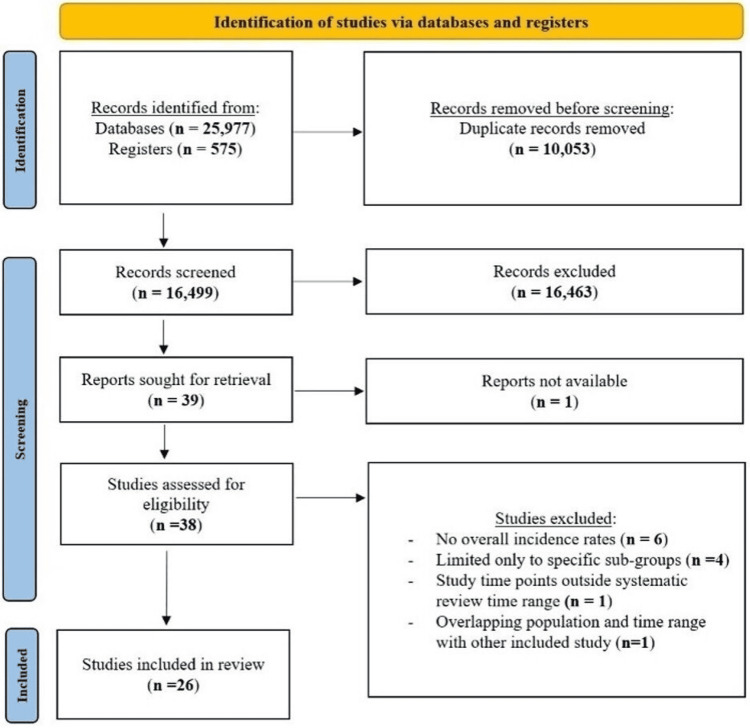
Methods: A contemporary systematic review was conducted using Ovid Cochrane Central Register of Controlled Trials (1991+), Ovid Embase (1974+), Ovid Medical Literature Analysis and Retrieval System Online (MEDLINE) (1946+ including epub ahead of print, in-process & other non-indexed citations), and Web of Science Core Collection (Science Citation Index Expanded 1975+ and Emerging Sources Citation Index 2015+). Two authors (J.R.H. and J.A.Q.M.) independently reviewed all studies and included those that reported population-based incidence of SAB in patients aged 18 years and older.
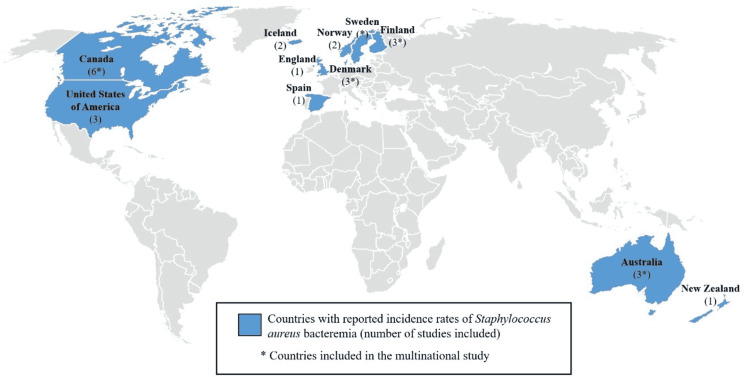
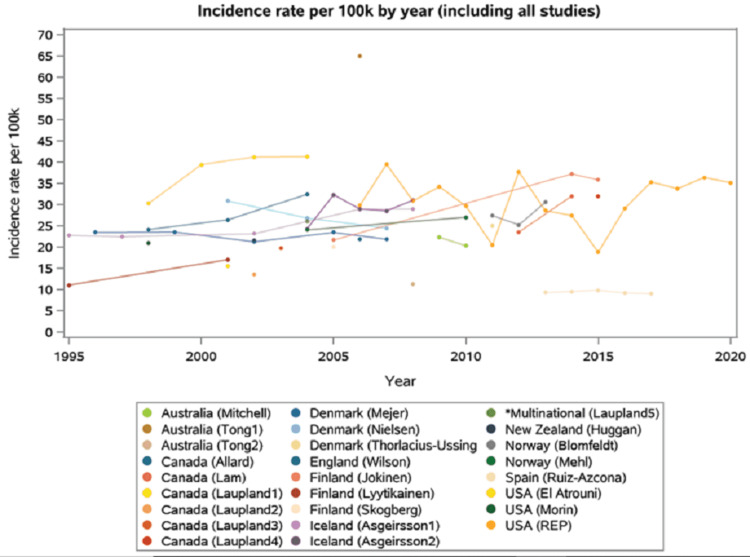
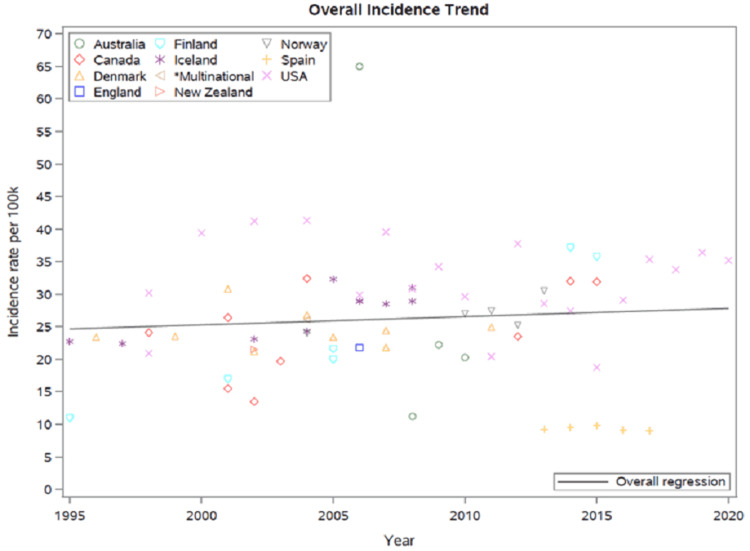
Results: Twenty-six studies met inclusion criteria with the highest number (n=6) of studies conducted in Canada. The incidence of SAB ranged from 9.3 to 65 cases/100,000/year. The median age of patients with SAB ranged from 62 to 72 years and SAB cases were more commonly observed in men than in women. The most common infection sources were intravascular catheters and skin and soft tissue infections. SAB incidence trends demonstrated high variability for geographic regions and calendar years. Overall, there was no change in the incidence trend across all studies during the past two decades.
Conclusion: Multiple factors, both pros, and cons are likely responsible for the overall stable SAB incidence in countries included in this systematic review. Some of these factors vary in geographic location and prompt additional investigations from countries not included in the current review so that a more global characterization is defined.
Keywords: bacteremia; incidence; population-based study; staphylococcus aureus; trends.
Copyright © 2022, Hindy et al.
Conflict of interest statement
The authors have declared financial relationships, which are detailed in the next section.
Figures
References
-
- Age- and sex-associated trends in bloodstream infection: a population-based study in Olmsted County, Minnesota. Uslan DZ, Crane SJ, Steckelberg JM, Cockerill FR, St Sauver JL, Wilson WR, Baddour LM. Arch Intern Med. 2007;167:834–839. - PubMed
-
- Nosocomial bloodstream infections in US hospitals: analysis of 24,179 cases from a prospective nationwide surveillance study. Wisplinghoff H, Bischoff T, Tallent SM, Seifert H, Wenzel RP, Edmond MB. Clin Infect Dis. 2004;39:309–317. - PubMed
-
- A prospective multicenter study of Staphylococcus aureus bacteremia: incidence of endocarditis, risk factors for mortality, and clinical impact of methicillin resistance. Chang F-Y, MacDonald BB, Peacock JE, et al. Medicine (Baltimore. 2003;82:322–332. - PubMed
-
- Enhanced surveillance of Staphylococcus aureus bacteraemia to identify targets for infection prevention. Morris AK, Russell CD. J Hosp Infect. 2016;93:169–274. - PubMed
Publication types
LinkOut - more resources
Full Text Sources
Miscellaneous