Case Reports
. 2022 May 26;14(5):e25357.
doi: 10.7759/cureus.25357. eCollection 2022 May.

Carcinoma Ex Pleomorphic Adenoma of the Parotid Gland: A Rare Case

Affiliations
Case Reports

Carcinoma Ex Pleomorphic Adenoma of the Parotid Gland: A Rare Case

Zaryab Umar et al. Cureus. .

Abstract

Cancer is a major cause of morbidity and mortality worldwide, with squamous cell carcinoma (SCC) being the most common type. Even though SCC is the major type of cancer found in the head and neck region, the salivary glands contribute to about 1/20 cases, of which 1/10 are said to be carcinoma ex pleomorphic adenoma (CXPA) type, and the parotid gland is found to be the most common origin of such cases. Although it usually arises later in life, it can grow rapidly, with local symptoms being late findings, if any. Even though fine needle aspiration cytology has low sensitivity for diagnosing such cancer, multiple/repeated biopsies can increase the yield and the accuracy of the test. Surgical resection is the main choice for treatment with postoperative radiation for select cases. Our case presented with CXPA with distant metastasis to multiple sites.

Keywords: brain metastasis; carcinoma ex pleomorphic adenoma; malignant pleural effusion; parotid tumor; squamous cell carcinoma; squamous cell carcinoma (scc).


Conflict of interest statement

The authors have declared that no competing interests exist.

Figures
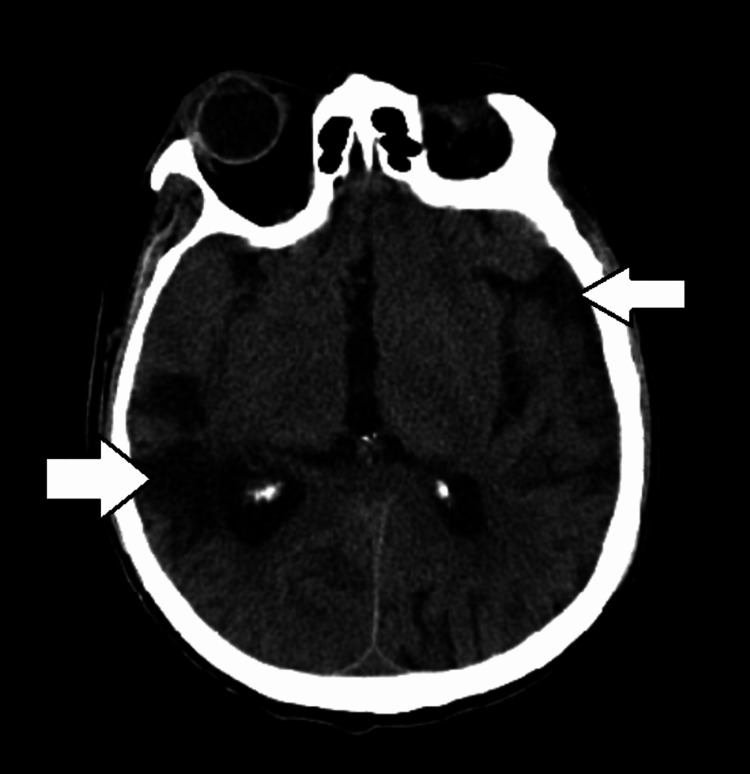
Figure 1
Figure 1. CT scan of the head without contrast showing diffuse encephalomalacia (white arrows).
Figure 2
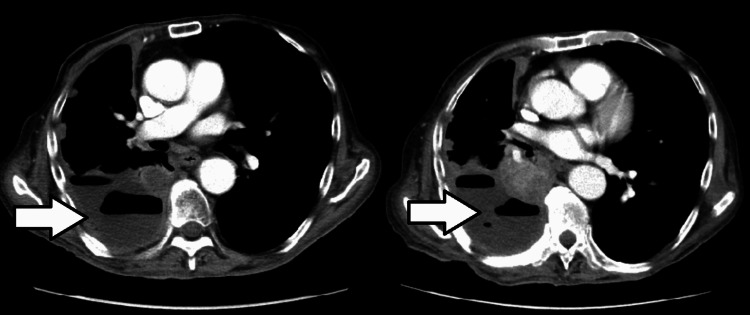
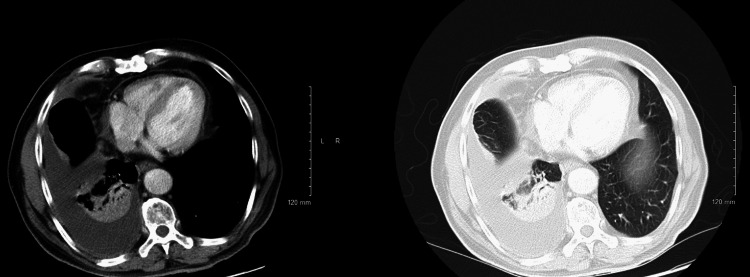
Figure 2. CT scan of the chest (left) showing pleural effusion (white arrow), unchanged from the prior CT scan of the chest (right).
Figure 3
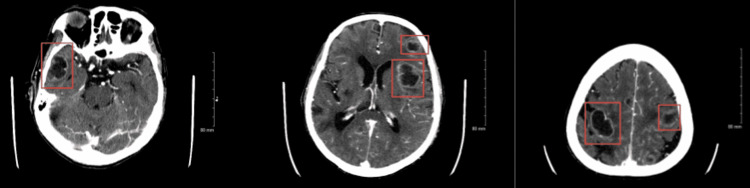
Figure 3. CT scan of the head with contrast showing multiple ring-enhancing lesions suggestive of neoplasm/malignancy.
Figure 4
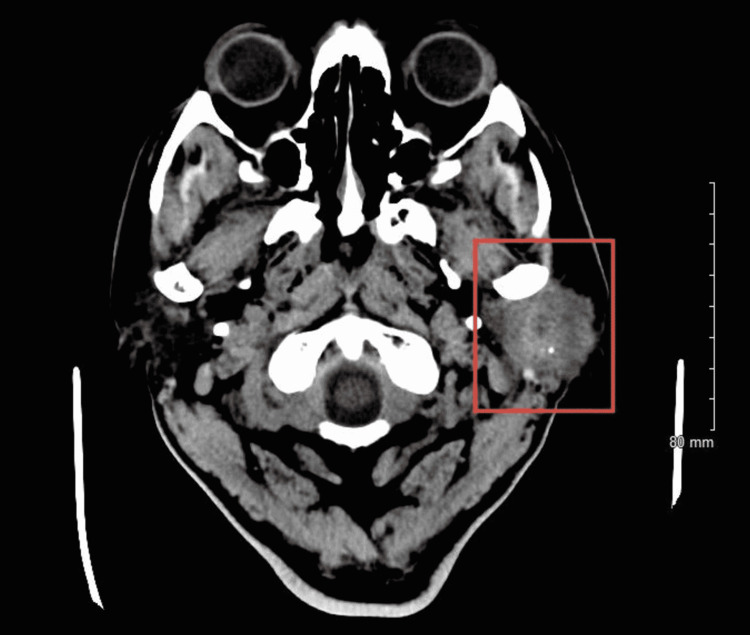
Figure 4. CT soft tissue neck with contrast showing salivary gland tumor centered within the left parotid gland with stranding of the surrounding subcutaneous tissues including the preauricular area as well as inflammatory changes extending toward the cartilaginous segment of the left external auditory canal with associated narrowing.
Figure 5
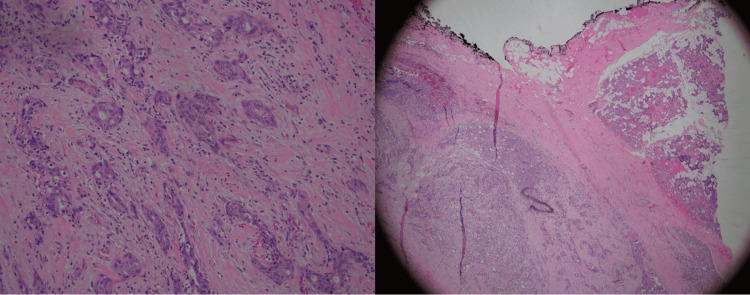
Figure 5. High and low power magnification images of parotid gland resection specimen showing an invasive carcinoma ex pleomorphic adenoma, with squamous cell carcinoma and high-grade adenocarcinoma components.
Figure 6
Figure 6. CT chest with contrast evident for right pleural effusion and basilar atelectasis and/or consolidation.
Figure 7
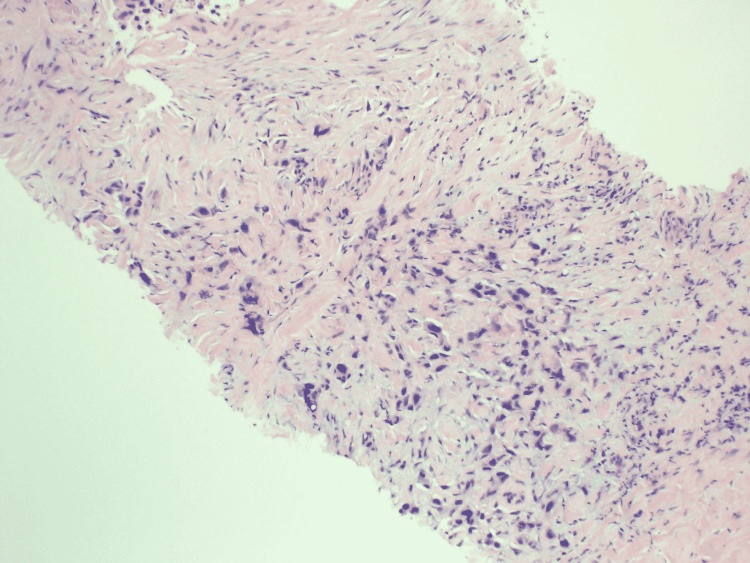
Figure 7. Pleural biopsy showing poorly differentiated epithelial cells infiltrate fibrotic pleural tissue. Tumor cells are positive for p40 and BER-EP4. Findings are consistent with squamous cell carcinoma.
Figure 8
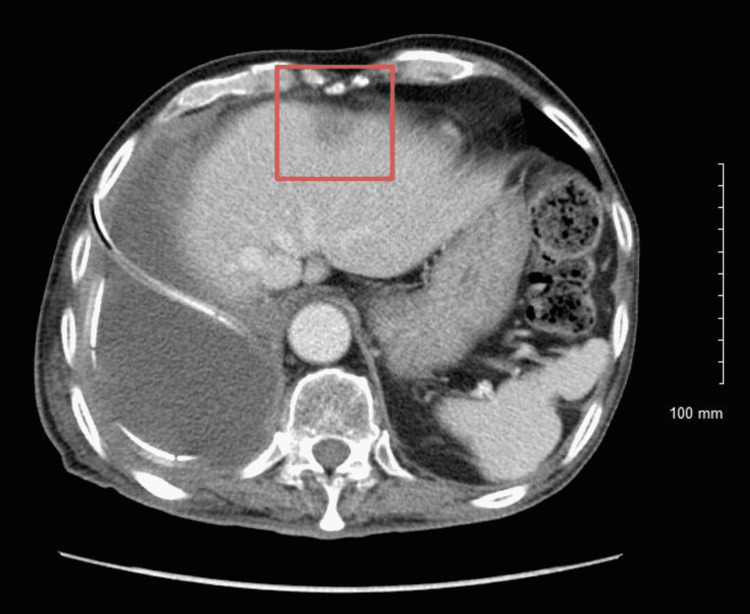
Figure 8. CT scan of the abdomen with contrast showing a 1.6 cm hypodense lesion in the left lobe of the liver.
Figure 9
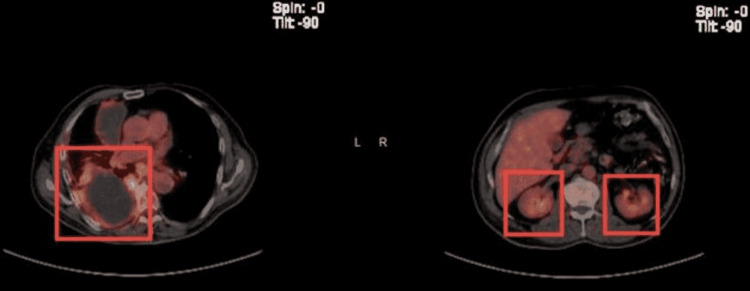
Figure 9. Positron emission tomography scan showing metabolically active foci in localizing to right lower lobe atelectasis and bilateral adrenal glands indicating neoplasm/malignancy.

References

    1. Parotid adenocarcinoma metastasis to the breast: a case report. Smith BM, Azouz V, Liu L, Williams G. J Surg Case Rep. 2020;2020:0. - PMC - PubMed
    1. Measuring depth of invasion in early squamous cell carcinoma of the oral tongue: positive deep margin, extratumoral perineural invasion, and other challenges. Berdugo J, Thompson LD, Purgina B, Sturgis CD, Tuluc M, Seethala R, Chiosea SI. Head Neck Pathol. 2019;13:154–161. - PMC - PubMed
    1. Carcinoma ex pleomorphic adenoma of the upper lip: a case of an unusual malignant component of squamous cell carcinoma. Mitate E, Kawano S, Kiyoshima T, et al. World J Surg Oncol. 2013;11:234. - PMC - PubMed
    1. Young A, Okuyemi OT. StatPearls Publishing. Treasure Island, FL: StatPearls Publishing; 2022. Benign Salivary Gland Tumors. - PubMed
    1. Distant metastases in patients with carcinoma of the major salivary glands. Ali S, Bryant R, Palmer FL, DiLorenzo M, Shah JP, Patel SG, Ganly I. Ann Surg Oncol. 2015;22:4014–4019. - PMC - PubMed

Publication types

LinkOut - more resources