doi: 10.1158/1055-9965.EPI-21-1440.
Epidemiology of Thyroid Cancer
Affiliations
- PMID: 35775227
- PMCID: PMC9473679
- DOI: 10.1158/1055-9965.EPI-21-1440
Item in Clipboard
Epidemiology of Thyroid Cancer
Cancer Epidemiol Biomarkers Prev.
.
No abstract available
Conflict of interest statement
Disclosure of Potential Conflicts of Interest
None
Figures
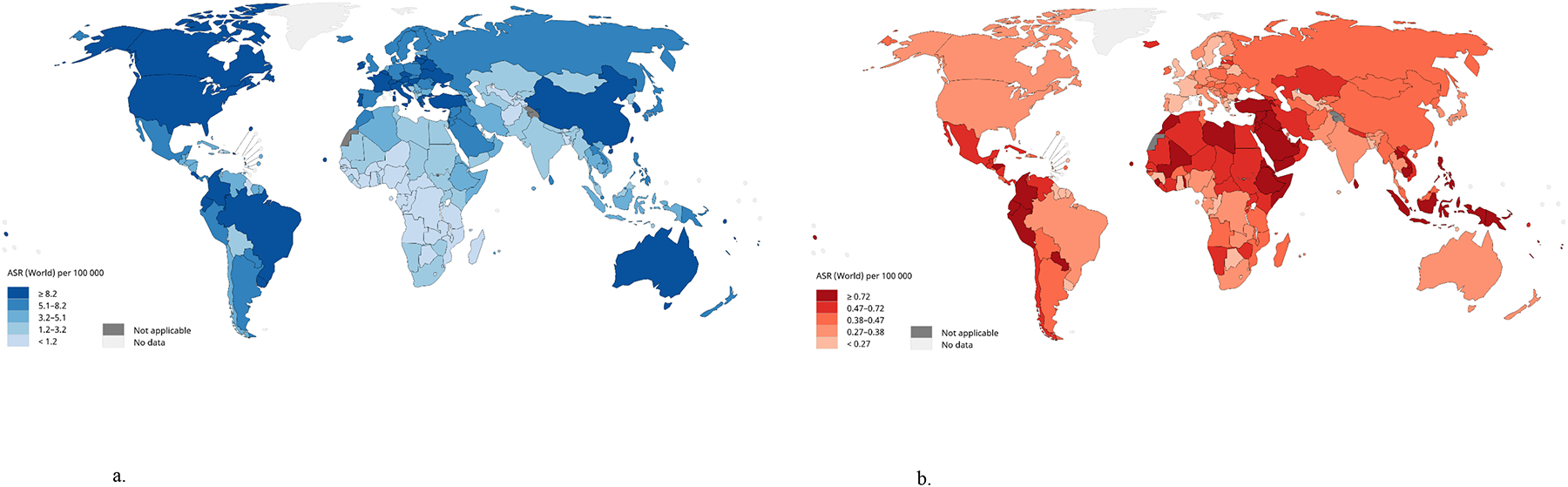
Estimated age-standardized rates (ASR) for thyroid cancer incidence (a) and thyroid cancer mortality (b) worldwide. Data source and graph production: GLOBOCAN 2020, International Agency for Research on Cancer, World Health Organization (7).
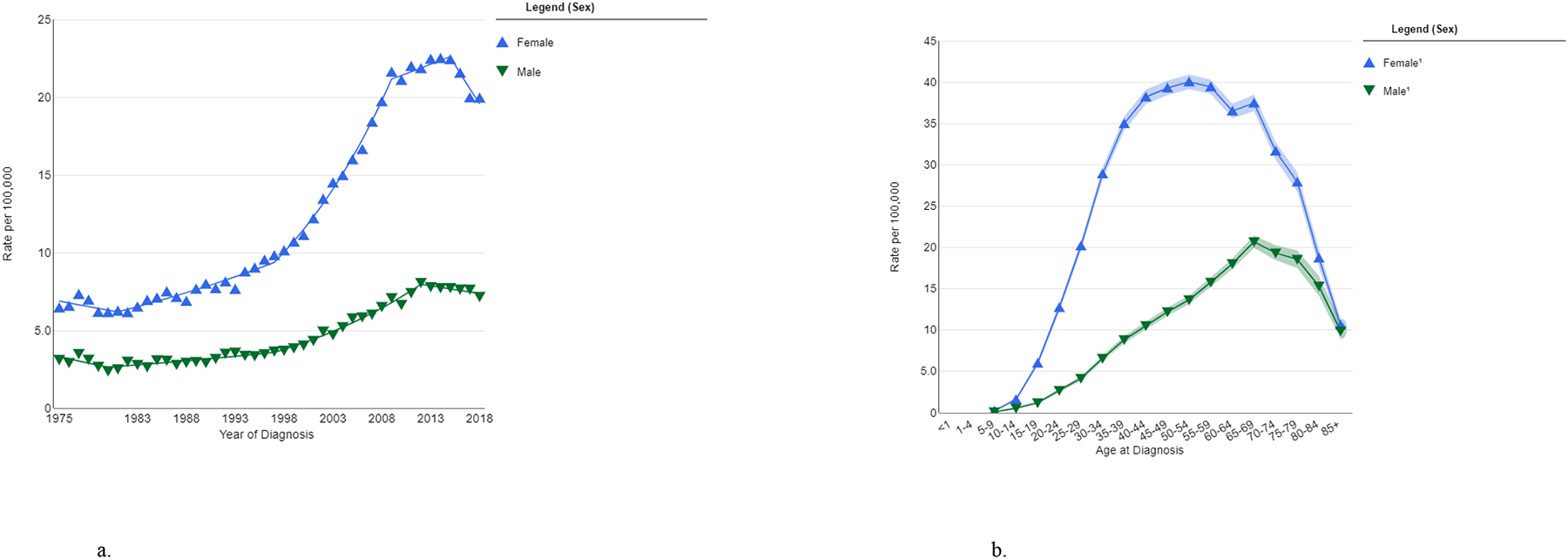
Thyroid cancer incidence in U.S. men and women, by calendar year at diagnosis (SEER-9, 1975–2018) (a) and age at diagnosis (SEER-21, 2014–2018) (b), (all races). Data source and graph production: SEER, Bethesda, MD (11). 1Estimates based on <16 cases are suppressed.
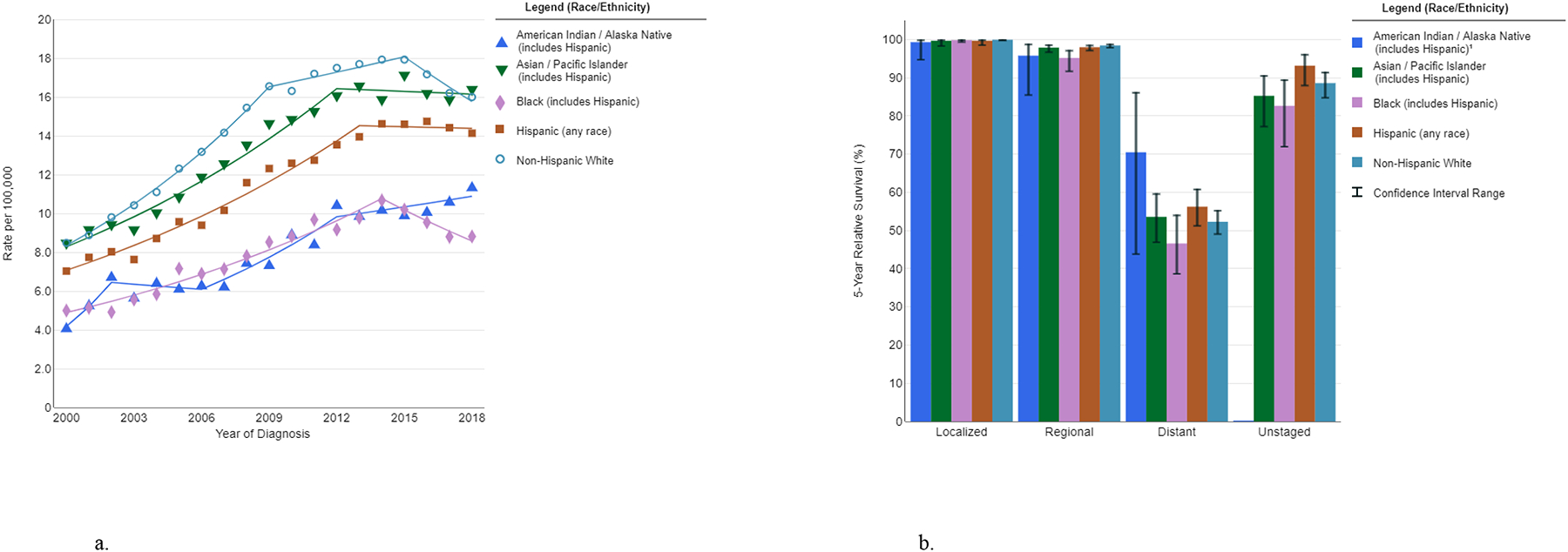
Race/ethnicity differences in thyroid cancer incidence trends (SEER-21, 2000–2018, delay-adjusted) (a) and five-year relative survival by stage at diagnosis (SEER-18, 2011–2017) (b). Data source and graph production: SEER, Bethesda, MD (11). 1Estimates based on <16 cases are suppressed.
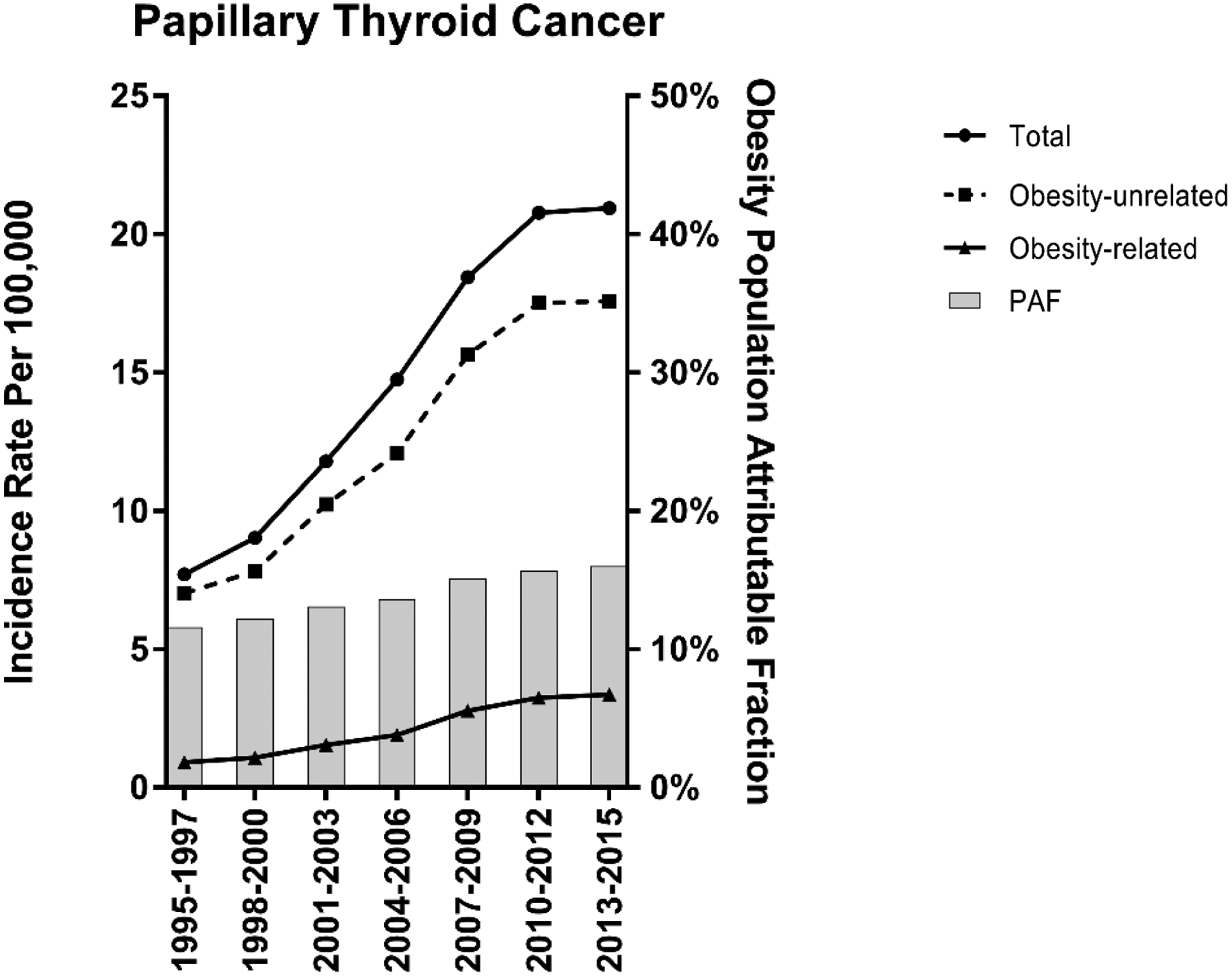
Trends in the incidence of papillary thyroid cancer in the U.S., overall and stratified by overweight and obesity-related and -unrelated cases, 1995–2015. The trend lines represent the incidence in each calendar-year period, and the gray bars represent the population-attributable fraction. Adapted from Kitahara et al., J Natl Cancer Inst 2020 (106).
References
-
- Surveillance, Epidemiology, and End Results Program (SEER) Cancer Statistics Review, 1975–2018 [Internet]. Bethesda (MD): National Cancer Institute; 2021. Apr 15 [cited 2021 Nov 24]. Available from: http://seer.cancer.gov/csr/1975_2018.
Publication types
MeSH terms
Grants and funding
LinkOut - more resources
Full Text Sources
Medical