. 2022 Jul 1;13(1):3801.
doi: 10.1038/s41467-022-31441-x.

Revisiting COVID-19 vaccine hesitancy around the world using data from 23 countries in 2021

Affiliations

Revisiting COVID-19 vaccine hesitancy around the world using data from 23 countries in 2021

Jeffrey V Lazarus et al. Nat Commun. .

Abstract

The COVID-19 pandemic continues to impact daily life, including health system operations, despite the availability of vaccines that are effective in greatly reducing the risks of death and severe disease. Misperceptions of COVID-19 vaccine safety, efficacy, risks, and mistrust in institutions responsible for vaccination campaigns have been reported as factors contributing to vaccine hesitancy. This study investigated COVID-19 vaccine hesitancy globally in June 2021. Nationally representative samples of 1,000 individuals from 23 countries were surveyed. Data were analyzed descriptively, and weighted multivariable logistic regressions were used to explore associations with vaccine hesitancy. Here, we show that more than three-fourths (75.2%) of the 23,000 respondents report vaccine acceptance, up from 71.5% one year earlier. Across all countries, vaccine hesitancy is associated with a lack of trust in COVID-19 vaccine safety and science, and skepticism about its efficacy. Vaccine hesitant respondents are also highly resistant to required proof of vaccination; 31.7%, 20%, 15%, and 14.8% approve requiring it for access to international travel, indoor activities, employment, and public schools, respectively. For ongoing COVID-19 vaccination campaigns to succeed in improving coverage going forward, substantial challenges remain to be overcome. These include increasing vaccination among those reporting lower vaccine confidence in addition to expanding vaccine access in low- and middle-income countries.


Conflict of interest statement

The authors declare no competing interests.

Figures

Fig. 1
Fig. 1. COVID-19 vaccine hesitancy and acceptance in June 2020 and June 2021.
a COVID-19 vaccine hesitancy and acceptance. b COVID-19 vaccine hesitancy and acceptance if recommended by employer or one’s doctor. a, b COVID-19 acceptance in June 2020 was defined as willingness to take vaccine if proven safe and effective. COVID-19 vaccine acceptance in June 2021 was defined as having received at least one dose of a COVID-19 vaccine and if not, willingness to take the COVID-19 vaccine when it is available to them. Vaccine hesitancy was defined as having reported “no” to the question on whether they have received at least one dose of a COVID-19 vaccine and also either unsure/no opinion, somewhat disagree, or strongly disagree to the question on whether they would take a COVID-19 vaccine when available to them. Four countries (Ghana, Kenya, Peru, and Turkey) were not included in the 2020 global survey. c Potential COVID-19 vaccine acceptance if recommended by employer or one’s doctor among those willing to take vaccine when available and those hesitant to vaccinate. c Potential COVID-19 vaccination was defined as willingness to take the COVID-19 vaccine when it is available if recommended by employer or by doctor.
Fig. 2
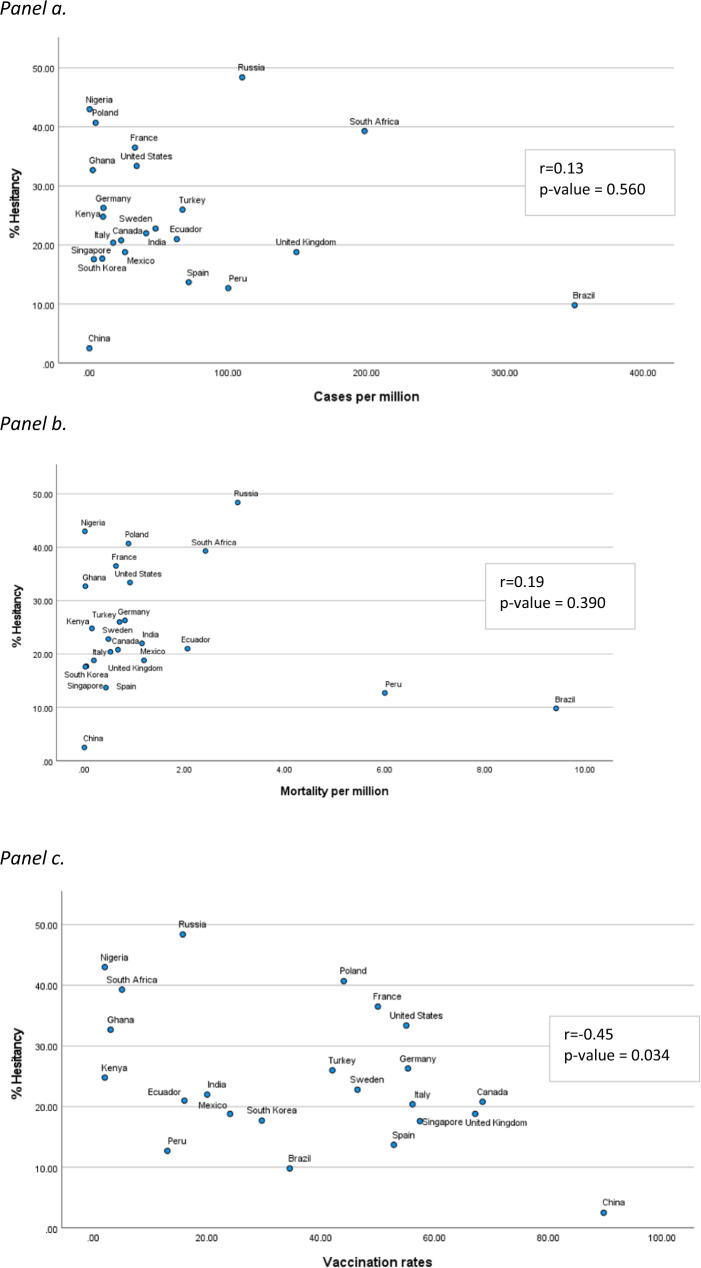
Fig. 2. COVID-19 vaccine hesitancy by current cases and mortality.
a COVID-19 vaccine hesitancy and COVID-19 cases. b COVID-19 vaccine hesitancy and COVID-19 mortality. a, b Source data are provided in a Source Data file. c Vaccination rates and COVID-19 vaccine hesitancy. c The association between a country’s COVID-19 vaccine hesitancy and COVID-19 cases and mortality (per million population) at the time of survey were each assessed using Pearson correlations and associated p-values based on two-sided tests. No adjustments for multiple analyses were made. Source data are provided in a Source Data file.
Fig. 3
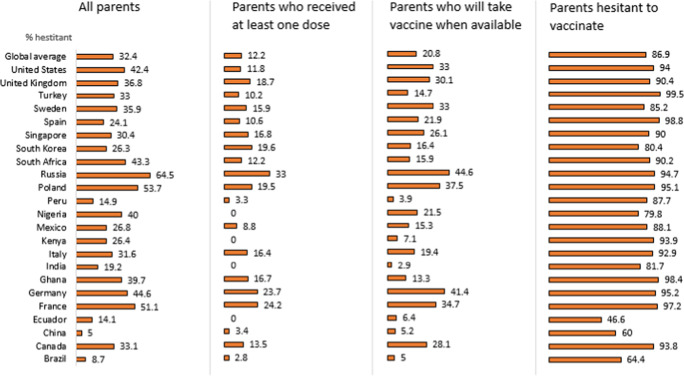
Fig. 3. COVID-19 vaccine hesitancy for children among parents.
Vaccine hesitancy was defined as having reported “no” to the question on whether respondents received at least one dose of a COVID-19 vaccine and also either “unsure/no opinion,” “somewhat disagree,” or “strongly disagree” to the question on whether they will take COVID-19 vaccine when available to them.
Fig. 4
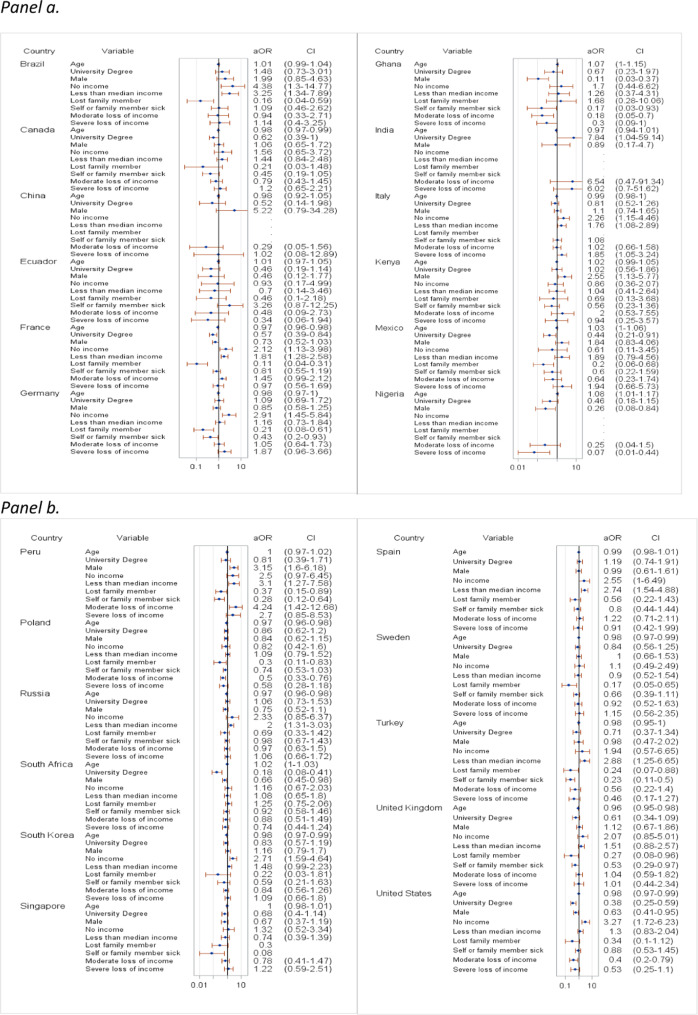
Fig. 4. Correlates of COVID-19 vaccine hesitancy with socio-demographic factors and COVID-19 experience.
a Correlates in Brazil, Canada, China, Ecuador, France, Germany, Ghana, India, Italy, Kenya, Mexico, and Nigeria. b Correlates in Peru, Poland, Russia, South Africa, South Korea, Singapore, Spain, Sweden, Turkey, the United Kingdom, and the United States. a, b Adjusted odds ratios (aOR) and 95% CI error bars (log scale) from weighted multivariable logistic regression; reference categories: Female, No university degree, More than median income, No COVID-19 sickness/death, No loss of income.
Fig. 5
Fig. 5. Correlates of COVID-19 vaccine hesitancy with beliefs in a vaccine’s ability to prevent COVID-19, safety and trust in the vaccine science, trust in government, anxiety, and depression.
a Correlates in Brazil, Canada, China, Ecuador, France, Germany, Ghana, India, Italy, Kenya, Mexico, and Nigeria. b Correlates in Peru, Poland, Russia, South Africa, South Korea, Singapore, Spain, Sweden, Turkey, the United Kingdom, and the United States. a, b Adjusted odds ratios (aOR) and 95% CI error bars (log scale) from weighted multivariable logistic regression, adjusted for socio-demographic factors and COVID-19 experience.
Fig. 6
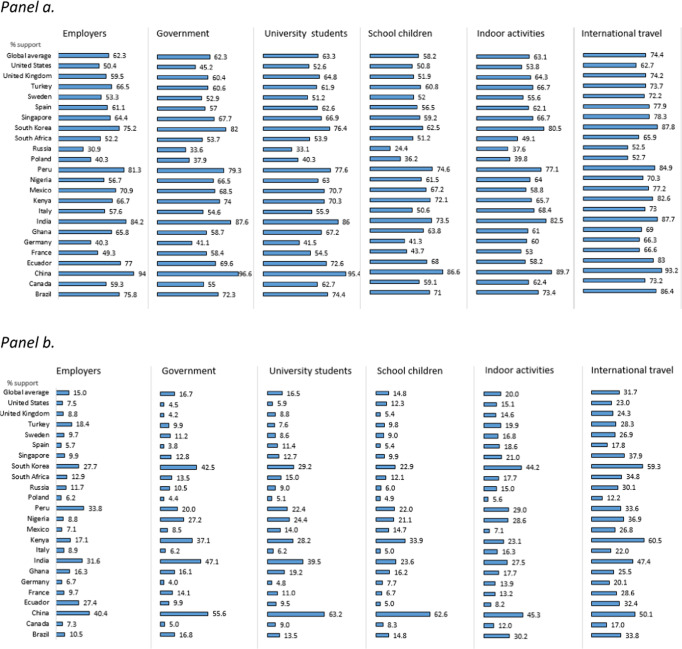
Fig. 6. Support for COVID-19 vaccination mandates.
a Overall. b Among those hesitant to vaccinate against COVID-19. a, b Support is defined as reporting “strongly agree/agree” with each mandate.

References

    1. MacDonald NE, SAGE Working Group on Vaccine Hesitancy. Vaccine hesitancy: definition, scope and determinants. Vaccine. 2015;33:4161–4164. doi: 10.1016/j.vaccine.2015.04.036. - DOI - PubMed
    1. World Health Organization. Ten threats to global health in 2019. https://www.who.int/news-room/spotlight/ten-threats-to-global-health-in-... (2019).
    1. Lazarus JV, et al. A global survey of potential acceptance of a COVID-19 vaccine. Nat. Med. 2020;27:225–228. doi: 10.1038/s41591-020-1124-9. - DOI - PMC - PubMed
    1. Mathieu, E. et al. A global database of COVID-19 vaccinations. Nature Human Behaviour 2021 5:75, 947–953 (2021). - PubMed
    1. Stojanovic J, et al. Global Trends and Correlates of COVID-19 Vaccination Hesitancy: Findings from the iCARE Study. Vaccines 2021. 2021;9:661 9–66661. - PMC - PubMed

Publication types