


In vitro accuracy of digital and conventional impressions in the partially edentulous maxilla
- PMID: 35778534
- PMCID: PMC9643200
- DOI: 10.1007/s00784-022-04598-4
In vitro accuracy of digital and conventional impressions in the partially edentulous maxilla
Abstract
Objectives: This in vitro study compared the dimensional accuracy of conventional impressions (CI) with that of digital impressions (DI) in a partially edentulous maxilla. DIs were made by two intraoral scanners, Omnicam (OC) and Primescan (PS).
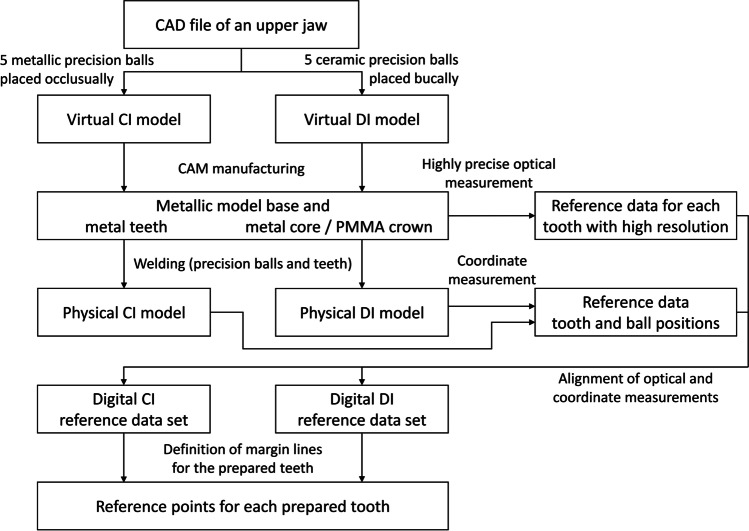
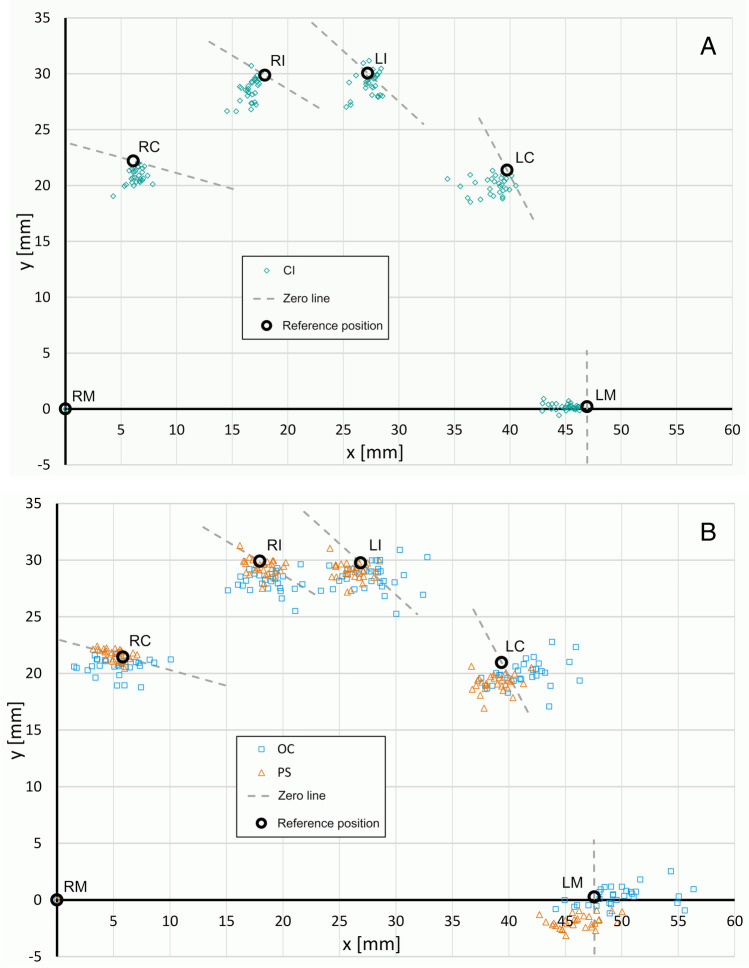
Materials and methods: CI and both intraoral scanners were used to take 30 impressions of two identical reference models. CIs were poured with type 4 gypsum and the saw-cut models were digitized. The reference models simulated a maxilla with six prepared teeth that accommodated a cross-arch fixed partial denture. Center points of five precision balls and center points at the margin level of each prepared tooth were used to detect changes in dimensions and tooth axis between the reference model and the scans.
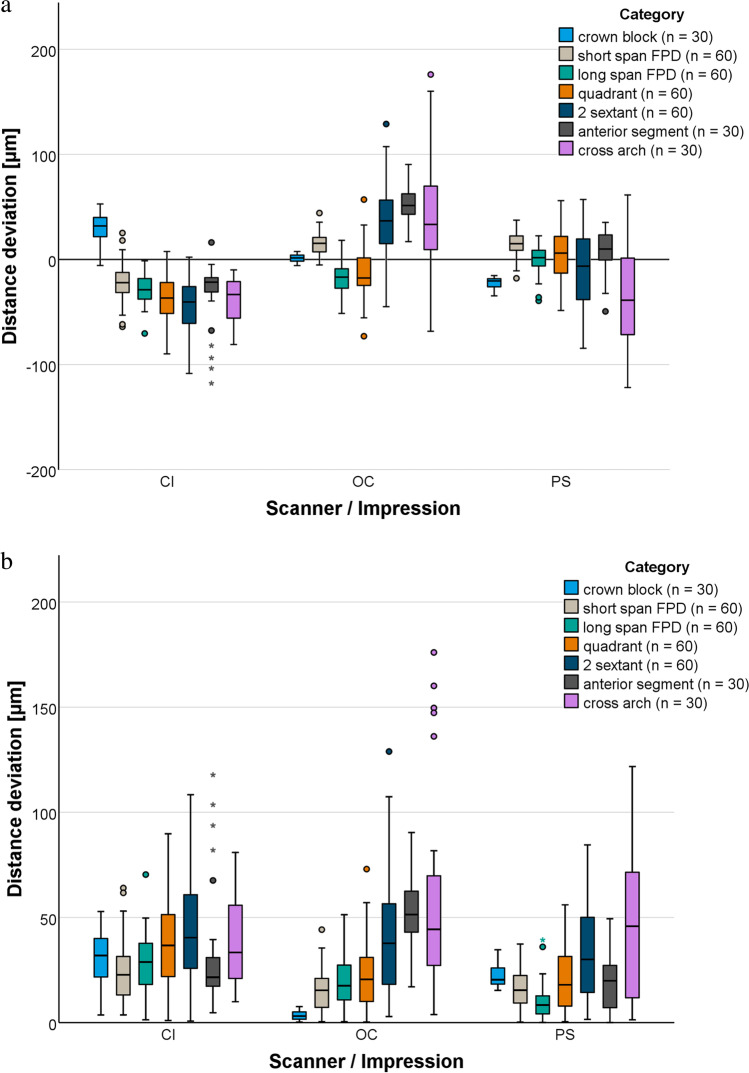
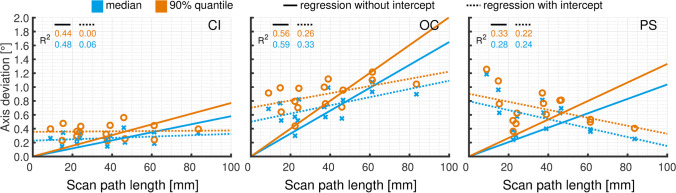
Results: For DI, the largest deviations (176 µm for OC and 122 µm for PS) occurred over the cross-arch. For CI, the largest deviation (118 µm) occurred over the anterior segment. For shorter distances up to a quadrant, DI was superior to CI. For longer scan distances, DI was comparable (2 sextant and anterior segment) or inferior (cross-arch) to CI. Vertical and tooth axis deviations were significantly smaller for CI than for DI (p < 0.001).
Conclusions: The impression method affected the impression accuracy of a partially edentulous maxilla with prepared teeth. DI is recommended for scans up to a quadrant. Larger scan volumes are not yet suitable for fabricating a fixed partial denture because of the high scatter of accuracy values.
Clinical relevance: In contrast to conventional impressions, digital impressions lead to comparable or better results concerning scans up to a quadrant. Consequently, for larger scan volumes, several smaller scans should be performed or, if restoration-related not possible, it is recommended to take conventional impressions.
Keywords: Complete arch; Conventional impression; Digital impression; Intraoral scan; Partially edentulous.
© 2022. The Author(s).
Conflict of interest statement
The authors declare no competing interests.
Figures


References
-
- de Paris Matos T, Wambier LM, Favoreto MW, Rezende CEE, Reis A, Loguercio AD, et al (2021) Patient-related outcomes of conventional impression making versus intraoral scanning for prosthetic rehabilitation: A systematic review and meta-analysis. J Prosthet Dent. - PubMed
-
- Waldecker M, Rues S, Trebing C, Behnisch R, Rammelsberg P, Bömicke W (2021) Effects of training on the execution of complete-arch scans. Part 2: Scanning Accuracy. Int J Prosthodont 34:27–36 - PubMed
-
- Waldecker M, Trebing C, Rues S, Behnisch R, Rammelsberg P, Bömicke W (2021) Effects of training on the execution of complete-arch scans. Part 1: Scanning Time. Int J Prosthodont 34:21–6 - PubMed
-
- Morsy N, El Kateb M, Azer A, Fathalla S (2021) Fit of zirconia fixed partial dentures fabricated from conventional impressions and digital scans: a systematic review and meta-analysis. J Prosthet Dent. - PubMed
MeSH terms
LinkOut - more resources
Full Text Sources
