


TyG index is positively associated with risk of CHD and coronary atherosclerosis severity among NAFLD patients
- PMID: 35778734
- PMCID: PMC9250269
- DOI: 10.1186/s12933-022-01548-y
TyG index is positively associated with risk of CHD and coronary atherosclerosis severity among NAFLD patients
Abstract
Background: Insulin resistance (IR), endothelial dysfunction, inflammation, glucose and lipid metabolism disorders, and thrombosis are believed involved in coronary heart disease (CHD) and non-alcoholic fatty liver disease (NAFLD). Triglyceride-glucose (TyG) index, a new IR indicator, is correlated with NAFLD occurrence and severity, but its relationship with CHD risk remains unclear. This study investigated the correlation between TyG index and CHD risk among NAFLD patients.
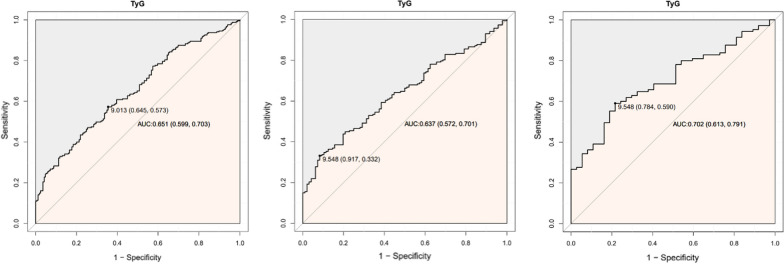
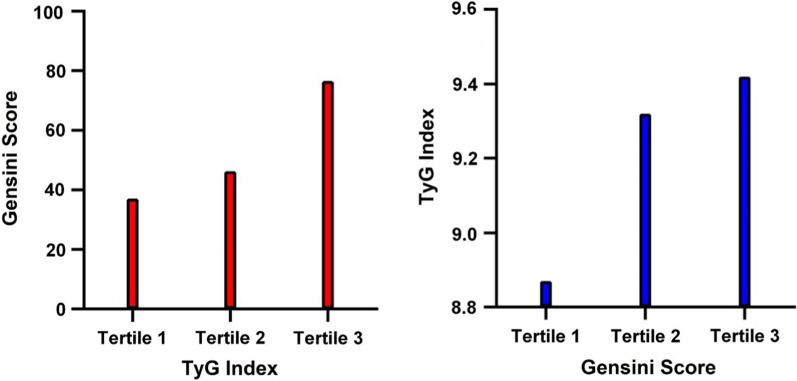
Methods: This cross-sectional study included 424 patients with NAFLD and chest pain in the Department of Cardiology, The Second Hospital of Shanxi Medical University, from January 2021 to December 2021. The TyG index was calculated and coronary angiography performed. All individuals were divided into NAFLD + CHD and NAFLD groups and then by TyG index level. The t-test, Mann-Whitney U-test, or one-way analysis of variance compared differences in continuous variables, while the chi-square test or Fisher's exact test compared differences in categorical variables. Logistic regression analysis determined the independent protective or hazardous factors of NAFLD with CHD. The receiver operating characteristic curve evaluated the ability of different TyG index rule-in thresholds to predict CHD. The relationship between Gensini score and TyG index was evaluated using linear correlation and multiple linear regression.
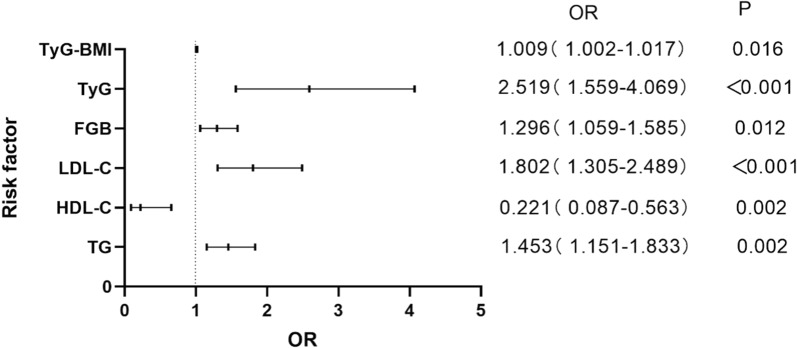
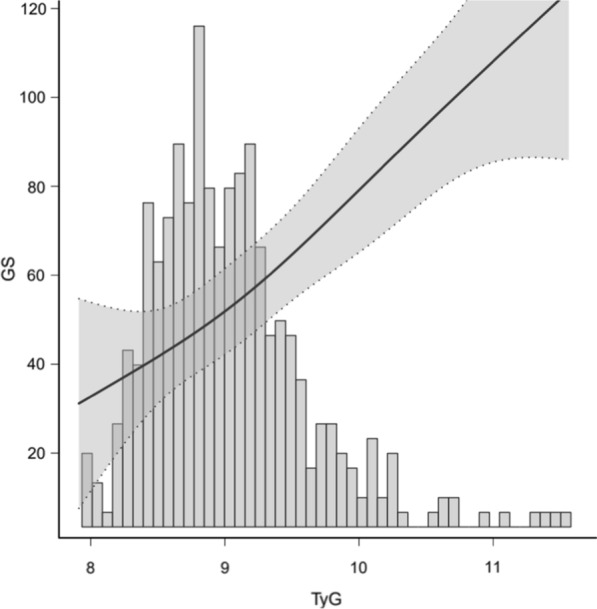
Results: CHD was detected in 255 of 424 patients. Compared to NAFLD group, multivariate logistic regression showed that TyG index was a risk factor for CHD among NAFLD patients after adjustment for age, sex, hypertension, and diabetes mellitus with the highest odds ratio (OR, 2.519; 95% CI, 1.559-4.069; P < 0.001). TG, low-density lipoprotein cholesterol, FBG and TYG-body mass index were also risk factors for CHD among NAFLD patients. High-density lipoprotein cholesterol level was a protective factor for CHD events in patients with NAFLD. In an in-depth analysis, multivariate logistic regression analysis showed that each 1-unit increase in TyG index was associated with a 2.06-fold increased risk of CHD (OR, 2.06; 95% CI, 1.16-3.65; P = 0.013). The multifactor linear regression analysis showed each 0.1-unit increase in TyG in the NAFLD-CHD group was associated with a 2.44 increase in Gensini score (β = 2.44; 95% CI, 0.97-3.91; P = 0.002).
Conclusions: The TyG index was positively correlated with CHD risk in NAFLD patients and reflected coronary atherosclerosis severity.
Keywords: Coronary heart disease; Insulin resistance; Non-alcoholic fatty liver diseases; Triglyceride-glucose index.
© 2022. The Author(s).
Conflict of interest statement
The authors declare that the research was conducted in the absence of any commercial or financial relationships that could be construed as potential conflicts of interest.
Figures
References
Publication types
MeSH terms
Substances
LinkOut - more resources
Full Text Sources
Medical
Miscellaneous
