


Subsequent malaria enhances virus-specific T cell immunity in SIV-infected Chinese rhesus macaques
- PMID: 35778766
- PMCID: PMC9248186
- DOI: 10.1186/s12964-022-00910-7
Subsequent malaria enhances virus-specific T cell immunity in SIV-infected Chinese rhesus macaques
Abstract
Background: Coinfection with HIV and Plasmodium parasites is fairly common, but the sequence of infection with these two pathogens and their impact on disease progression are poorly understood.
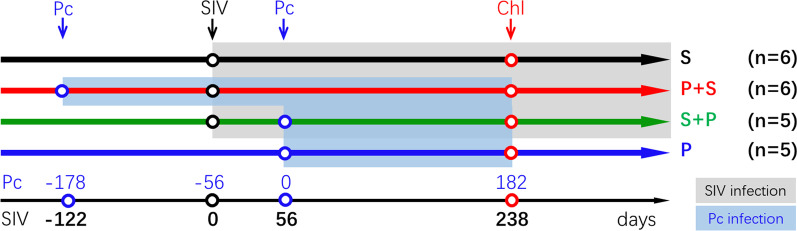
Methods: A Chinese rhesus macaque HIV and Plasmodium coinfection model was established to compare the impact of pre-existing and subsequent malaria on the progression of SIV infection.
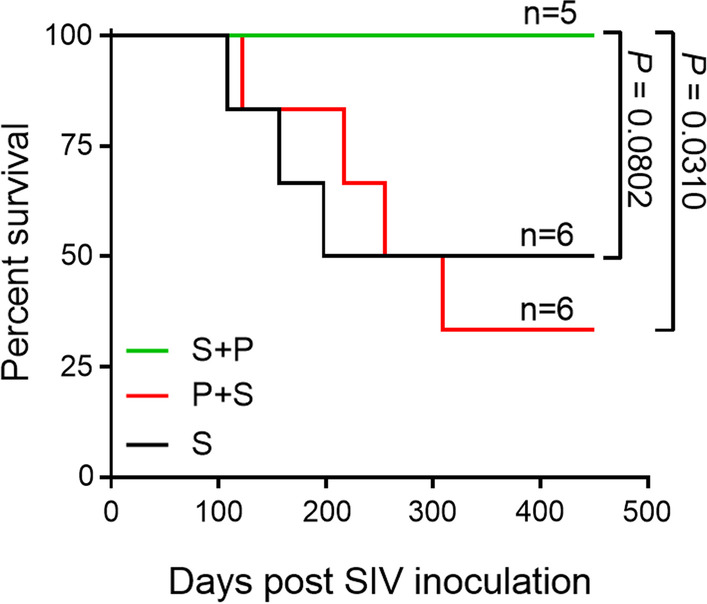
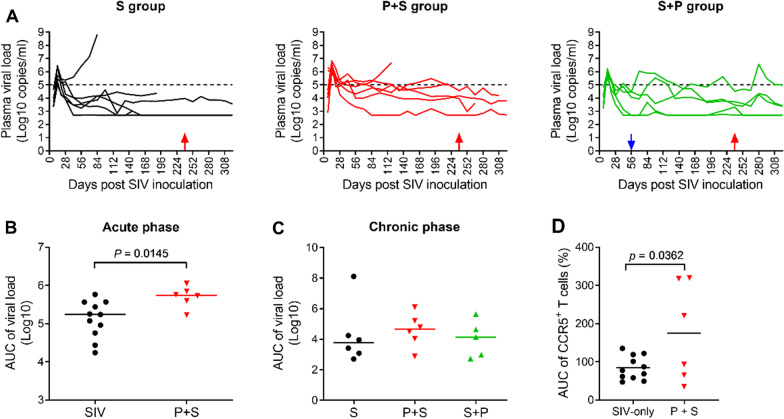
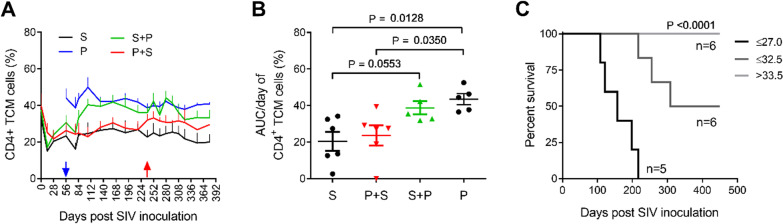
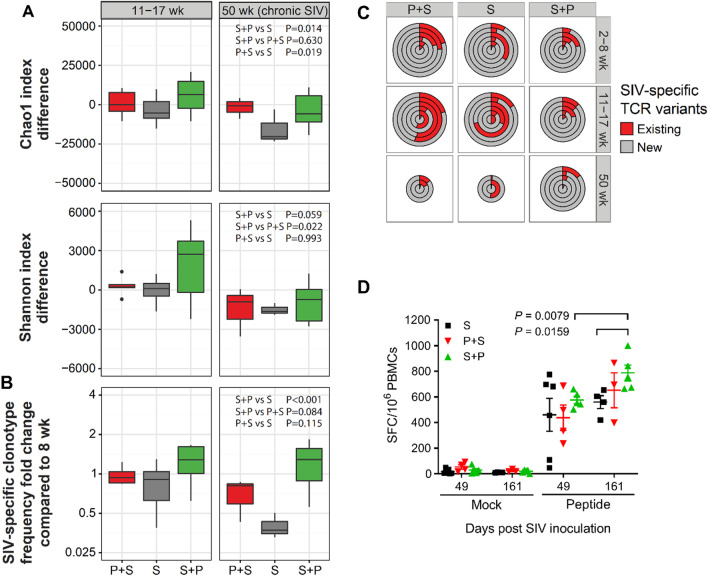
Results: We found that a pre-existing malaria caused animals to produce a greater number of CD4+CCR5+ T cells for SIV replication, resulting in higher viral loads. Conversely, subsequent malaria induced a substantially larger proportion of CD4+CD28highCD95high central memory T cells and a stronger SIV-specific T cell response, maintained the repertoire diversity of SIV-specific T cell receptors, and generated new SIV-specific T cell clonotypes to trace SIV antigenic variation, resulting in improved survival of SIV-infected animals.
Conclusion: The complex outcomes of this study may have important implications for research on human HIV and malaria coinfection. The infection order of the two pathogens (HIV and malaria parasites) should be emphasized. Video abstract.
Keywords: Coinfection; Monkey model; Plasmodium; SIV; Virus-specific immunity.
© 2022. The Author(s).
Conflict of interest statement
There are no competing interests with this article.
Figures
References
-
- WHO: HIV/AIDS key facts. 2020; Available from: https://www.who.int/news-room/fact-sheets/detail/hiv-aids.
-
- WHO: Malaria key facts. 2020; Available from: https://www.who.int/news-room/fact-sheets/detail/malaria.
Publication types
MeSH terms
LinkOut - more resources
Full Text Sources
Medical
Research Materials
