


The role of dynamic magnetic resonance imaging in exclusion of inguinal hernia in patients suffering from indefinitive groin pain
- PMID: 35779146
- PMCID: PMC9931858
- DOI: 10.1007/s10029-022-02642-6
The role of dynamic magnetic resonance imaging in exclusion of inguinal hernia in patients suffering from indefinitive groin pain
Abstract
Rationale and objectives: The objective of this study was to analyze the role of dynamic magnetic resonance imaging (MRI) in patients who suffered from groin pain and whose physical examination and ultrasound returned inconclusive/indefinite results, as well as in patients receiving an ongoing assessment for a previous herniotomy.
Material and methods: For this study, 25 patients 14 women and 11 men were selected with a mean age of 41.6 years, including clinical complaints, such as groin pain and or a previous herniotomies. These patients underwent dynamic MRI. Reports were created by a radiology resident and a radiology consultant. Clinical and ultrasound documentation were compared to with imaging results from the MRI.
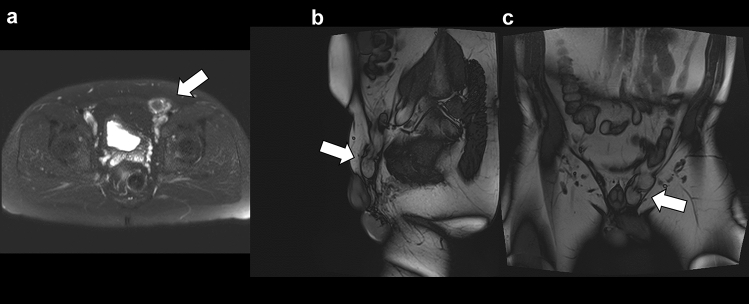
Results: The results of the dynamic MRI were negative for 23 patients (92%) and positive for two patients (8%). One patient suffered from an indirect hernia and one from a femoral hernia. A repeated hernia was an excluding for the preoperated patients with pain and ongoing assessment.
Conclusions: Dynamic MRI shows substantially higher diagnostic performance in exclusion of inguinal hernia, when compared to a physical examination and ultrasound. The examination can also be used in assessments to analyze the operation's results.
Keywords: Dynamic MRI; Groin pain; Inguinal hernia; Inguinal pain; MRI.
© 2022. The Author(s).
Conflict of interest statement
None.
Figures

References
-
- Berndsen MR, Gudbjartsson T, Berndsen FH. Inguinal hernia—review. Laeknabladid. 2019;105(9):385–391. - PubMed
-
- Robinson A, Light D, Nice C. Meta-analysis of sonography in the diagnosis of inguinal hernias. J Ultrasound Med (official journal of the American Institute of Ultrasound in Medicine) 2013;32(2):339–346. - PubMed
MeSH terms
LinkOut - more resources
Full Text Sources
