


Heterogeneity in IgG-CD16 signaling in infectious disease outcomes
- PMID: 35781671
- PMCID: PMC9539944
- DOI: 10.1111/imr.13109
Heterogeneity in IgG-CD16 signaling in infectious disease outcomes
Abstract
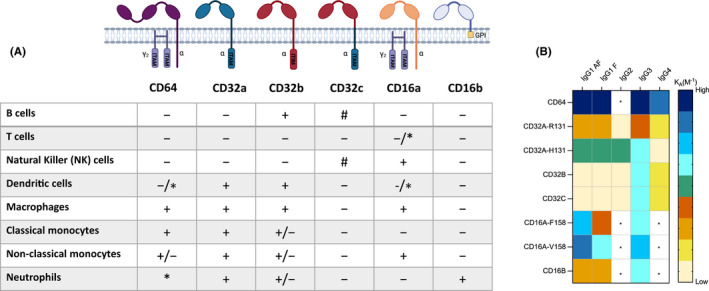
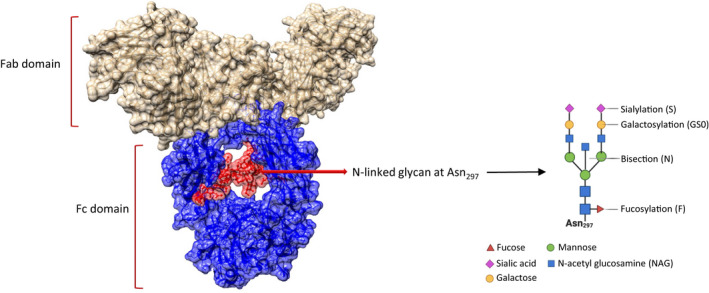
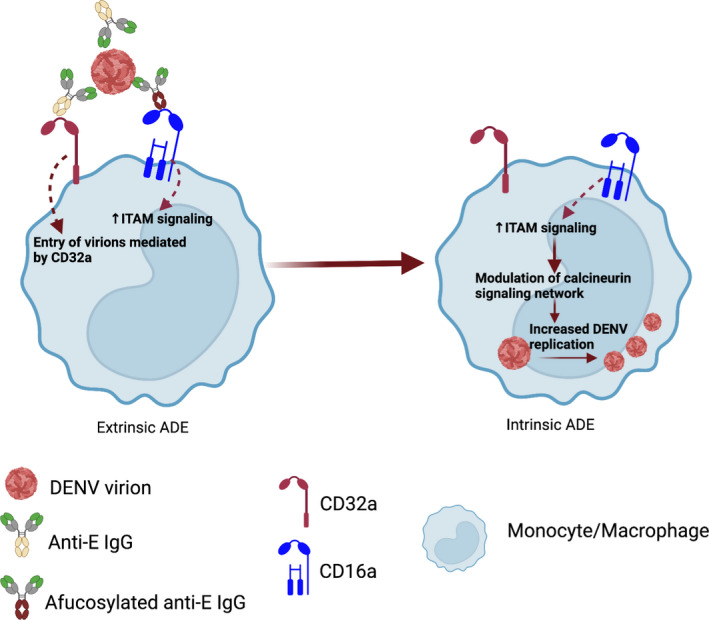
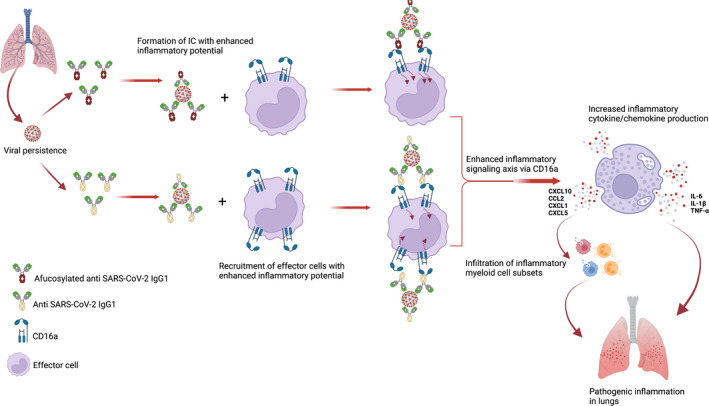
In this review, we discuss how IgG antibodies can modulate inflammatory signaling during viral infections with a focus on CD16a-mediated functions. We describe the structural heterogeneity of IgG antibody ligands, including subclass and glycosylation that impact binding by and downstream activity of CD16a, as well as the heterogeneity of CD16a itself, including allele and expression density. While inflammation is a mechanism required for immune homeostasis and resolution of acute infections, we focus here on two infectious diseases that are driven by pathogenic inflammatory responses during infection. Specifically, we review and discuss the evolving body of literature showing that afucosylated IgG immune complex signaling through CD16a contributes to the overwhelming inflammatory response that is central to the pathogenesis of severe forms of dengue disease and coronavirus disease 2019 (COVID-19).
Keywords: COVID-19; Fc afucosylation; IgG1 antibodies; dengue disease; effector functions.
© 2022 The Authors. Immunological Reviews published by John Wiley & Sons Ltd.
Conflict of interest statement
The authors have no conflicts of interest to declare.
Figures
References
-
- Knipe DM, Howley PM. Fields Virology. 6th ed. Wolters Kluwer/Lippincott Williams & Wilkins Health; 2013.
-
- Warren JS, Ward PA. Immune Complex Diseases. eLS; 2017:1‐9.
-
- Wang TT, Ravetch JV. Immune complexes: not just an innocent bystander in chronic viral infection. Immunity. 2015;42(2):213‐215. - PubMed
Publication types
MeSH terms
Substances
Grants and funding
LinkOut - more resources
Full Text Sources
Medical
