


In the presence of autoantibodies and iron overload, do not judge a book by its cover: A case report
- PMID: 35783902
- PMCID: PMC9138916
- DOI: 10.14744/hf.2021.2021.0013
In the presence of autoantibodies and iron overload, do not judge a book by its cover: A case report
Abstract
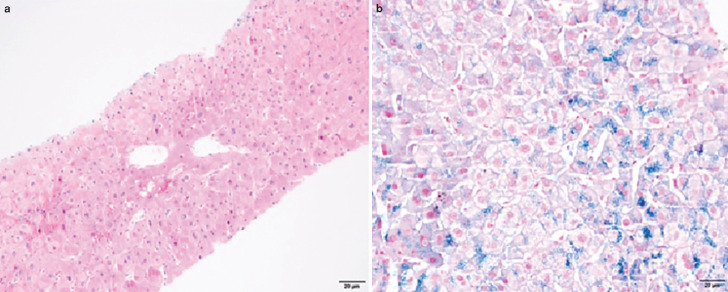
The presence of autoantibody positivity with an elevated ferritin level and high transferrin saturation can create a diagnostic dilemma. This report describes the challenging case of 38-year-old male patient who presented with new-onset diabetes, malaise, weight loss, dark-yellow skin discoloration, and splenomegaly. Initial laboratory tests revealed thrombocytopenia, leucopenia, an elevated unconjugated bilirubin level, and mildly elevated liver enzymes in a cholestatic pattern. Antinuclear antibody and anti-smooth muscle antibody findings were positive with titers of 1/160 and 1/320, respectively, along with hypergammaglobulinemia. The transferrin saturation value was 92% and the ferritin level was 498 µg/L. HFE gene mutation analysis revealed a C282Y heterozygote mutation, which is not diagnostic, but supported a diagnosis of hereditary hemochromatosis (HH). A liver biopsy is the most accurate way to differentiate autoimmune hepatitis from HH, and confirmed a diagnosis of HH. This case highlights the importance of paying close attention to all findings to avoid misdiagnosis and treatment which might result in dangerous outcomes. Additionally, in spite of a genetic test, a liver biopsy has great value as an important tool to determine an accurate diagnosis in patients with iron overload, especially in patients with concomitant autoantibody positivity.
Keywords: Autoimmune hepatitis; elevated transferrin saturation; hemochromatosis; iron overload.
© Copyright 2021 by Hepatology Forum - Available online at www.hepatologyforum.org.
Conflict of interest statement
Conflict of Interest: The authors have no conflict of interest to declare.
Figures
References
-
- Pietrangelo A. Hereditary hemochromatosis: pathogenesis, diagnosis, and treatment. Gastroenterology. 2010;139(2):393–408. - PubMed
Publication types
LinkOut - more resources
Full Text Sources