


Changes of Physicochemical Properties and Immunomodulatory Activity of Polysaccharides During Processing of Polygonum multiflorum Thunb
- PMID: 35784754
- PMCID: PMC9243645
- DOI: 10.3389/fphar.2022.934710
Changes of Physicochemical Properties and Immunomodulatory Activity of Polysaccharides During Processing of Polygonum multiflorum Thunb
Abstract
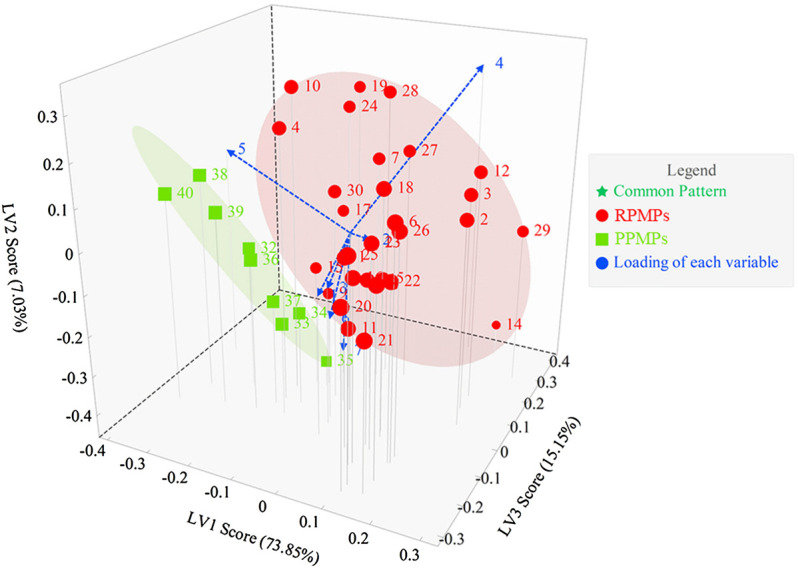
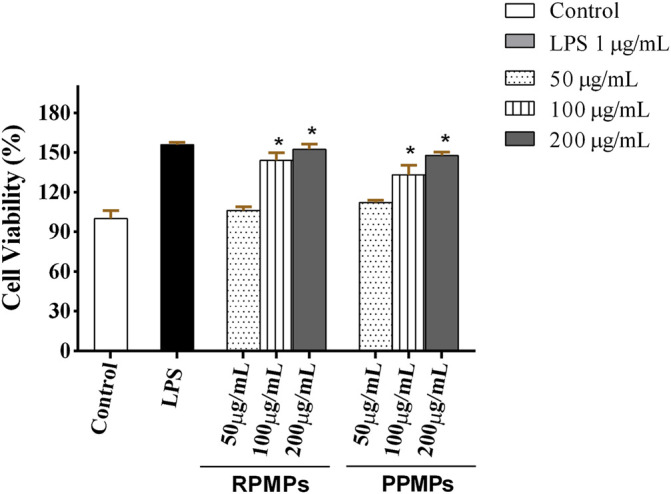
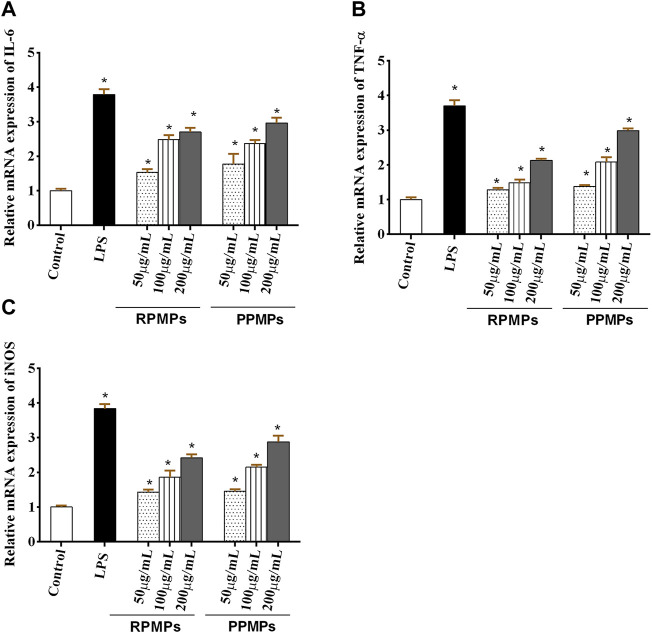
The roots of Polygonum multiflorum Thunb (PM) have a long history of usage in traditional Chinese medicine and are still widely utilized today. PM in raw or processed form has different biological activities and is commonly used to treat different diseases. Polysaccharides are the main component of PM, and it is unclear whether their physicochemical properties and activities change after processing. In this study, the polysaccharides from thirty-one raw PM (RPMPs) and nine processed PM (PPMPs) were extracted, and the physicochemical properties and immunomodulatory activity in vitro of polysaccharide samples were evaluated. Results showed that RPMPs and PPMPs had significant differences in physicochemical properties. RPMPs and PPMPs were both composed of mannose, rhamnose, glucuronic acid, galacturonic acid, glucose, galactose, and arabinose. However, RPMPs and PPMPs had significant differences in their yields, molecular weight (Mw), and the molar ratio of Glc/GalA (p < 0.05), which can be used to distinguish raw and processed PM. The fingerprint of monosaccharide composition was analyzed by chemometrics, and it was further demonstrated that Glc and GalA could be used as differential markers. The immunomodulatory activity assays indicated that RPMPs and PPMPs could significantly enhance phagocytosis and mRNA expression of cytokines in RAW 264.7 cells. In addition, the immunomodulatory activity of PPMPs with lower Mw was significantly better than that of RPMPs. This study furthers the understanding of the polysaccharides from raw and processed PM and provides a reference for improving the quality standard of PM.
Keywords: Polygonum multiflorum Thunb; fingerprint; immunomodulatory activity; polysaccharides; processing.
Copyright © 2022 Gu, Wang, Jin, Kang, Liu, Zan, Fan, Wei and Ma.
Conflict of interest statement
The authors declare that the research was conducted in the absence of any commercial or financial relationships that could be construed as a potential conflict of interest.
Figures
References
-
- Bradford M. M. (1976). A Rapid and Sensitive Method for the Quantitation of Microgram Quantities of Protein Utilizing the Principle of Protein-Dye Binding. Anal. Biochem. 72, 248–254. 10.1006/abio.1976.9999 PubMed Abstract | 10.1006/abio.1976.9999 | Google Scholar - DOI - PubMed
-
- Chen Q., Zhang S.-z., Ying H.-z., Dai X.-y., Li X.-x., Yu C.-h., et al. (2012). Chemical Characterization and Immunostimulatory Effects of a Polysaccharide from Polygoni Multiflori Radix Praeparata in Cyclophosphamide-Induced Anemic Mice. Carbohydr. Polym. 88, 1476–1482. 10.1016/j.carbpol.2012.02.055 10.1016/j.carbpol.2012.02.055 | Google Scholar - DOI
-
- Chen W., Wang P., Chen H., Xing Y., Liu C., Pan G., et al. (2021). The Composition Differences between Small Black Beans and Big Black Beans from Different Habitats and its Effects on the Processing of Polygonum Multiflorum . Phytochem. Anal. 32, 767–779. 10.1002/pca.3022 PubMed Abstract | 10.1002/pca.3022 | Google Scholar - DOI - PubMed
-
- Dong Q., Li N., Li Q., Zhang C. E., Feng W. W., Li G. Q., et al. (2015). Screening for Biomarkers of Liver Injury Induced by Polygonum Multiflorum: a Targeted Metabolomic Study. Front. Pharmacol. 6, 217. 10.3389/fphar.2015.00217 PubMed Abstract | 10.3389/fphar.2015.00217 | Google Scholar - DOI - PMC - PubMed
-
- DuBois M., Gilles K. A., Hamilton J. K., Rebers P. A., Smith F. (1956). Colorimetric Method for Determination of Sugars and Related Substances. Anal. Chem. 28, 350–356. 10.1021/ac60111a017 10.1021/ac60111a017 | Google Scholar - DOI
LinkOut - more resources
Full Text Sources
