. 2022 Oct;42(10):2237-2246.
doi: 10.1111/liv.15358. Epub 2022 Jul 16.

Hepatic abnormalities in youth with Turner syndrome

Affiliations

Hepatic abnormalities in youth with Turner syndrome

Isani Singh et al. Liver Int. 2022 Oct.

Abstract

Background & aims: Liver disease in children with Turner Syndrome (TS) is poorly understood relative to associated growth, cardiac and reproductive complications. This study sought to better characterize hepatic abnormalities in a large national cohort of youth with TS.

Methods: Using electronic health record data from PEDSnet institutions, 2145 females with TS were matched to 8580 females without TS on eight demographic variables. Outcomes included liver enzymes (AST and ALT) stratified as normal, 1-2 times above the upper limit of normal (ULN), 2-3 times ULN and >3 times ULN, as well as specific liver disease diagnoses.

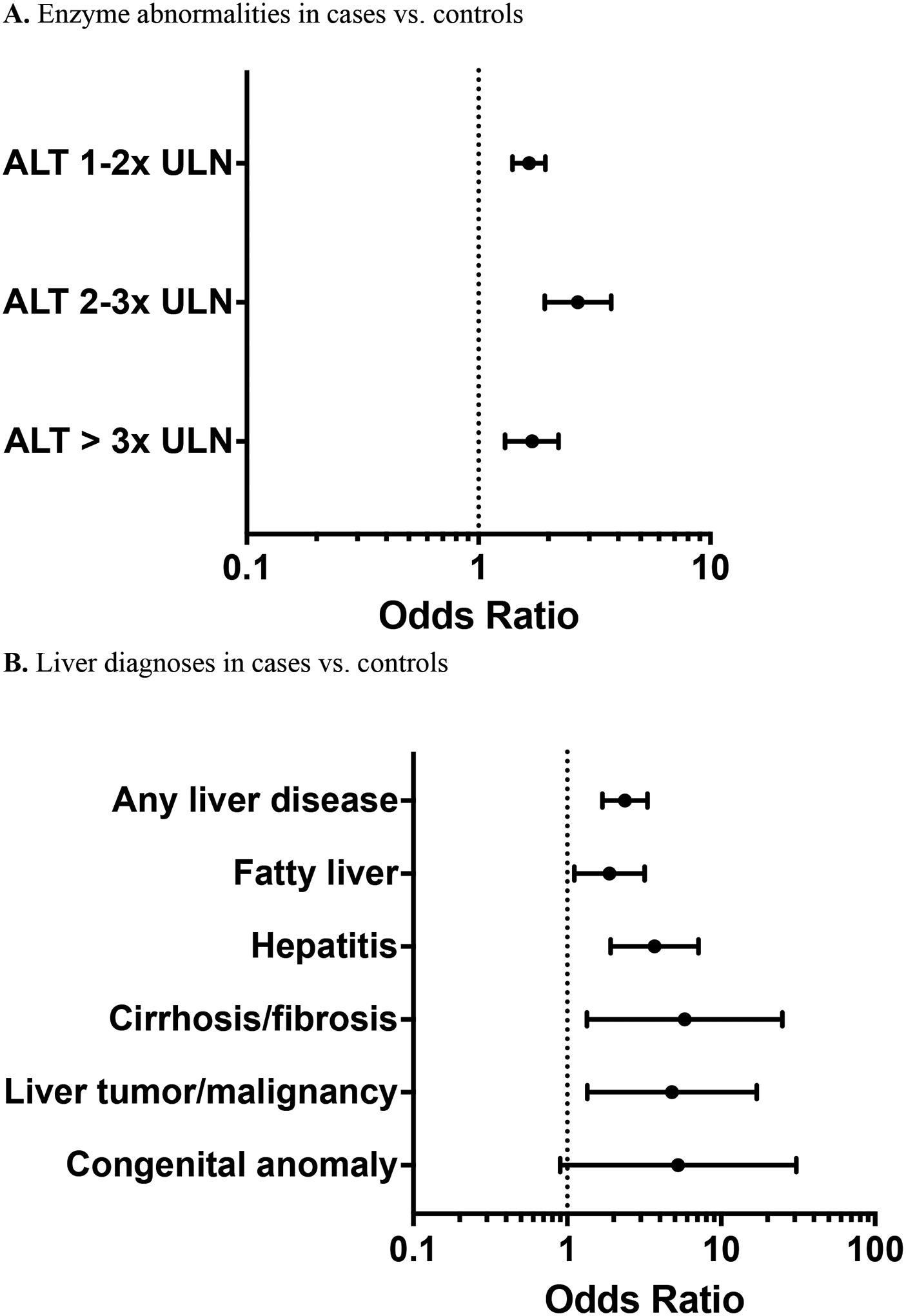
Results: Fifty-eight percent of youth with TS had elevated liver enzymes. Patients with TS had higher odds of enzymes 1-2 times ULN (OR: 1.7, 95% CI: 1.4-1.9), 2-3 times ULN (OR: 2.7, 95% CI: 1.7-3.3) and >3 times ULN (OR: 1.7, 95% CI: 1.3-2.2). They also had higher odds of any liver diagnosis (OR: 2.4, 95% CI: 1.7-3.3), fatty liver disease (OR: 1.9, 95% CI: 1.1-3.2), hepatitis (OR: 3.7, 95% CI: 1.9-7.1), cirrhosis/fibrosis (OR: 5.8, 95% CI: 1.3-25.0) and liver tumour/malignancy (OR: 4.8, 95% CI: 1.4-17.0). In a multinomial model, age, BMI and presence of cardiovascular disease or diabetes significantly increased the odds of elevated liver enzymes in girls with TS.

Conclusions: Youth with TS have higher odds for elevated liver enzymes and clinically significant liver disease compared with matched controls. These results emphasize the need for clinical screening and additional research into the aetiology and treatment of liver disease in TS.

Lay summary: Turner Syndrome, a chromosomal condition in which females are missing the second sex chromosome, is often associated with short stature, infertility and cardiac complications. Liver abnormalities are less well described in the literature. In this study, nearly 60% of youth with TS have elevated liver enzymes. Furthermore, patients with TS had a diagnosis of liver disease more often than patients without TS. Our results support the importance of early and consistent liver function screening and of additional research to define mechanisms that disrupt liver function in paediatric TS females.

Keywords: PEDSnet; Turner syndrome; fatty liver disease; hormone replacement therapy; mosaicism; transaminases.


Conflict of interest statement

Conflicts of Interest:. NJN has consulted and conducted research with Neurocrine Biosciences. The other authors have no financial relationships relevant to this article to disclose.

Figures

A-1A.
A-1A.
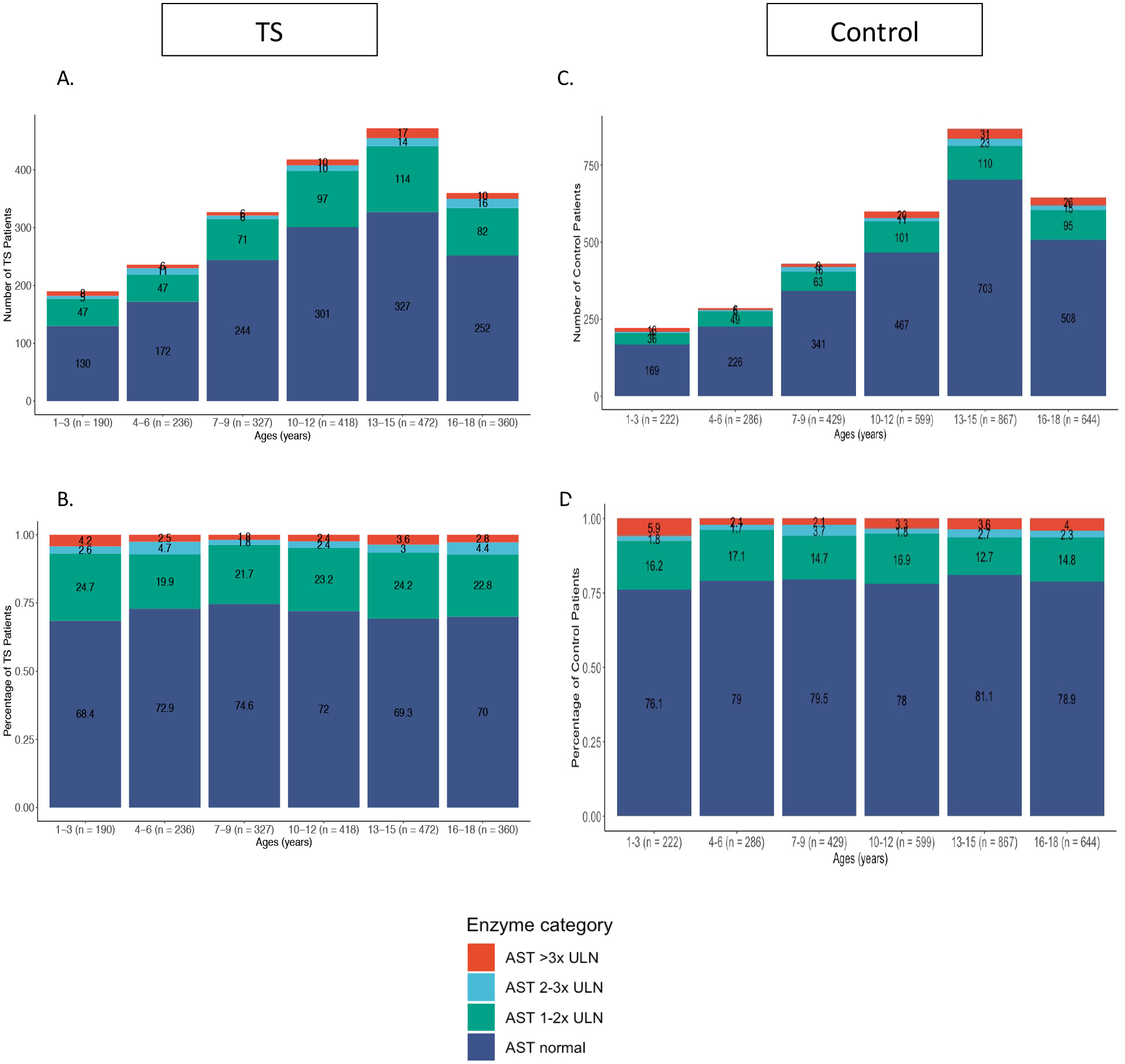
Age breakdown of liver enzyme elevation: A. Categorization of AST abnormalities for different age groups in TS. B. Prevalence of AST abnormality for different age groups in TS. C. Categorization of AST abnormalities for different age groups in controls. D. Prevalence of AST abnormality for different age groups in controls.
A-1B.
A-1B.
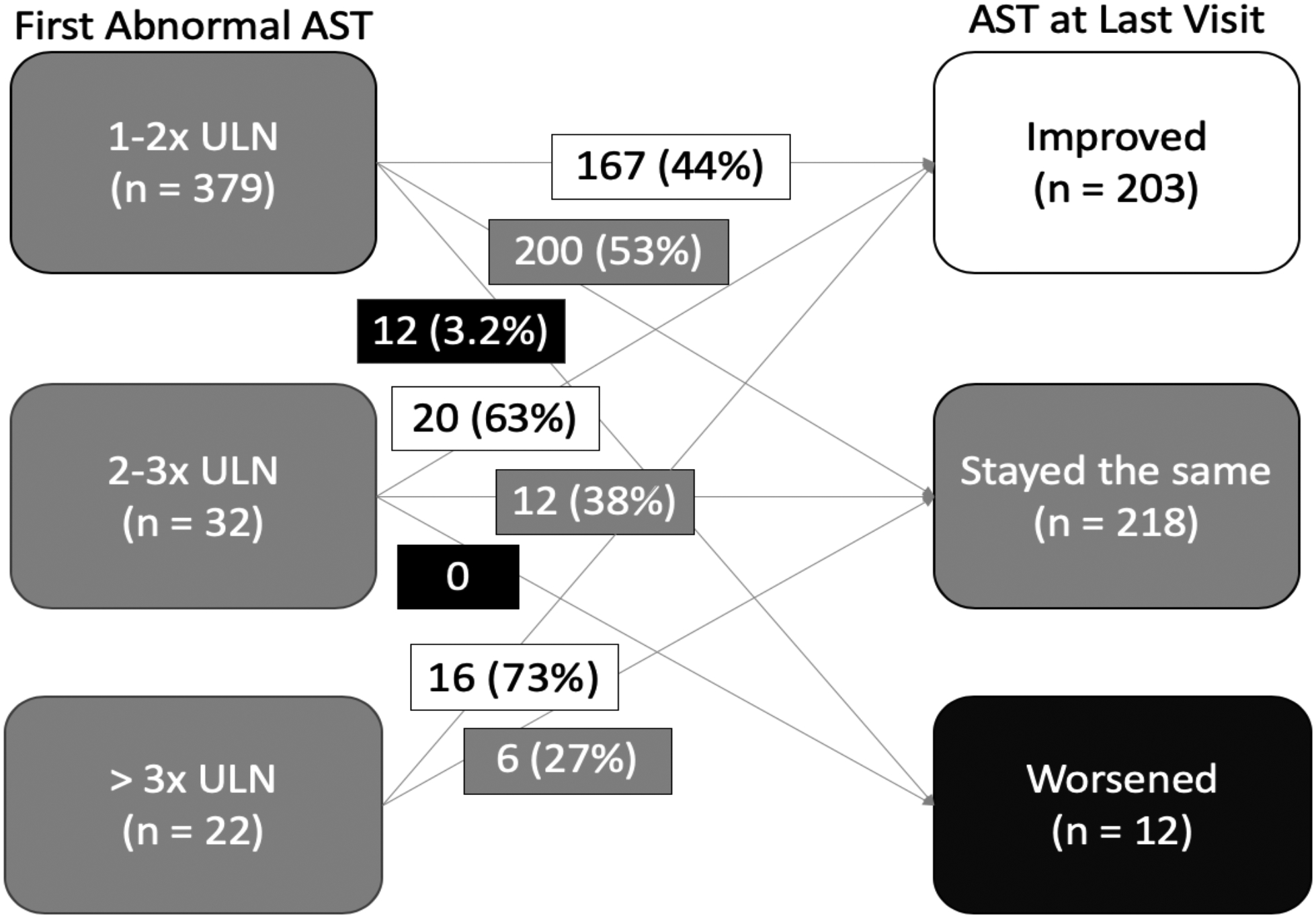
AST progression from onset of abnormality to most recent visit
Figure 1.
Figure 1.
Age breakdown of liver enzyme elevation: A. Categorization of alanine transaminase (ALT) abnormalities for different age groups in TS. B. Prevalence of ALT abnormality for different age groups in TS. C. Categorization of ALT abnormalities for different age groups in controls. D. Prevalence of ALT abnormality for different age groups in controls. † TS: Turner syndrome
Figure 2.
Figure 2.
Odds ratios (OR) and 95% confidence intervals of liver enzyme elevation and liver diagnoses in Turner syndrome cases compared to matched controls. OR of 1.0 indicates no difference in odds between groups. † ALT: Alanine transaminase
Figure 3.
Figure 3.
Multinomial logistic regression investigating variables that were independently associated with Turner syndrome liver enzyme abnormalities. Point estimate is the odds ratio and error bars represent the 95% confidence interval. Asterisks indicate variables that significantly impact odds for liver enzyme elevation. † ALT: Alanine transaminase
Figure 4.
Figure 4.
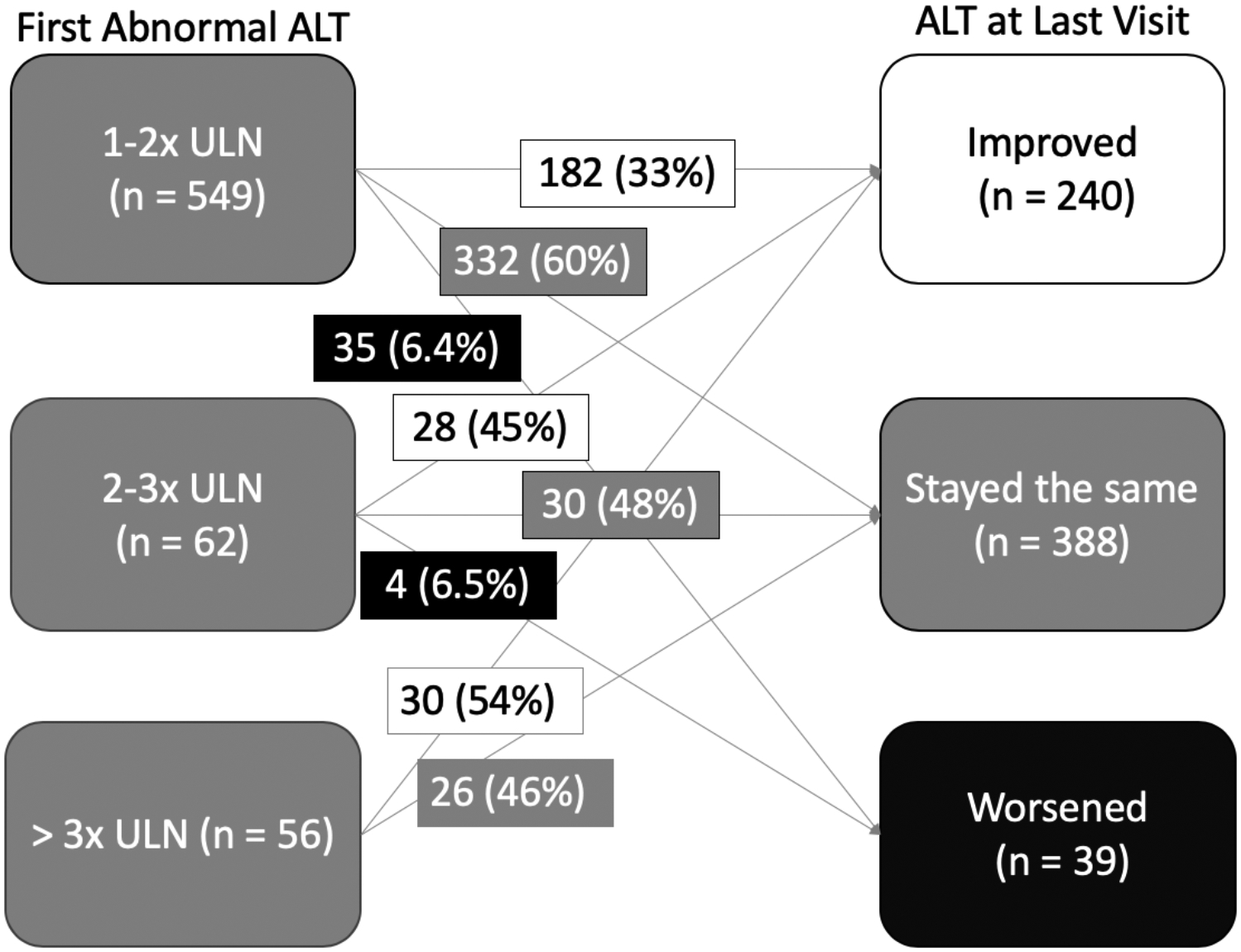
ALT progression from onset of abnormality to most recent visit † ALT: Alanine transaminase, AST: Aspartate transaminase
Figure 5.
Figure 5.
Number of patients who experienced changes of care out of those with abnormal liver enzymes and number needed to screen in order to result in a change of care. † TS: Turner syndrome

References

    1. Gravholt CH, Andersen NH, Conway GS, et al. Clinical practice guidelines for the care of girls and women with Turner syndrome: proceedings from the 2016 Cincinnati International Turner Syndrome Meeting. Eur J Endocrinol. 2017;177(3):G1–G70. doi:10.1530/EJE-17-0430 - DOI - PubMed
    1. Mortensen KH, Andersen NH, Gravholt CH. Cardiovascular phenotype in Turner syndrome--integrating cardiology, genetics, and endocrinology. Endocr Rev. 2012;33(5):677–714. doi:10.1210/er.2011-1059 - DOI - PubMed
    1. Calanchini M, Moolla A, Tomlinson JW, et al. Liver biochemical abnormalities in Turner syndrome: A comprehensive characterization of an adult population. Clin Endocrinol (Oxf.) 2018;89(5):667–676. doi:10.1111/cen.13811 - DOI - PubMed
    1. Roulot D Liver involvement in Turner syndrome. Liver Int Off J Int Assoc Study Liver. 2013;33(1):24–30. doi:10.1111/liv.12007 - DOI - PubMed
    1. Wójcik M, Ruszała A, Januś D, Starzyk JB. Liver Biochemical Abnormalities in Adolescent Patients with Turner Syndrome. J Clin Res Pediatr Endocrinol. 2019;11(4):395–399. doi:10.4274/jcrpe.galenos.2019.2018.0271 - DOI - PMC - PubMed

Publication types