


Time-Varying Effect Models for Examining Age-Dynamic Associations in Gerontological Research
- PMID: 35786370
- PMCID: PMC9807687
- DOI: 10.1080/0361073X.2022.2095606
Time-Varying Effect Models for Examining Age-Dynamic Associations in Gerontological Research
Abstract
Objectives: Dynamic processes unfolding over later adulthood are of prime interest to gerontological researchers. Time-varying effect modeling (TVEM) accommodates dynamic change trajectories, but its use in gerontological research is limited. We introduce and demonstrate TVEM with an empirical example based on the National Health and Aging Trends Study (NHATS).
Methods: We examined (a) age-varying prevalence of past month elevated symptoms of depression and anxiety and (b) age-varying associations between older adults' elevated symptoms of depression and anxiety and needing help with basic activities of daily living and educational attainment.
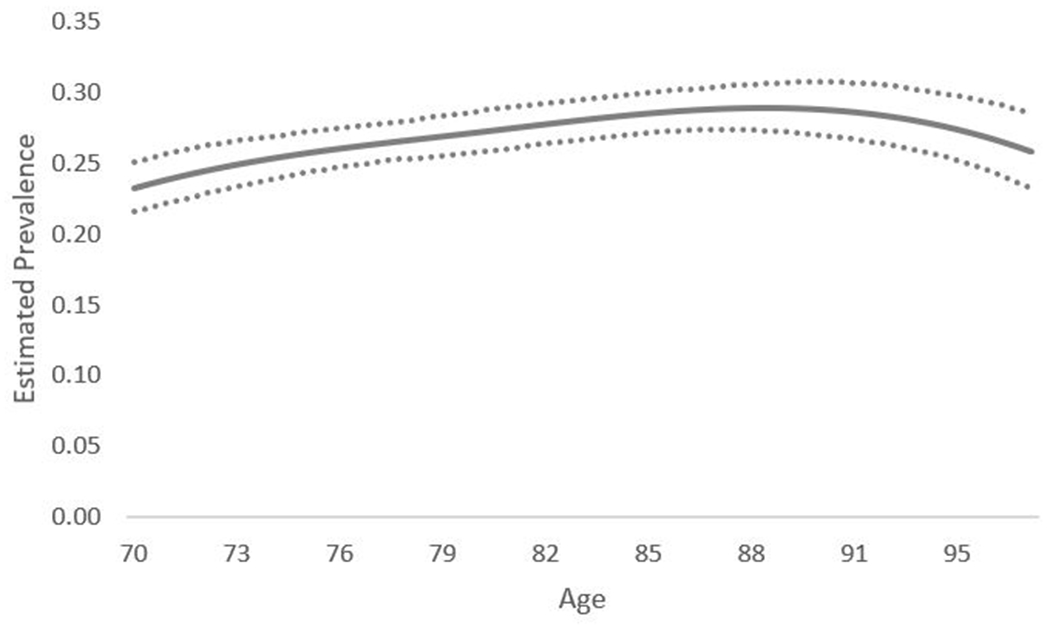
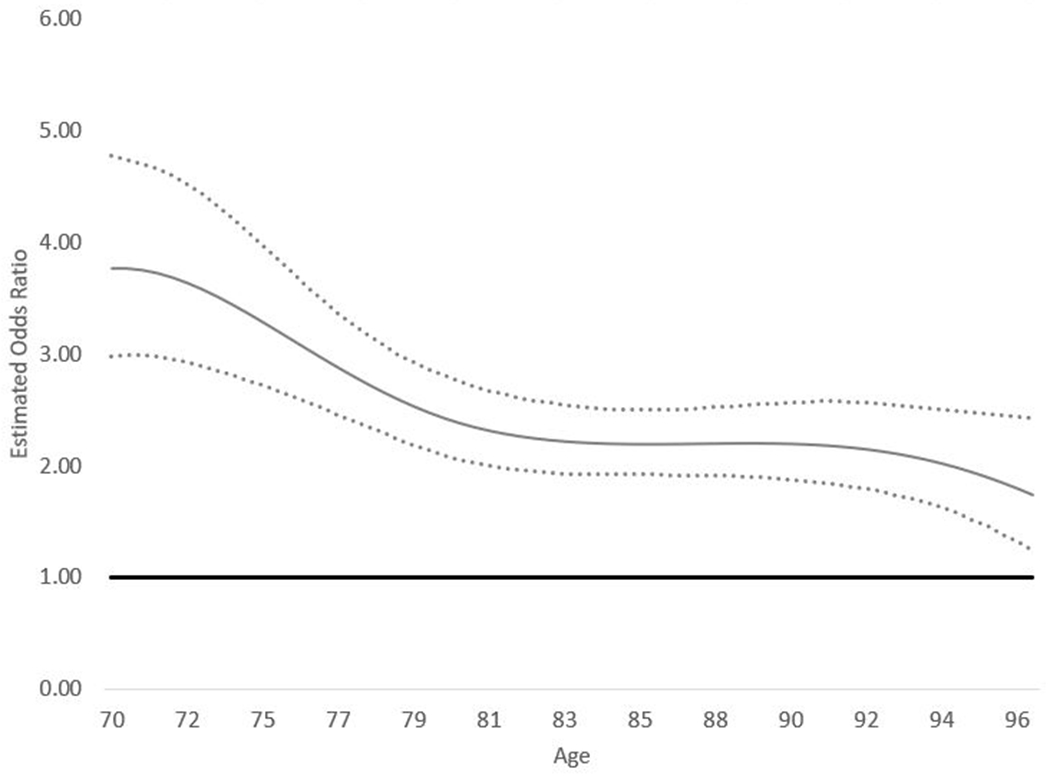
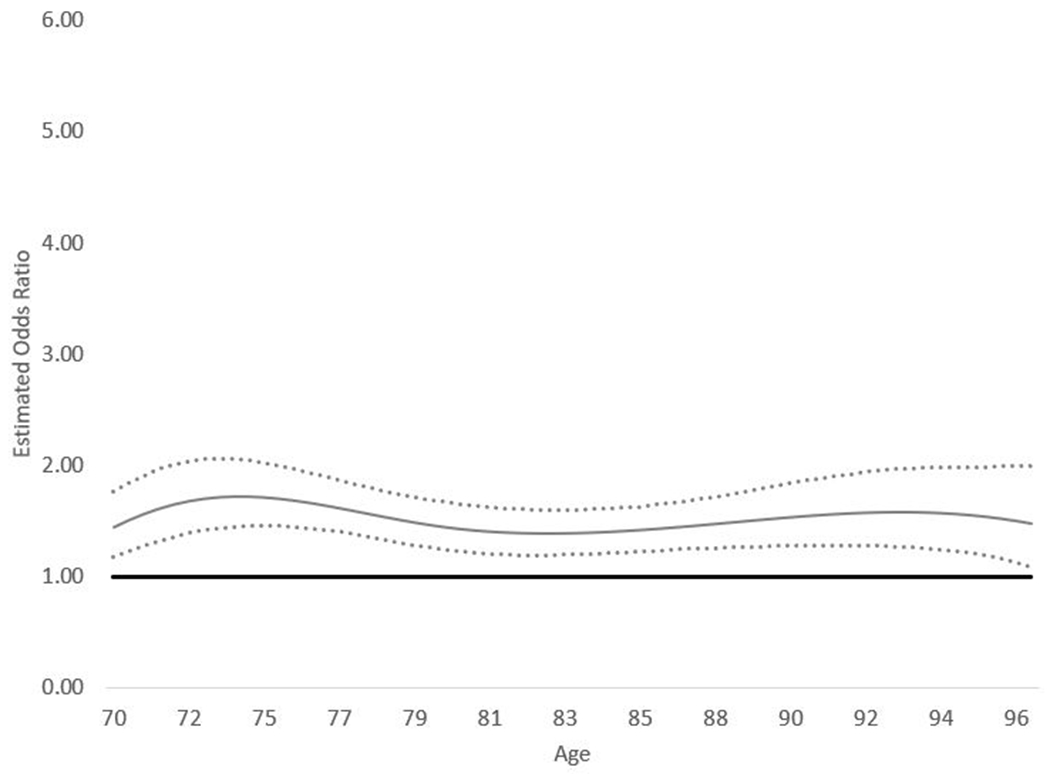
Results: The proportion of participants reporting elevated symptoms of depression and anxiety in the past month increased gradually from 23-29% across the ages 70-92. Individuals needing help with ADLs had higher odds of reporting elevated symptoms of depression and anxiety, however the association was strongest for those in their 60s versus 80s. Across all ages, adults with lower education levels had higher odds of reporting elevated symptoms of depression and anxiety, an association that also varied by age.
Conclusion: We demonstrated TVEM's value for studying dynamic associations that vary across chronological age. With the recent availability of free, user-friendly software for implementing TVEM, gerontological researchers have a new tool for exploring complex change processes that characterize older adults' development.
Conflict of interest statement
Figures
References
-
- Adams PF, Kirzinger WK, & Martinez ME (2013). Summary health statistics for the U.S. population: National Health Interview Survey, 2012. Vital and Health Statistics. Series 10, Data from the National Health Survey, 259, 1–95. - PubMed
-
- Almeida OP, Draper B, Pirkis J, Snowdon J, Lautenschlager NT, Byrne G, Sim M, Stocks N, Kerse N, Flicker L, & Pfaff JJ (2012). Anxiety, depression, and comorbid anxiety and depression: risk factors and outcome over two years. Int Psychogeriatr, 24(10), 1622–1632. 10.1017/s104161021200107x - DOI - PubMed
Publication types
MeSH terms
Grants and funding
LinkOut - more resources
Full Text Sources
Medical
Miscellaneous
