The Use of Psychoactive Substances in Germany
- PMID: 35791270
- PMCID: PMC9677535
- DOI: 10.3238/arztebl.m2022.0244
The Use of Psychoactive Substances in Germany
Abstract
Background: Monitoring the use of psychoactive substances and substance-related problems in the population allows for the assessment of prevalence and associated health and social consequences.
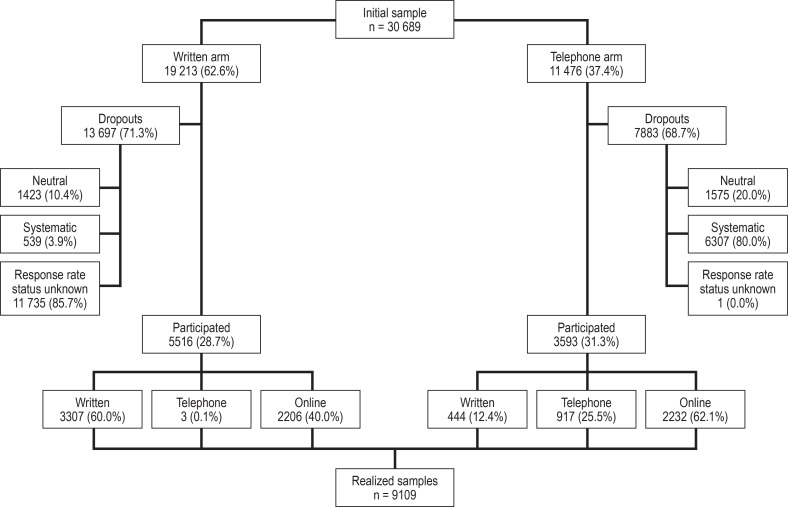
Methods: The data are derived from the Epidemiological Survey of Substance Abuse (ESA) 2021 (n = 9046, 18-64 years). We estimated prevalence rates of the use of tobacco, alcohol, illegal drugs, and psychoactive medications, as well as the prevalence rates of their problematic use (indicating dependence) using screening instruments, and extrapolated the results to the resident population (N = 51 139 451).
Results: Alcohol was the most frequently used substance, with a 30-day prevalence of 70.5% (36.1 million people), followed by non-opioid analgesic drugs (47.4%; 24.2 million) and conventional tobacco products (22.7%; 11.6 million). E-cigarettes were used by 4.3% (2.2 million) and heat-not-burn products by 1.3% (665 000). Among illegal drugs (12-month prevalence), cannabis was the most frequently used (8.8%; 4.5 million), followed by cocaine/crack (1.6%; 818 000) and amphetamine (1.4%; 716 000). Rates of problematic use among the study participants were 17.6% for alcohol (9.0 million), 7.8% for tobacco (4.0 million), 5.7% for psychoactive medications (2.9 million), and 2.5% for cannabis (1.3 million).
Conclusion: The consumption of psychoactive substances continues to be widespread in Germany. In view of the imminent legal changes, the high prevalence of cannabis use and its problematic use need to be taken into consideration.
Figures
References
-
- Peacock A, Leung J, Larney S, et al. Global statistics on alcohol, tobacco and illicit drug use: 2017 status report. Addiction. 2018;113:1905–1926. - PubMed
-
- Institute for Health Metrics and Evaluation. Global Health Data Exchange GHDx, GBD Results Tool Permalink. https://vizhub.healthdata.org/gbd-results?params=gbd-api-2019-permalink/... (last accessed on 10 February 2022)
-
- Manthey J, Shield KD, Rylett M, Hasan OSM, Probst C, Rehm J. Global alcohol exposure between 1990 and 2017 and forecasts until 2030: a modelling study. Lancet. 2019;393:2493–2502. - PubMed