


Psychiatric polygenic risk scores: Child and adolescent psychiatrists' knowledge, attitudes, and experiences
- PMID: 35792502
- PMCID: PMC9444963
- DOI: 10.1002/ajmg.b.32912
Psychiatric polygenic risk scores: Child and adolescent psychiatrists' knowledge, attitudes, and experiences
Abstract
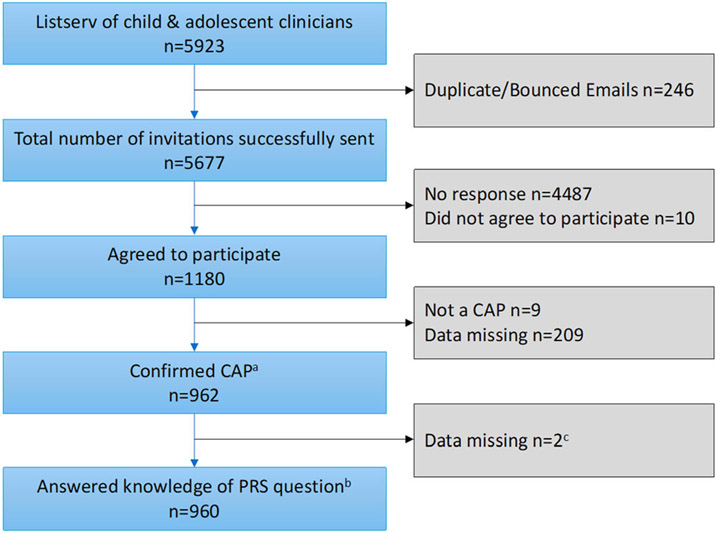
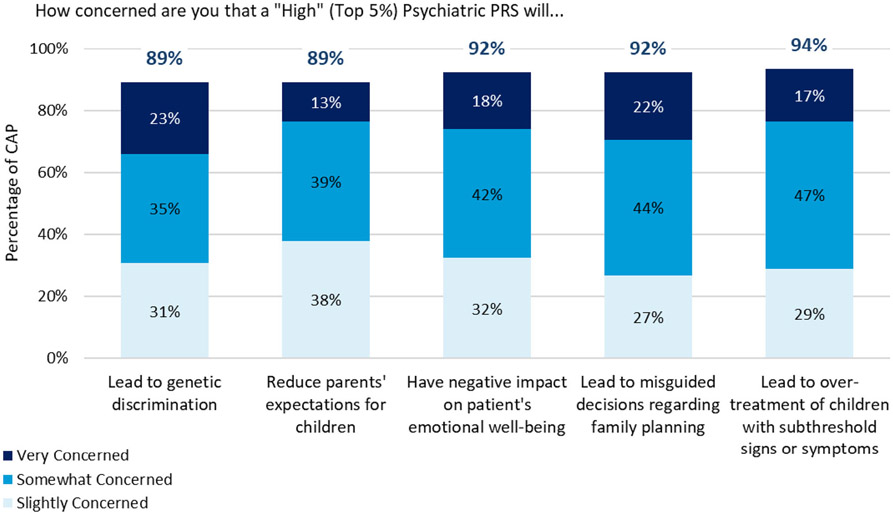
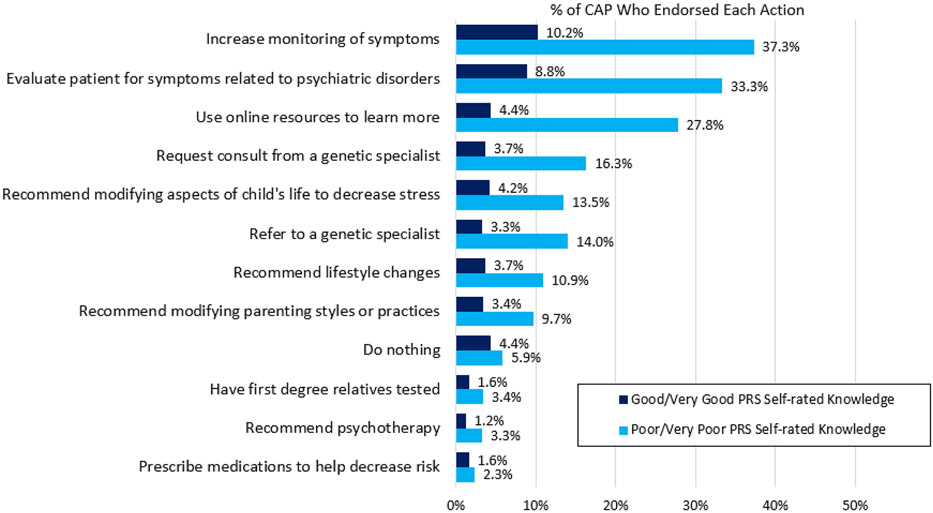
Psychiatric polygenic risk scores (PRS) have potential utility in psychiatric care and prevention, but there are concerns about their implementation. We surveyed 960 US-based practicing child and adolescent psychiatrists' (CAP) about their experiences, perspectives, and potential uses of psychiatric PRS. While 23% of CAP reported that they had never heard of PRS, 10 % of respondents have had a patient/family bring PRS to them and 4% have generated PRS for patients. Though 25% stated they would request PRS if a patient/caregiver asked, 35% indicated that nothing would prompt them to request PRS. Most respondents (54%) believed psychiatric PRS are currently at least slightly useful and 87% believed they will be so in 5 years. More than 70% indicated they would take action in response to a child with a top fifth percentile psychiatric PRS but no diagnosis: 48% would increase monitoring of symptoms, 42% would evaluate for current symptoms, and 4% would prescribe medications. Yet, most respondents were concerned that high-PRS results could lead to overtreatment and negatively impact patients' emotional well-being. Findings indicate emerging use of psychiatric PRS within child and adolescent psychiatry in the US. It is critical to examine the ethical and clinical challenges that PRS may generate and begin efforts to promote their informed and responsible use.
Keywords: genetics; pediatrics; pharmacotherapy; polygenic risk scores; psychiatric practice.
© 2022 Wiley Periodicals LLC.
Conflict of interest statement
CONFLICT OF INTEREST
Dr. Pereira reports research grants from the NIH. Ms. Muñoz reports no biomedical financial interests or potential conflicts of interest. Dr. Small reports no biomedical financial interests or potential conflicts of interest. Dr. Soda reports research grants from the NIH and the Foundation of Hope for Research and Treatment of Mental Illness. Ms. Torgerson reports no biomedical financial interests or potential conflicts of interest. Ms. Sanchez reports no biomedical financial interests or potential conflicts of interest. Dr. Austin reports research grants (unrelated to this work) from the Canadian Institutes of Health Research, NIH, Pfizer, and Genome BC, and is supported by the Canada Research Chairs Program and BC mental health and substance use services. Dr. Storch receives research support from NIH, Texas Higher Education Coordinating Board, Houston Community Foundation and Ream Foundation. He receives book royalties from Elsevier, Wiley, Oxford, Springer, Jessica Kingsley, and American Psychological Association. He is a consultant for Biohaven Pharmaceuticals and owns stock in NView. Dr. Lázaro-Muñoz reports research grants from the NIH.
Figures
References
-
- Agerbo E, Trabjerg BB, Børglum AD, Schork AJ, Vilhjálmsson BJ, Pedersen CB, … Musliner KL (2021). Risk of early-onset depression associated with polygenic liability, parental psychiatric history, and socioeconomic status. JAMA Psychiatry, 78(4), 387–397. 10.1001/jamapsychiatry.2020.4172 - DOI - PMC - PubMed
-
- CDC. (n.d.). Mental Health Surveillance Among Children—United States, 2005–2011. https://www.cdc.gov/mmwr/preview/mmwrhtml/su6202a1.htm - PubMed
Publication types
MeSH terms
Grants and funding
LinkOut - more resources
Full Text Sources
Miscellaneous
