. 2022 Jul;607(7919):617-622.
doi: 10.1038/s41586-022-04950-4. Epub 2022 Jul 6.

Biosynthesis of strychnine

Affiliations

Biosynthesis of strychnine

Benke Hong et al. Nature. 2022 Jul.

Erratum in

  • Publisher Correction: Biosynthesis of strychnine.
    Hong B, Grzech D, Caputi L, Sonawane P, López CER, Kamileen MO, Hernández Lozada NJ, Grabe V, O'Connor SE. Hong B, et al. Nature. 2022 Aug;608(7924):E37. doi: 10.1038/s41586-022-05177-z. Nature. 2022. PMID: 35931767 Free PMC article. No abstract available.

Abstract

Strychnine is a natural product that, through isolation, structural elucidation and synthetic efforts, shaped the field of organic chemistry. Currently, strychnine is used as a pesticide to control rodents1 because of its potent neurotoxicity2,3. The polycyclic architecture of strychnine has inspired chemists to develop new synthetic transformations and strategies to access this molecular scaffold4, yet it is still unknown how plants create this complex structure. Here we report the biosynthetic pathway of strychnine, along with the related molecules brucine and diaboline. Moreover, we successfully recapitulate strychnine, brucine and diaboline biosynthesis in Nicotiana benthamiana from an upstream intermediate, thus demonstrating that this complex, pharmacologically active class of compounds can now be harnessed through metabolic engineering approaches.


Conflict of interest statement

The authors declare no competing interests.

Figures

Fig. 1
Fig. 1. The proposed biosynthesis pathway for strychnine and brucine.
The partial biosynthetic pathway was predicted on the basis of previous radioisotopic feeding experiments. OPP, pyrophosphate; GPP, geranyl pyrophosphate.
Fig. 2
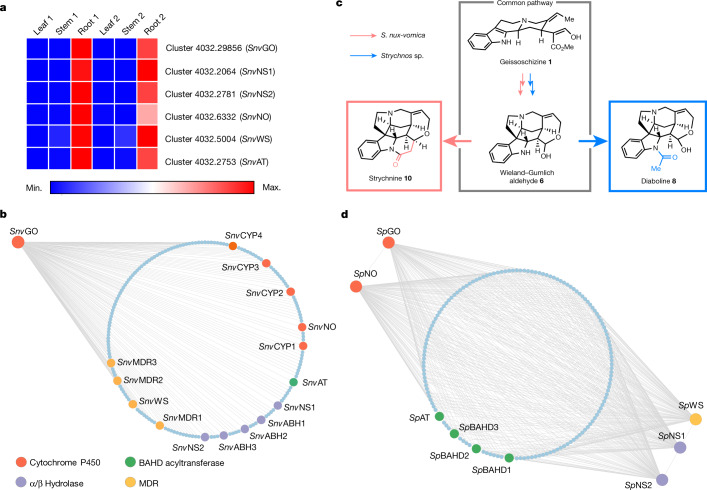
Fig. 2. Expression analysis of candidate genes in S. nux-vomica (strychnine producer) and Strychnos sp. (diaboline producer).
Both strychnine and diaboline are derived from the same biosynthetic intermediate, the Wieland–Gumlich aldehyde. a, Expression profiles of identified genes in S. nux-vomica. The expression of each identified gene is represented as the FPKM of S. nux-vomica transcriptomes. Sample sets 1 and 2 represent two biological replicates. b, Co-expression analysis using SnvGO as bait in S. nux-vomica. The circle of dots represents genes co-expressed with SnvGO (Pearson’s r ≥ 0.95; 470 genes in total). c, S. nux-vomica and Strychnos sp. share a common pathway from geissoszhizine 1 to Wieland–Gumlich aldehyde 6. d, Co-expression analysis in Strychnos sp. SpGO, SpNS1, SpNS2, SpNO and SpWS were used as baits. The circle depicts genes co-expressed with all the baits (r > 0.6; 3,999 genes in total). Enlarged and annotated dots in (b and d) represent genes tested in N. benthamiana. Source data
Fig. 3
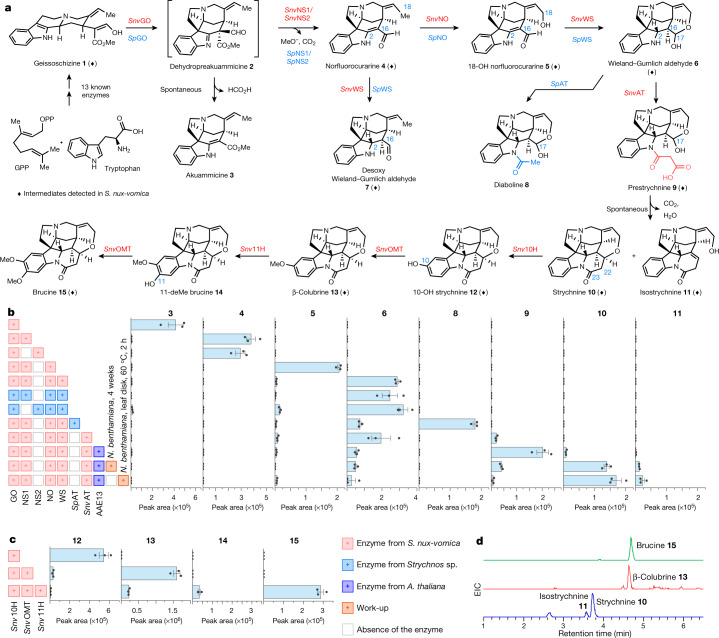
Fig. 3. Discovery of a diaboline, strychnine and brucine biosynthesis pathway.
a, The complete biosynthetic pathway leading to the production of diaboline 8, strychnine 10 and brucine 15. Diamonds represent intermediates detected in S. nux-vomica (Extended Data Fig. 10). b, The liquid chromatography–mass spectrometry peak area of products produced in N. benthamiana after expression of the indicated enzymes and geissoschizine 1 infiltration. Date are mean ± s.e.m.; n  =  3 biological replicates. c, The liquid chromatography–mass spectrometry peak area of products produced in N. benthamiana after expression of the indicated enzymes and strychnine 10 infiltration. Date are mean ± s.e.m.; n =  3 biological replicates. Work-up: manipulation after expression of the indicated enzymes and substrate infiltration. d, Extracted ion chromatograms (EIC) for strychnine 10, isostrychnine 11, β-colubrine 13 and brucine 15 in N. benthamiana leaves expressing all nine enzymes with the infiltration of geissoschizine 1 and disodium malonate. All intermediates were validated by comparison to synthetic authentic standards (see Supplementary Information for synthetic procedures). Source data
Extended Data Fig. 1
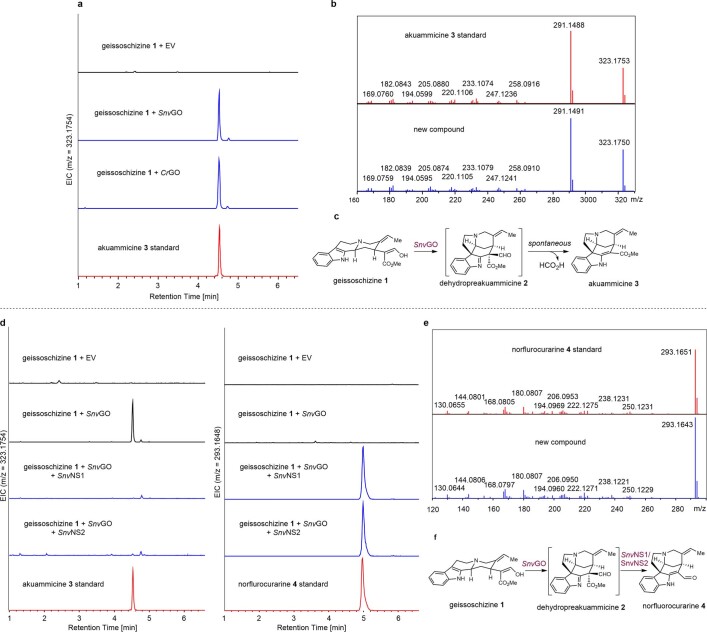
Extended Data Fig. 1. Functional characterization of SnvGO, SnvNS1 and SnvNS2.
a. Transient expression of SnvGO in N. benthamiana with co-infiltration of geissoschizine 1. Extracted ion chromatograms for akuammicine 3 (m/z [M+H]+ = 323.1754 ± 0.05). CrGO was used as a positive control. This experiment was repeated three times with similar results. b. MS/MS (20 to 50 eV) spectra of akuammicine 3 produced in N. benthamiana (blue) compared to standard (red). c. Reaction catalyzed by SnvGO. d. Transient expression of SnvGO, SnvNS1, and SnvNS2 in N. benthamiana with co-infiltration of geissoschizine 1. Extracted ion chromatograms for akuammicine 3 (m/z [M+H]+ = 323.1754 ± 0.05, left) and norflurocurarine 4 (m/z [M+H]+ = 293.1648 ± 0.05, right). This experiment was repeated three times with similar results. e. MS/MS (20 to 50 eV) spectra of norflurocurarine 4 produced in N. benthamiana (blue) compared to standard (red). f. Reaction catalyzed by SnvNS1 and SnvNS2. EV, empty vector.
Extended Data Fig. 2
Extended Data Fig. 2. Functional characterization of SnvNO.
a. Transient expression of SnvGO, SnvNS1, and SnvNO in N. benthamiana with co-infiltration of geissoschizine 1. Extracted ion chromatograms for norflurocurarine 4 (m/z [M+H]+ = 293.1648 ± 0.05, left) and 18-OH norflurocurarine 5 (m/z [M+H]+ = 309.1567 ± 0.05, right). This experiment was repeated three times with similar results. b. MS/MS (20 to 50 eV) spectra of 18-OH norflurocurarine 5 produced in N. benthamiana (blue) compared to standard (red). c. Reaction catalyzed by SnvNO.
Extended Data Fig. 3
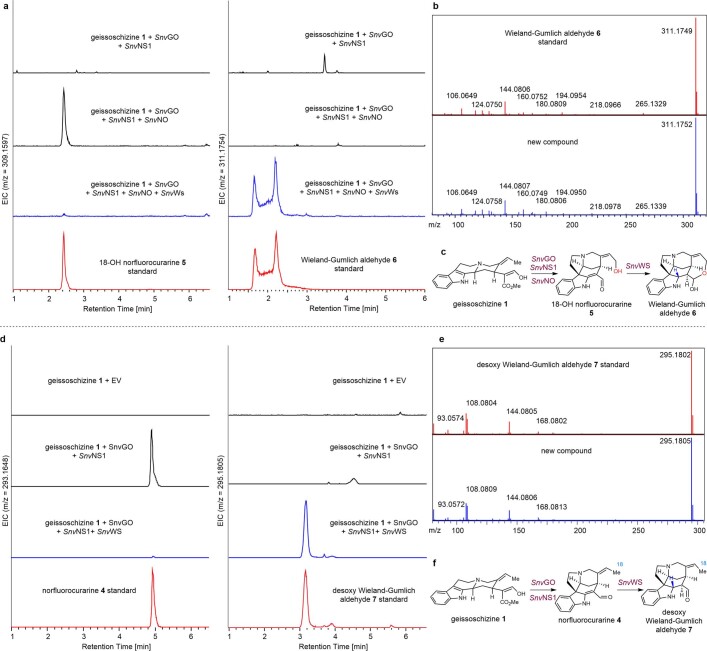
Extended Data Fig. 3. Functional characterization of SnvWS.
a. Transient expression of SnvGO, SnvNS1, SnvNO and SnvWS in N. benthamiana with co-infiltration of geissoschizine 1. Extracted ion chromatograms for 18-OH norflurocurarine 5 (m/z [M+H]+ = 309.1567 ± 0.05, left) and Wieland-Gumlich aldehyde 6 (m/z [M+H]+ = 311.1754 ± 0.05, right). The broad two peaks of Wieland-Gumlich aldehyde 6 in chromatogram due to the hemiacetal diastereomers. This experiment was repeated three times with similar results. b. MS/MS (20 to 50 eV) spectra of Wieland-Gumlich aldehyde 6 produced in N. benthamiana (blue) compared to synthetic standard (red). c. Reaction catalyzed by SnvGO, SnvNS1, SnvNO and SnvWS. d. Transient expression of SnvGO, SnvNS1, and SnvWS in N. benthamiana with co-infiltration of geissoschizine 1. Extracted ion chromatograms for norflurocurarine 4 (m/z [M+H]+ = 293.1648 ± 0.05, left) and desoxy Wieland-Gumlich aldehyde 7 (m/z [M+H]+ = 295.1805 ± 0.05, right). This experiment was repeated three times with similar results. e. MS/MS (20 to 50 eV) spectra of desoxy Wieland-Gumlich aldehyde 7 produced in N. benthamiana (blue) compared to synthetic standard (red). f. Reaction catalyzed by SnvGO, SnvNS1, and SnvWS.
Extended Data Fig. 4
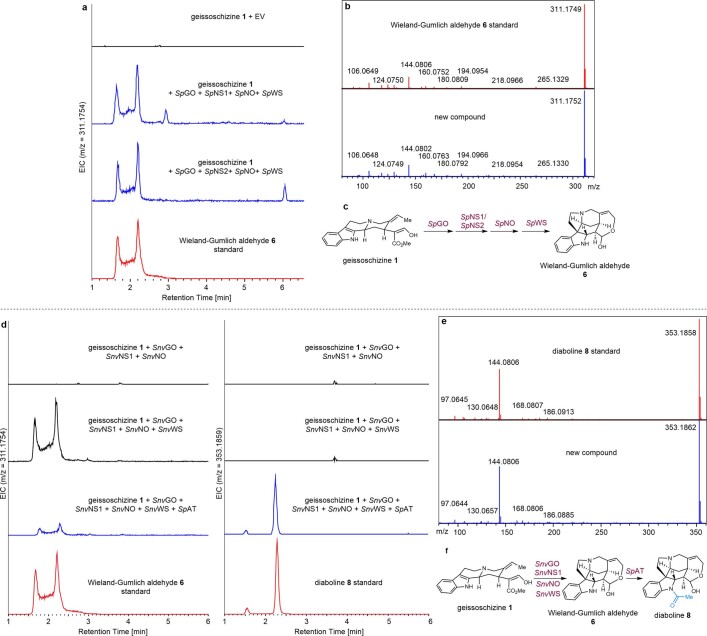
Extended Data Fig. 4. Functional characterization of SpGO, SpNS1, SpNS2, SpNO, SpWS and SpAT.
a. Transient expression of SpGO, SpNS1, SpNS2, SpNO, and SpWS in N. benthamiana with co-infiltration of geissoschizine 1. Extracted ion chromatograms for Wieland-Gumlich aldehyde 6 (m/z [M+H]+ = 311.1754 ± 0.05). This experiment was repeated three times with similar results. b. MS/MS (20 to 50 eV) spectra of Wieland-Gumlich aldehyde 6 produced in N. benthamiana (blue) compared to synthetic standard (red). c. Reaction catalyzed by SpGO, SpNS1, SpNS2, SpNO, and SpWS. d. Transient expression of SnvGO, SnvNS1, SnvNO, SnvWS and SpAT in N. benthamiana with co-infiltration of geissoschizine 1. Extracted ion chromatograms for Wieland-Gumlich aldehyde 6 (m/z [M+H]+ = 311.1754 ± 0.05, left) and diaboline 8 (m/z [M+H]+ = 353.1859 ± 0.05, right). The two peaks of diaboline 8 in chromatogram due to the hemiacetal diastereomers. This experiment was repeated three times with similar results. ‑e. MS/MS (20 to 50 eV) spectra of diaboline 8 produced in N. benthamiana (blue) compared to synthetic standard (red). f. Reaction catalyzed by SpAT.
Extended Data Fig. 5
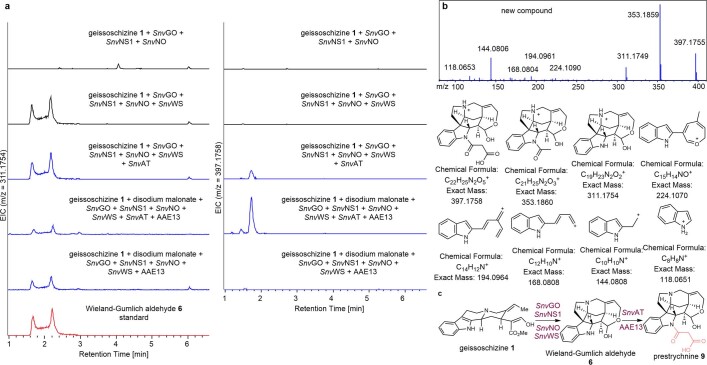
Extended Data Fig. 5. Functional characterization of SnvAT.
a. Transient expression of SnvGO, SnvNS1, SnvNO, SnvWS, SnvAT, and AAE13 in N. benthamiana with co-infiltration of geissoschizine 1 and disodium malonate. Extracted ion chromatograms for for Wieland-Gumlich aldehyde 6 (m/z [M+H]+ = 311.1754 ± 0.05, left) and prestrychnine 9 (m/z [M+H]+ = 397.1758 ± 0.05, right). The two peaks of 9 in chromatogram due to the hemiacetal diastereomers. This experiment was repeated three times with similar results. b. MS/MS (20 to 50 eV) spectra and putative ion fragments of generated m/z [M+H]+ 397.1758. c. Reaction catalyzed by SnvAT.
Extended Data Fig. 6
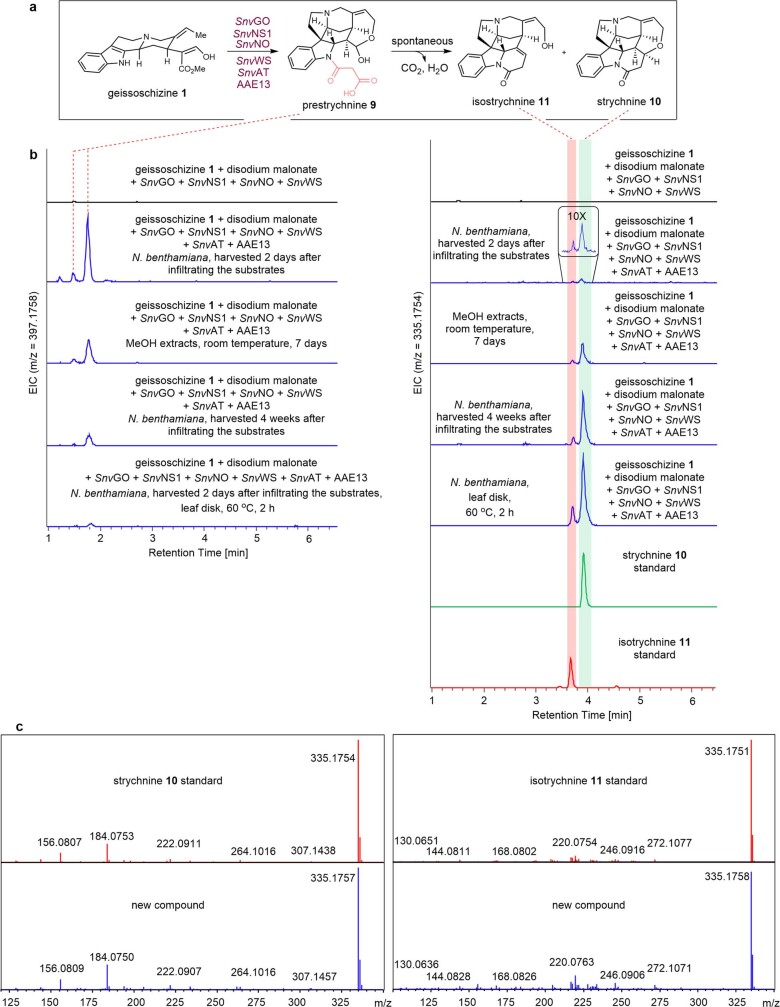
Extended Data Fig. 6. Conversion of prestrychnine 9 to strychnine 10 and isostrychnine 11.
a. Reaction of the conversion. b. Extracted ion chromatograms for prestrychnine 9 (m/z [M+H]+ = 397.1758 ± 0.05, left) and strychnine 10 and isostrychnine 11 (m/z [M+H]+ = 335.1754 ± 0.05, right). These experiments were repeated three times with similar results. c. MS/MS (20 to 50 eV) spectra of generated m/z [M+H]+ 335.1754 (strychnine 10 and isostrychnine 11, blue) compared to standards (red).
Extended Data Fig. 7
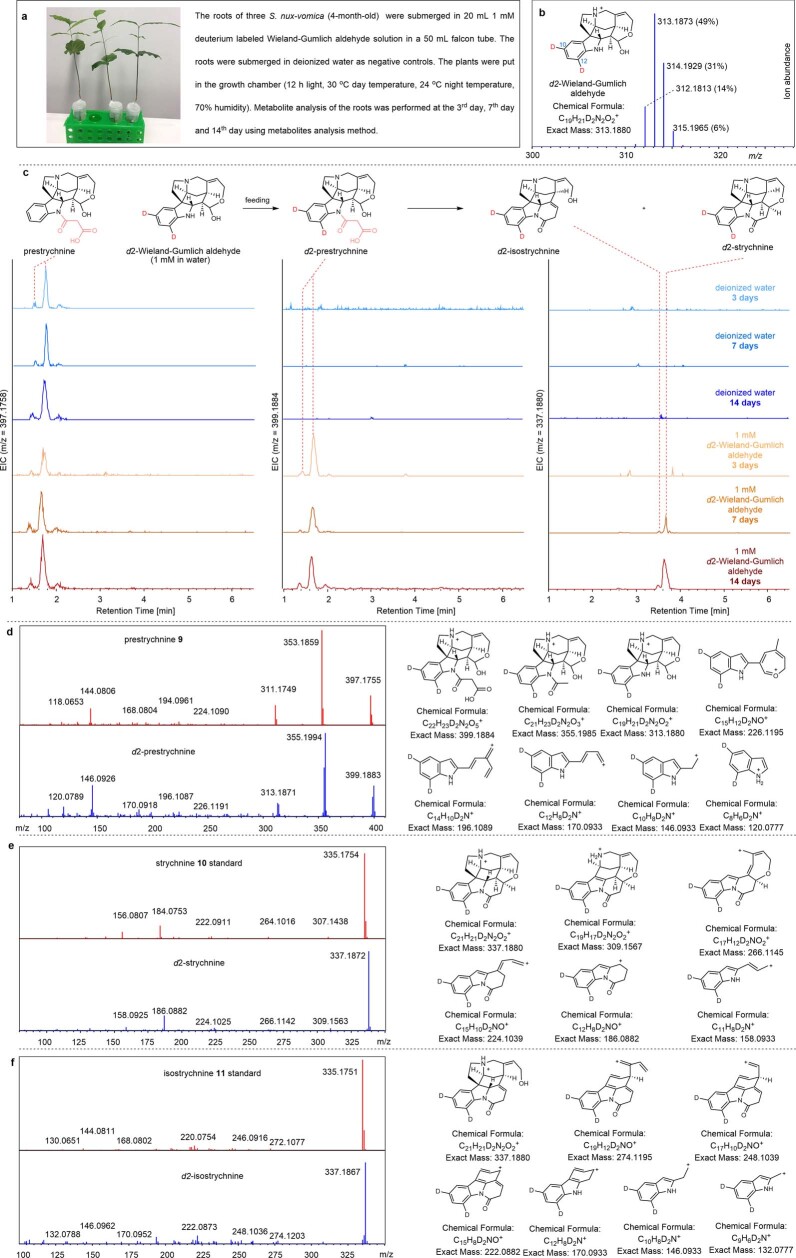
Extended Data Fig. 7. Hydroponic feedings to the roots of 4-month-old S. nux-vomica seedlings with deuterium labelled Wieland-Gumlich aldehyde.
a. Hydroponic feedings of S. nux-vomica in 50 mL falcon tube with 20 mL 1 mM deuterium labelled Wieland-Gumlich aldehyde. b. HRMS (ESI) [M+H]+ chromatogram of synthetic deuterium labelled Wieland-Gumlich aldehyde mixture. The major component (49%) is d2-Wieland-Gumlich aldehyde. c. Extracted ion chromatograms for prestrychnine 9 (m/z [M+H]+ = 397.1758 ± 0.005), d2-prestrychnine (m/z [M+H]+ = 399.1884 ± 0.005), d2-isostrychnine (m/z [M+H]+ = 337.1880 ± 0.005), d2-strychnine (m/z [M+H]+ = 337.1880 ± 0.005). d. MS/MS (20 to 50 eV) spectrum and putative ion fragments of generated d2-prestrychnine (m/z [M+H]+ = 399.1884, blue) compared to prestrychnine (m/z [M+H]+ = 397.1758, red). e. MS/MS (20 to 50 eV) spectra and putative ion fragments of generated d2-strychnine (m/z [M+H]+ = 337.1880, blue) compared to strychnine standard (m/z [M+H]+ = 335.1754, red). f. MS/MS (20 to 50 eV) spectra and putative ion fragments of generated d2-isostrychnine (m/z [M+H]+ = 337.1880, blue) compared to isostrychnine standard (m/z [M+H]+ = 335.1754, red). This experiment was repeated three times with similar results.
Extended Data Fig. 8
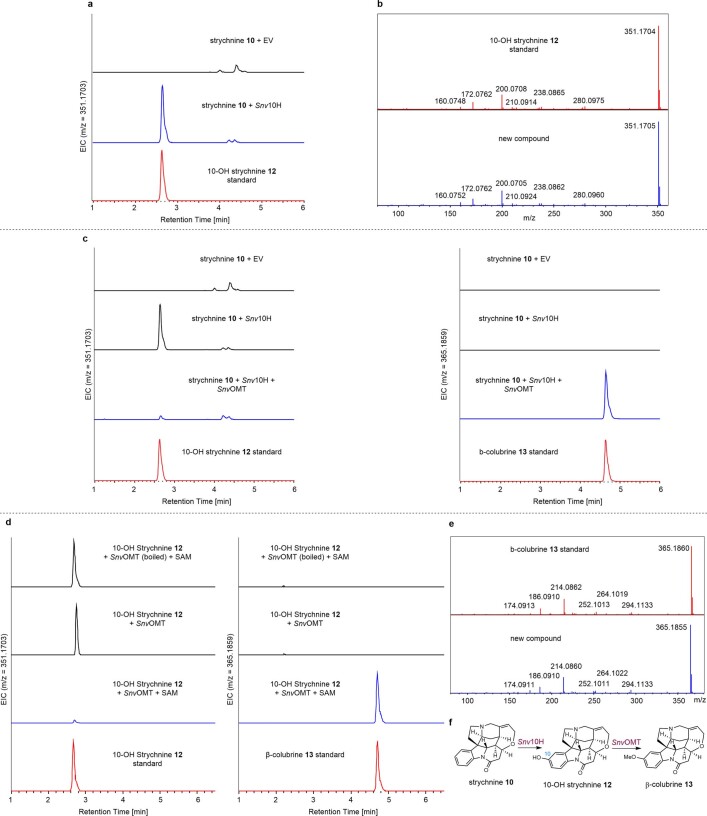
Extended Data Fig. 8. Functional characterization of Snv10H and SnvOMT.
a. Transient expression of Snv10H in N. benthamiana with co-infiltration of strychnine 10. Extracted ion chromatograms for 10-OH strychnine (m/z [M+H]+ = 351.1703 ± 0.05). This experiment was repeated three times with similar results. b. MS/MS (20 to 50 eV) spectra of 10-OH strychnine 12 produced in N. benthamiana (blue) compared to standard (red). c. Transient expression of Snv10H and SnvOMT in N. benthamiana with co-infiltration of strychnine 10. Extracted ion chromatograms for 10-OH strychnine (m/z [M+H]+ = 351.1703 ± 0.05, left) and β-colubrine 13 (m/z [M+H]+ = 365.1859 ± 0.05, right). This experiment was repeated three times with similar results. d. In vitro assays using purified SnvOMT from SoluBL21 E. coli with 10-OH strychnine 12. Extracted ion chromatograms for 10-OH strychnine (m/z [M+H]+ = 351.1703 ± 0.05, left) and β-colubrine 13 (m/z [M+H]+ = 365.1859 ± 0.05, right). This experiment was repeated more than three times with similar results. e. MS/MS (20 to 50 eV) spectra of β-colubrine 13 produced in N. benthamiana (blue) compared to standard (red). f. Reaction catalyzed by Snv10H and SnvOMT.
Extended Data Fig. 9
Extended Data Fig. 9. Functional characterization of Snv11H.
a. Reaction catalyzed by Snv11H and SnvOMT. b. Transient expression of Snv10H, SnvOMT, and Snv11H in N. benthamiana with co-infiltration of strychnine 10. Extracted ion chromatograms for β-colubrine 13 (m/z [M+H]+ = 365.1859 ± 0.05, left), 11-deMe brucine 14 (m/z [M+H]+ = 381.1808 ± 0.05, middle), and brucine 15 (m/z [M+H]+ = 395.1965 ± 0.05, right). This experiment was repeated three times with similar results. c. Transient expression of Snv11H in N. benthamiana with co-infiltration of β-colubrine 13. Extracted ion chromatograms for 11-deMe brucine 14 (m/z [M+H]+ = 381.1808 ± 0.05). This experiment was repeated three times with similar results. d. Transient expression of Snv11H and SnvOMT in N. benthamiana with co-infiltration of β-colubrine 13. Extracted ion chromatograms for 11-deMe brucine 14 (m/z [M+H]+ = 381.1808 ± 0.05, left) and brucine 15 (m/z [M+H]+ = 395.1965 ± 0.05, right). This experiment was repeated three times with similar results. e. Transient expression of SnvOMT in N. benthamiana with co-infiltration of 11-deMe brucine 14. Extracted ion chromatograms for brucine 15 (m/z [M+H]+ = 395.1965 ± 0.05). This experiment was repeated three times with similar results. f. In vitro assays using purified SnvOMT from SoluBL21 E. coli. Extracted ion chromatograms for 11-deMe brucine 14 (m/z [M+H]+ = 381.1808 ± 0.05, left) and brucine 15 (m/z [M+H]+ = 395.1965 ± 0.05, right). This experiment was repeated three times with similar results. g. MS/MS (20 to 50 eV) spectra of generated 11-deMe brucine 14 and brucine 15 (blue) compared to standards (red).
Extended Data Fig. 10
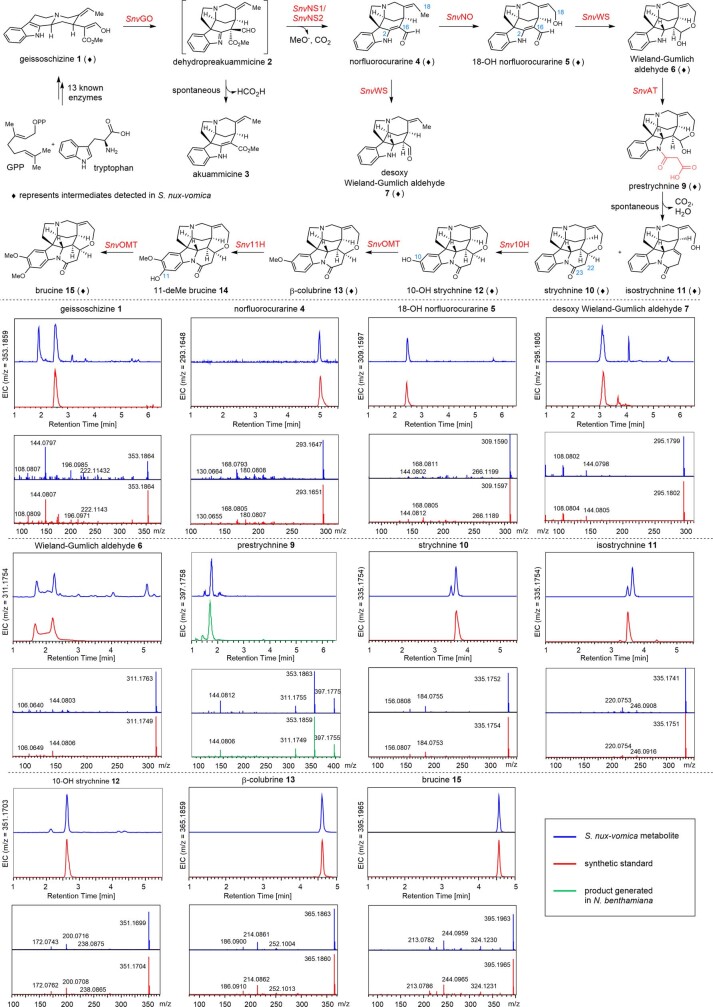
Extended Data Fig. 10. Comparison of S. nux-vomica metabolites to standards or enzymatic product generated in N. benthamiana transient expression.
Intermediates detected in methanolic extracts of S. nux-vomica roots (blue) were compared to standards (red) or products produced in N. benthamiana transient expression experiment (green) by retention time and MS/MS spectra.

References

    1. US EPA Strychnine. EPA-738-F-96-033 (1996); https://www3.epa.gov/pesticides/chem_search/reg_actions/reregistration/f...
    1. Valdes F, Orrego F. Strychnine inhibits the binding of glycine to rat brain-cortex membrane. Nature. 1970;226:761–762. doi: 10.1038/226761a0. - DOI - PubMed
    1. Huang X, Chen H, Michelsen K, Schneider S, Shaffer PL. Crystal structure of human glycine receptor-α3 bound to antagonist strychnine. Nature. 2015;526:277–280. doi: 10.1038/nature14972. - DOI - PubMed
    1. Cannon JS, Overman LE. Is there no end to the total syntheses of strychnine? Lessons learned in strategy and tactics in total synthesis. Angew. Chem. Int. Edn. 2012;51:4288–4311. doi: 10.1002/anie.201107385. - DOI - PMC - PubMed
    1. Pelletier PJ, Caventou JB. Note sur un nouvel alcali. Ann. Chim. Phys. 1818;8:323.

MeSH terms