


Current Status of Human Papillomavirus Infection and Cervical Cancer in the Philippines
- PMID: 35795639
- PMCID: PMC9251542
- DOI: 10.3389/fmed.2022.929062
Current Status of Human Papillomavirus Infection and Cervical Cancer in the Philippines
Abstract
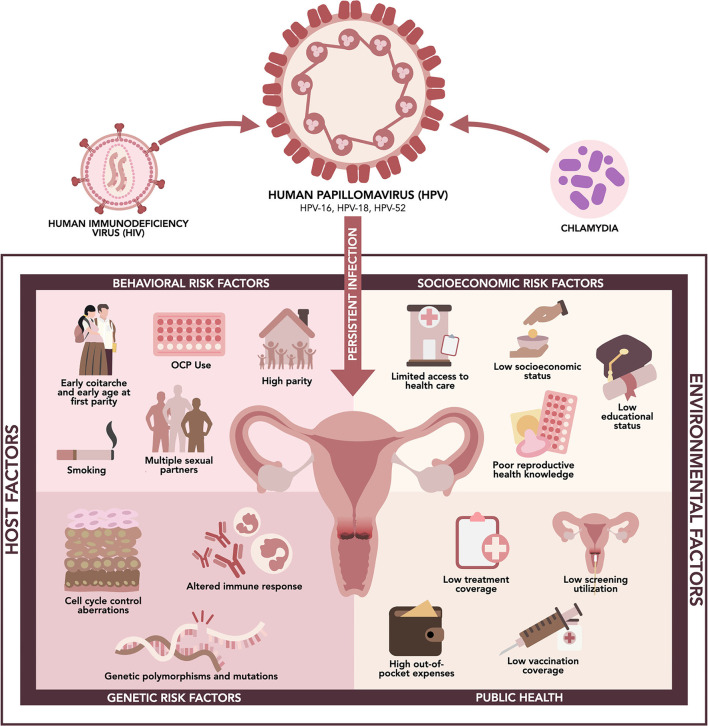
Cervical cancer is estimated to cause 341,831 deaths each year, with 9 of 10 deaths occurring in developing countries. Over the past decade, there has been a significant increase in cervical cancer incidence among women in the Philippines. Persistent infection with high-risk human papillomavirus (HPV) is the well-established necessary cause of cervical cancer. Based on limited studies conducted in the Philippines, the prevalence of infection with any HPV genotype was 93.8% for cervical squamous cell carcinoma and 90.9% for cervical adenocarcinomas. HPV types 16 and 18 were the most common HPV genotypes among Filipino patients with cervical cancer. On the other hand, the incidence of HPV infection among Filipino women with normal cervices was 9.2%. The World Health Organization has launched a global agenda of eliminating HPV infection by 2030. One of its key milestones is to vaccinate 90% of girls with the HPV vaccine by 15 years. However, the HPV vaccination rate among Filipino women remains to be unsatisfactory. HPV vaccination has only been included in the Philippine Department of Health's community-based National Immunization Program in 2015. Despite these efforts, the Philippines currently ranks last on HPV program coverage among low-middle income countries, with coverage of only 23% of the target female population for the first dose and 5% for the final dose. The principal reason for the non-acceptance of HPV vaccines was the perceived high cost of vaccination. The low utilization of available cervical cancer screening tests such as Pap smear and visual inspection with acetic acid hampered the Philippines' control and prevention of HPV infection and cervical cancer. Among those diagnosed with cervical cancer in the Philippines, only an estimated 50% to 60% receive some form of treatment. To this end, we summarize the burden of HPV infection and cervical cancer on Filipinos and the risk factors associated with the disease. We present the current screening, diagnostics, treatment, and prevention of HPV-related diseases in the Philippines. Lastly, we also propose solutions on how each building block in health systems can be improved to eliminate HPV infection and reduce the burden of cervical cancer in the Philippines.
Keywords: Philippines; cervical cancer; epidemiology; human papillomavirus; screening; treatment; vaccination.
Copyright © 2022 Lintao, Cando, Perias, Tantengco, Tabios, Velayo and de Paz-Silava.
Conflict of interest statement
The authors declare that the research was conducted in the absence of any commercial or financial relationships that could be construed as a potential conflict of interest.
Figures
References
-
- Bruni L, Albero G, Serrano B, Mena M, Collado JJ, Gomez D, et al. Human Papillomavirus and Related Diseases in the World. Barcelona, Spain: ICO/IARC Information Centre on HPV and Cancer (HPV Information Centre) (2021).
Publication types
LinkOut - more resources
Full Text Sources
Research Materials
Miscellaneous
