


Comparison of four handheld point-of-care ultrasound devices by expert users
- PMID: 35796842
- PMCID: PMC9263020
- DOI: 10.1186/s13089-022-00274-6
Comparison of four handheld point-of-care ultrasound devices by expert users
Abstract
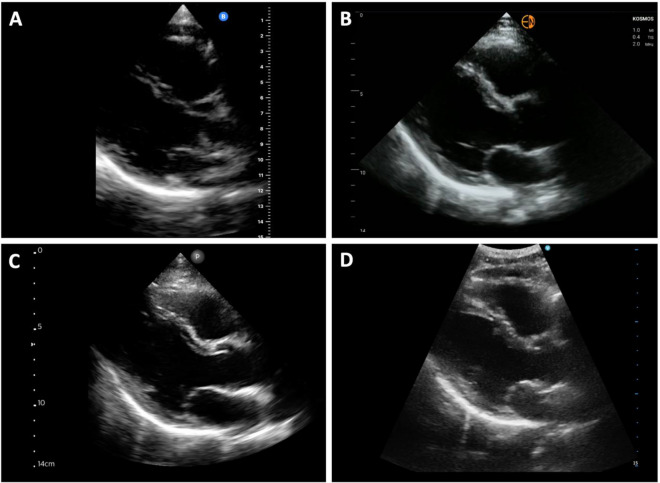
Background: Point-of-care ultrasound (POCUS) is rapidly becoming ubiquitous across healthcare specialties. This is due to several factors including its portability, immediacy of results to guide clinical decision-making, and lack of radiation exposure to patients. The recent growth of handheld ultrasound devices has improved access to ultrasound for many clinicians. Few studies have directly compared different handheld ultrasound devices among themselves or to cart-based ultrasound machines. We conducted a prospective observational study comparing four common handheld ultrasound devices for ease of use, image quality, and overall satisfaction. Twenty-four POCUS experts utilized four handheld devices (Butterfly iQ+™ by Butterfly Network Inc., Kosmos™ by EchoNous, Vscan Air™ by General Electric, and Lumify™ by Philips Healthcare) to obtain three ultrasound views on the same standardized patients using high- and low-frequency probes.
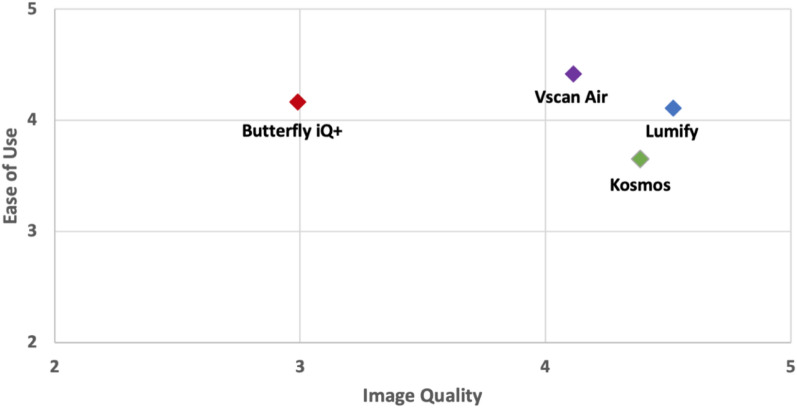
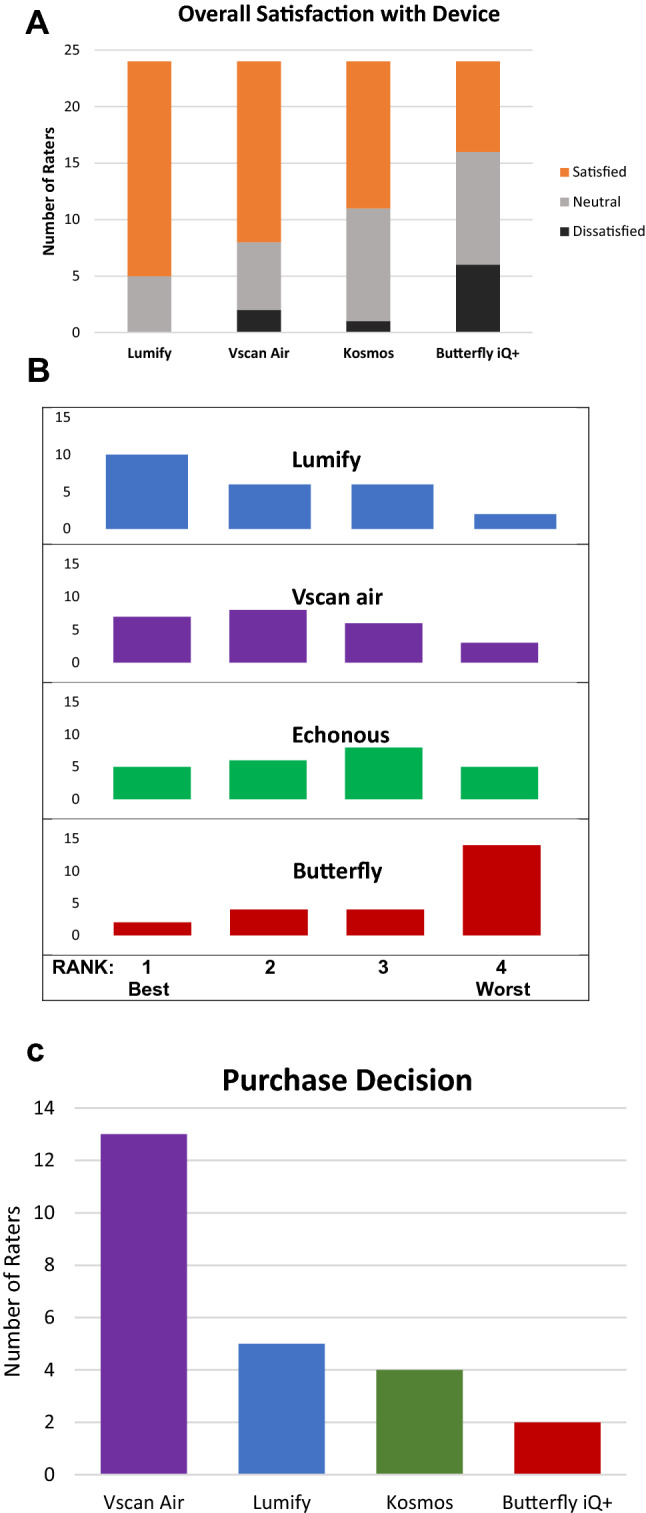
Results: Data were collected from 24 POCUS experts using all 4 handheld devices. No single ultrasound device was superior in all categories. For overall ease of use, the Vscan Air™ was rated highest, followed by the Lumify™. For overall image quality, Lumify™ was rated highest, followed by Kosmos™. The Lumify™ device was rated highest for overall satisfaction, while the Vscan Air™ was rated as the most likely to be purchased personally and carried in one's coat pocket. The top 5 characteristics of handheld ultrasound devices rated as being "very important" were image quality, ease of use, portability, total costs, and availability of different probes.
Conclusions: In a comparison of four common handheld ultrasound devices in the United States, no single handheld ultrasound device was perceived to have all desired characteristics. POCUS experts rated the Lumify™ highest for image quality and Vscan Air™ highest for ease of use. Overall satisfaction was highest with the Lumify™ device, while the most likely to be purchased as a pocket device was the Vscan Air™. Image quality was felt to be the most important characteristic in evaluating handheld ultrasound devices.
Keywords: Handheld ultrasound; POCUS; Point-of-care ultrasound; Portable ultrasound diagnostic imaging; Procedures.
© 2022. The Author(s).
Conflict of interest statement
Echonous, Philips, General Electric, and Butterfly Network, Inc. did not have any involvement in the development of this study, data review and analysis, writing of the manuscript, or any approval or decision making in the submission of this manuscript. None of the authors are or were in any contractual agreement with Echonous, Philips, General Electric, or Butterfly Network, Inc. regarding the study equipment (other than purchasing or loan agreements). None of the authors serve as speakers or consultants for any of the companies whose devices were included in this study. The authors did not receive any payment, support, or benefits from these companies for the present study or in the past. The Kosmos™ (Echonous), Lumify™ (Phillips), and Vscan Air™ (General Electric) ultrasound equipment were temporarily loaned from their respective companies at the request of one of our authors (NS). The Butterfly IQ+™ (Butterfly Network, Inc.) equipment was previously purchased by one of our authors (GJ) for personal use and temporarily loaned for this study. One of the authors (HS) has received loaned equipment with shipping from Butterfly Network, Inc. for an unrelated investigator-initiated study.
Figures
References
LinkOut - more resources
Full Text Sources
Other Literature Sources