Plant-Based and Ketogenic Diets As Diverging Paths to Address Cancer: A Review
- PMID: 35797039
- PMCID: PMC10184023
- DOI: 10.1001/jamaoncol.2022.1769
Plant-Based and Ketogenic Diets As Diverging Paths to Address Cancer: A Review
Abstract
Importance: As the incidence of cancer and metabolic disorders, such as obesity, concurrently rise, there has been increasing awareness of the pervasive effect of nutrition. The whole foods plant-based diet (WFPBD) and ketogenic diet (KD) have gained popularity in oncology, and this topic is increasingly permeating clinical dialogue.
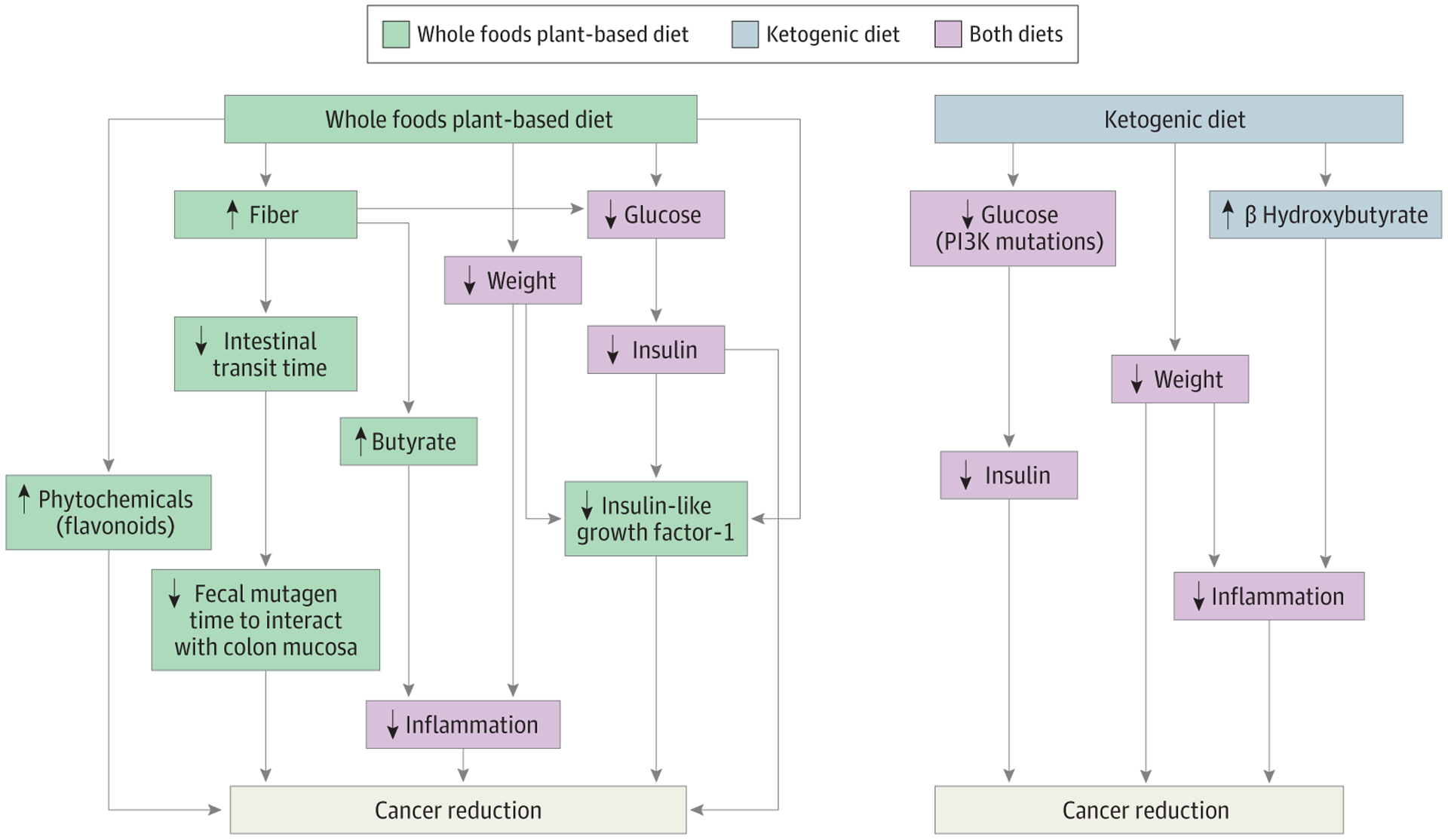
Observations: Dietary intake is associated with multiple pathways involved in carcinogenesis and tumor progression. Consumption of a plant-enriched diet is associated with reduced cancer incidence and is recommended by dietary guidelines for cancer prevention. Despite a starkly different nutrient composition, a WFPBD and KD can be associated with weight loss, decreased inflammation, and decreased insulin levels. In addition, a WFPBD is associated with increased fiber, phytochemicals, and butyrate levels and decreased insulin-like growth factor 1 levels, whereas a KD exerts potential anticancer effects by increasing β hydroxybutyrate levels. A KD may be of interest in select, less common settings, such as tumors treated with phosphatidylinositol 3-kinase inhibitors, which induce hyperinsulinemia and hyperglycemia. Completed interventional trials have focused on increasing fruit and vegetable intake or reducing fat intake but have not specifically tested WFPBD or KD for cancer prevention or treatment. Currently available data support plant-based diets as opposed to KD as part of a lifestyle associated with reduced cancer risk. In the postdiagnosis setting, there are currently no rigorously tested approaches that support the recommendation of any diet to treat cancer.
Conclusions and relevance: The results of this review suggest that the collective evidence supports plant-enriched diets vs KD for the reduction of cancer risk and the improvement of metabolic disorders in survivors. Additional prospective randomized clinical trials are needed to encourage use of dietary modification across the cancer continuum. Rigorous trial designs that adapt classical oncologic end points may identify populations that are likely to benefit from starkly contrasting diets. Current data support prioritization of plant-based diets, and future data could further personalize dietary recommendations in cancer populations.
Conflict of interest statement
Figures
References
-
- Key TJ, Appleby PN, Crowe FL, Bradbury KE, Schmidt JA, Travis RC. Cancer in British vegetarians: updated analyses of 4998 incident cancers in a cohort of 32,491 meat eaters, 8612 fish eaters, 18,298 vegetarians, and 2246 vegans. Am J Clin Nutr. 2014;100(suppl 1):378S–385S. doi: 10.3945/ajcn.113.071266 - DOI - PMC - PubMed
Publication types
MeSH terms
Substances
Grants and funding
LinkOut - more resources
Full Text Sources
Medical
Research Materials