Review
. 2022 Jul 7;7(1):218.
doi: 10.1038/s41392-022-01080-1.

Hypoxia signaling in human health and diseases: implications and prospects for therapeutics

Affiliations
Review

Hypoxia signaling in human health and diseases: implications and prospects for therapeutics

Zhen Luo et al. Signal Transduct Target Ther. .

Abstract

Molecular oxygen (O2) is essential for most biological reactions in mammalian cells. When the intracellular oxygen content decreases, it is called hypoxia. The process of hypoxia is linked to several biological processes, including pathogenic microbe infection, metabolic adaptation, cancer, acute and chronic diseases, and other stress responses. The mechanism underlying cells respond to oxygen changes to mediate subsequent signal response is the central question during hypoxia. Hypoxia-inducible factors (HIFs) sense hypoxia to regulate the expressions of a series of downstream genes expression, which participate in multiple processes including cell metabolism, cell growth/death, cell proliferation, glycolysis, immune response, microbe infection, tumorigenesis, and metastasis. Importantly, hypoxia signaling also interacts with other cellular pathways, such as phosphoinositide 3-kinase (PI3K)-mammalian target of rapamycin (mTOR) signaling, nuclear factor kappa-B (NF-κB) pathway, extracellular signal-regulated kinases (ERK) signaling, and endoplasmic reticulum (ER) stress. This paper systematically reviews the mechanisms of hypoxia signaling activation, the control of HIF signaling, and the function of HIF signaling in human health and diseases. In addition, the therapeutic targets involved in HIF signaling to balance health and diseases are summarized and highlighted, which would provide novel strategies for the design and development of therapeutic drugs.


Conflict of interest statement

The authors declare no competing interests.

Figures
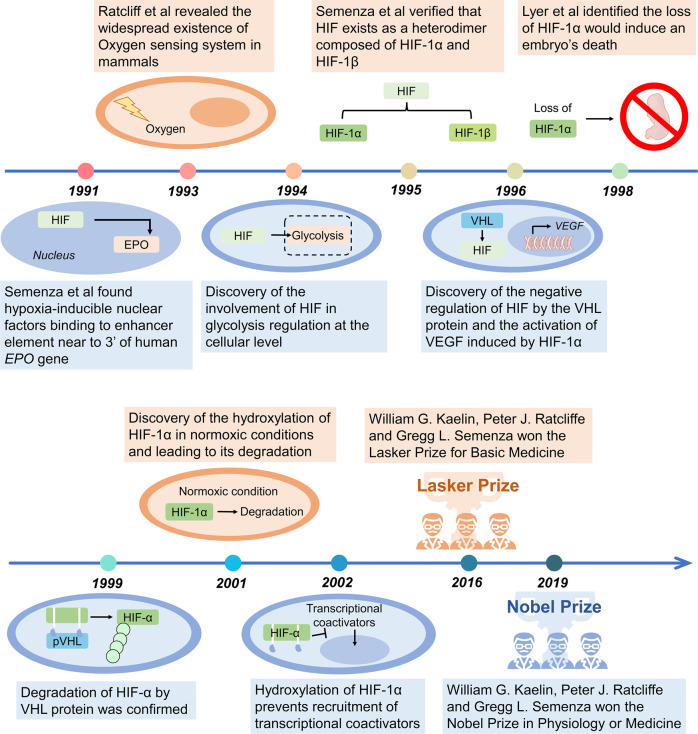
Fig. 1
Fig. 1
History and events of the studies on hypoxia signaling. A glance of the discoverty and advance of the knownlegment of hypoxia signaling started from 1991. In 2019, the Nobel Prize in Physiology and Medicine was awarded for the discovery of cellular mechanisms for oxygen sensing in animals
Fig. 2
Fig. 2
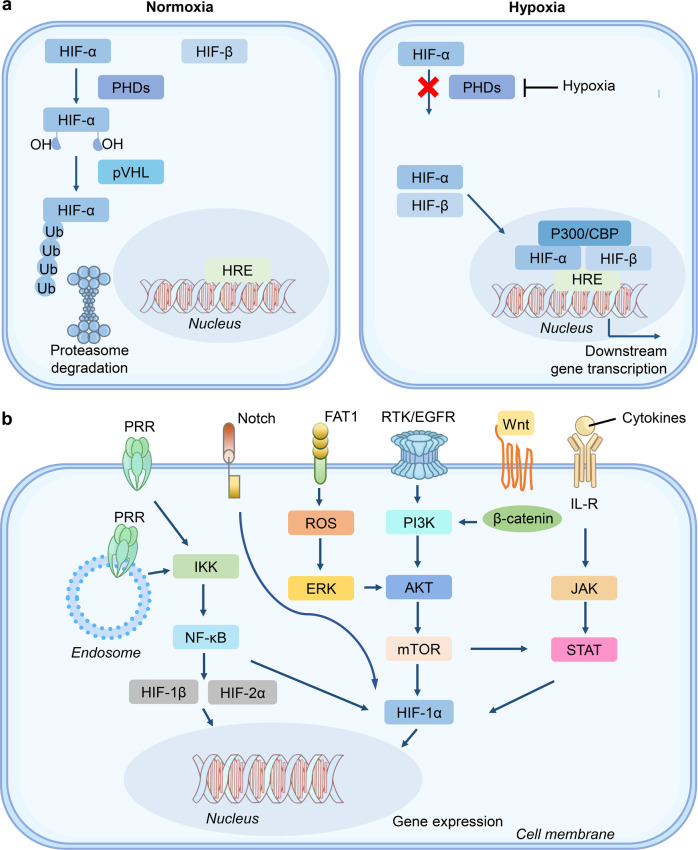
The underlying principles of hypoxia and cross-talk of HIF signal with multiple pathways. a Under normoxia, HIFs (α and β subunits) undergo ubiquitination mediated by PHDs (oxygen-dependent proline hydroxylase family) and pVHL (von Hippel–Lindau tumor suppressor protein). The enzymatic activity PHD is prohibited under hypoxia. HIFs are stabilized to promote downstream genes transcription. b The interaction among HIF signal with multiple signaling pathways
Fig. 3
Fig. 3
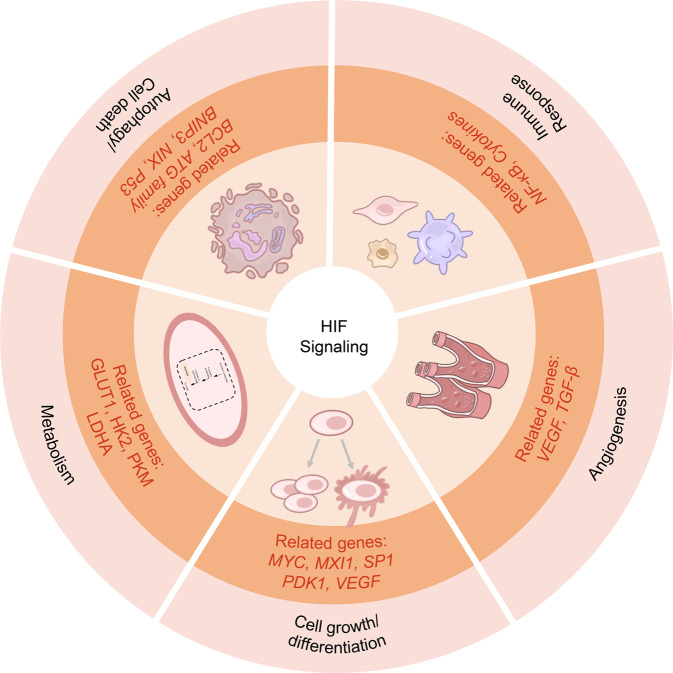
Biological functions of hypoxia signaling. Hypoxia signaling companied with the related genes participates in multiple biological processes
Fig. 4
Fig. 4
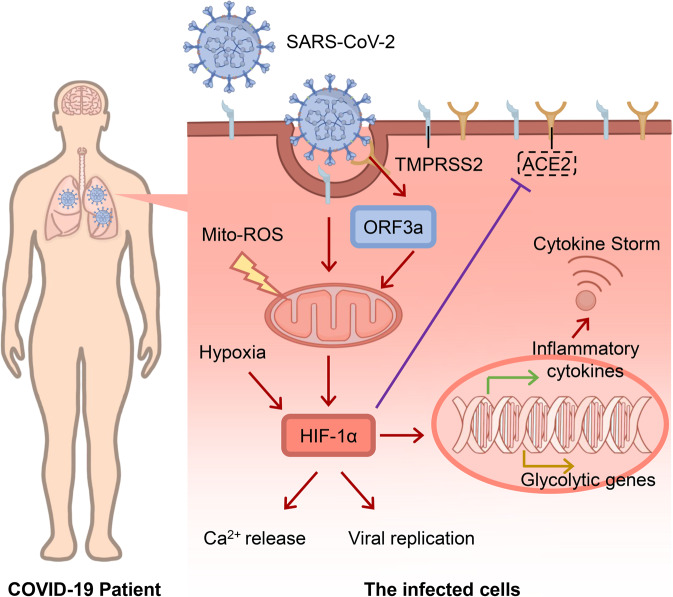
Role of HIF-1α in hypixa signaling in COVID-19. When SARS-CoV-2 entering host cells, viral ORF3a protein induces HIF-1α expression through triggering mitochondrial reactive oxygen species (ROS) activation. The accumulated HIF-1α stimulates Ca2+ release, promotes viral replication and enhances glycolytic and inflammatory genes, which leads to a cytokine storm
Fig. 5
Fig. 5
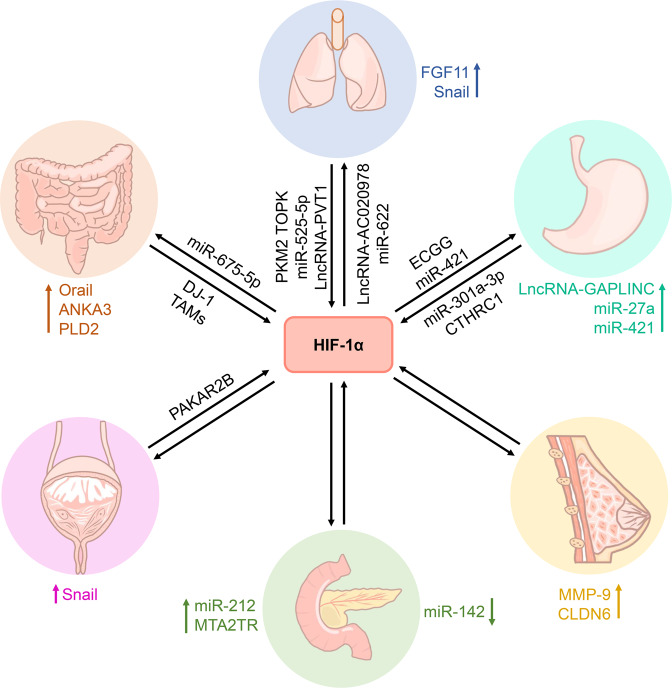
Summarized paticipation of HIF-1α in the tumorgenesis. The roles of HIF-1α in various kinds of human cancer. The tumorgenesis arises by the regulation of HIF-1α with intermediator and effectors such as indicated protein, miRNAs, or lncRNAs
Fig. 6
Fig. 6
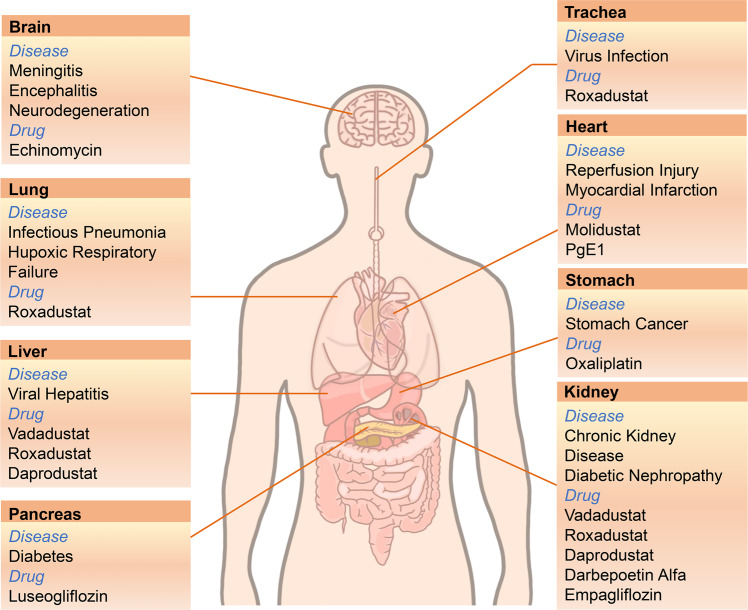
Developed drugs targeting hypoxia signaling in human diseases. The main human diseases in different organs are displayed with the according the developed drugs targeting hypoxia signaling
Fig. 7
Fig. 7
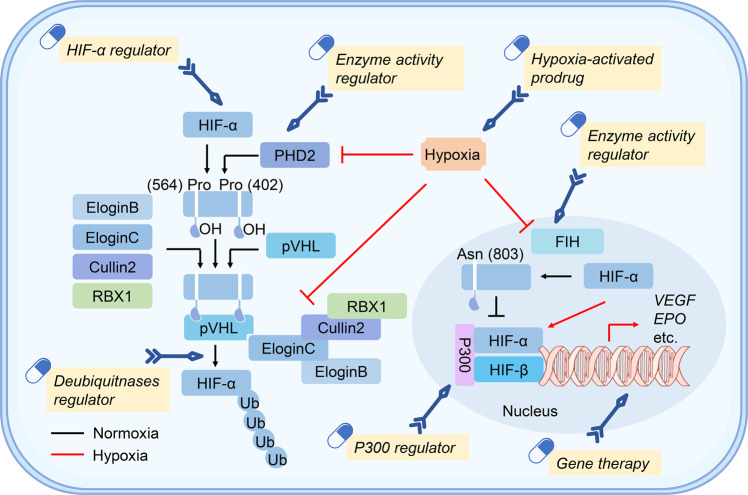
The principle of therapeutics targeting hypoxia signaling. The stratigies of therapeutics targeting hypoxia signaling are classified in (1) HIF-1α regulator; (2) Enzyme activity regulator; (3) deubiquinases regulator; (4) hypoxia-activated prodrug; and (5) P300 regulator

References

    1. Lee P, Chandel NS, Simon MC. Cellular adaptation to hypoxia through hypoxia inducible factors and beyond. Nat. Rev. Mol. Cell Biol. 2020;21:268–283. doi: 10.1038/s41580-020-0227-y. - DOI - PMC - PubMed
    1. Nakazawa MS, Keith B, Simon MC. Oxygen availability and metabolic adaptations. Nat. Rev. Cancer. 2016;16:663–673. doi: 10.1038/nrc.2016.84. - DOI - PMC - PubMed
    1. Ratcliffe PJ. Oxygen sensing and hypoxia signalling pathways in animals: the implications of physiology for cancer. J. Physiol. 2013;591:2027–2042. doi: 10.1113/jphysiol.2013.251470. - DOI - PMC - PubMed
    1. Bruick RK. Oxygen sensing in the hypoxic response pathway: regulation of the hypoxia-inducible transcription factor. Genes Dev. 2003;17:2614–2623. doi: 10.1101/gad.1145503. - DOI - PubMed
    1. Harris AL. Hypoxia-a key regulatory factor in tumour growth. Nat. Rev. Cancer. 2002;2:38–47. doi: 10.1038/nrc704. - DOI - PubMed

Publication types