


Contraceptive uptake and associated factors among women in the immediate postpartum period at Kawempe Hospital
- PMID: 35799181
- PMCID: PMC9261026
- DOI: 10.1186/s12905-022-01856-1
Contraceptive uptake and associated factors among women in the immediate postpartum period at Kawempe Hospital
Abstract
Introduction: Within Africa, contraceptive use is low although about 214 million women who are not using contraception want to avoid pregnancy. In Uganda, modern contraceptive uptake is at 35% resulting in unwanted or unplanned pregnancies which may increase morbidity and mortality among children and mothers. Contraceptive uptake at 6 weeks postpartum is encouraged but it is not very effective since there is low attendance during this visit. Additionally, some women may have become sexually active by the visit at 6 weeks postpartum leading to early conception.
Objectives: This study sought to determine contraceptive uptake in the immediate postpartum period and the associated factors among women delivering at Kawempe Hospital.
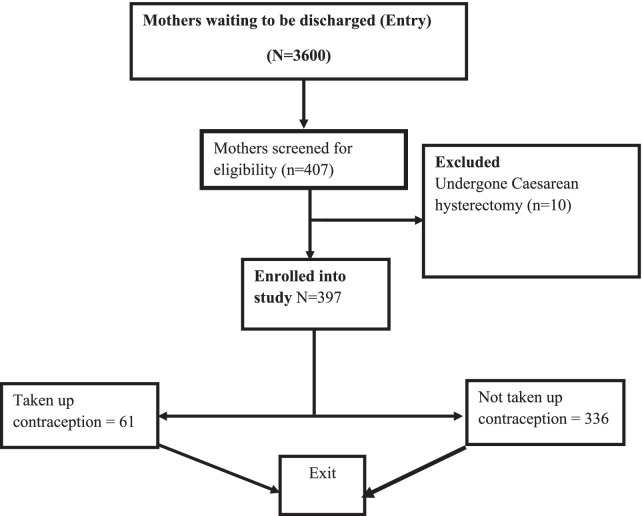
Methods: This study employed a cross-sectional study design where 397 women aged 18-49 years were recruited using systematic random sampling. The women who were discharged within 72 h after delivery were considered. Data collection was done using an interviewer-administered data collection tool. Data was double entered into EpiData version 4.2 and analyzed using STATA version 13 at univariate using descriptive statistics then at bivariate and multivariate levels using logistic regression with contraceptive uptake as the outcome.
Results: We enrolled 397 participants. Their mean age range was 18-45 years and a median of 25 years (IQR 22, 30). The majority of the participants, 333 (83.88%), were married and 177 (44.58%) were housewives or unemployed. Contraceptive uptake in the immediate postpartum period among these participants was 15.4% (61/397). The factors independently associated with immediate postpartum contraceptive uptake were grand multiparity (aOR = 2.57; 95% CI 1.11-5.95; p = 0.028), cesarean delivery (aOR = 2.63; 95% CI 1.24-5.57; p = 0.011), and prior contraceptive counseling during Antenatal (aOR = 9.05; 95% CI 2.65-30.93; p = < 0.001).
Conclusion: There was a 15.4% contraceptive uptake among immediate postpartum women which is very low. The factors independently associated with immediate postpartum contraceptive uptake were grand multiparity, cesarean section, and prior contraceptive counseling during antenatal care. Efforts need to be made to improve contraceptive uptake among immediate postpartum mothers such that the high unmet need for contraception is reduced and short inter-pregnancy intervals are controlled.
Keywords: Contraceptive uptake; Family planning; Immediate postpartum period; Women.
© 2022. The Author(s).
Conflict of interest statement
The authors declare that they have no competing interests.
Figures
References
-
- UN . Trend in contraceptive use worldwide 2015. New York: United Nations; 2015.
-
- WHO. Postpartum family planning: essential for ensuring health of women and their babies. 2018. Cited 18 Sept 2019. https://www.who.int/reproductivehealth/topics/family_planning/world-cont....
-
- UBOS and ICF. Uganda demographic and health survey 2016: key indicators report. 2017. Kampala, Uganda: UBOS, and Rockville, Maryland, USA: UBOS and ICF.
-
- Bakamjian L. Programming strategies for postpartum family planning. 2013.
MeSH terms
Substances
LinkOut - more resources
Full Text Sources
