


Blueprints for measuring natural behavior
- PMID: 35800771
- PMCID: PMC9254349
- DOI: 10.1016/j.isci.2022.104635
Blueprints for measuring natural behavior
Abstract
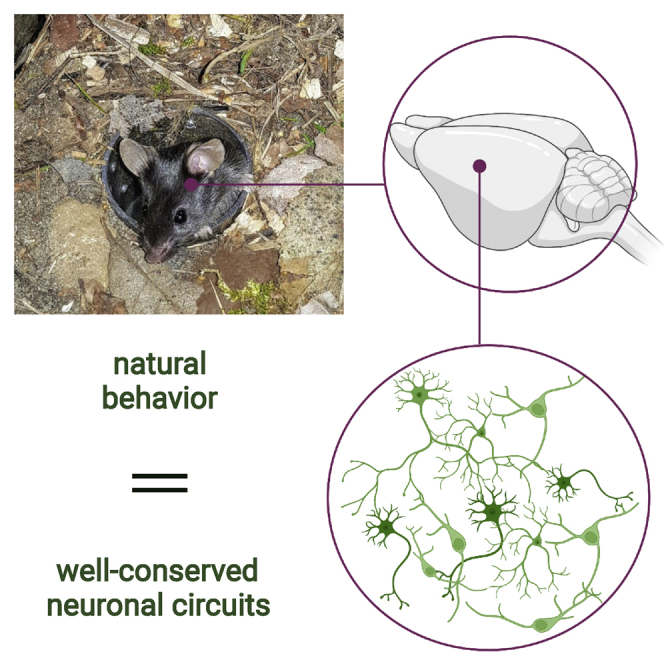
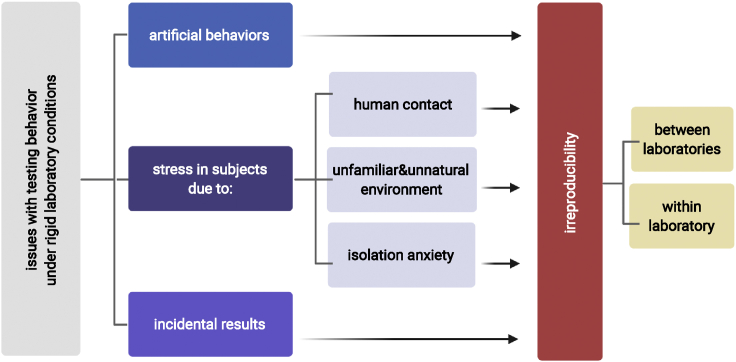
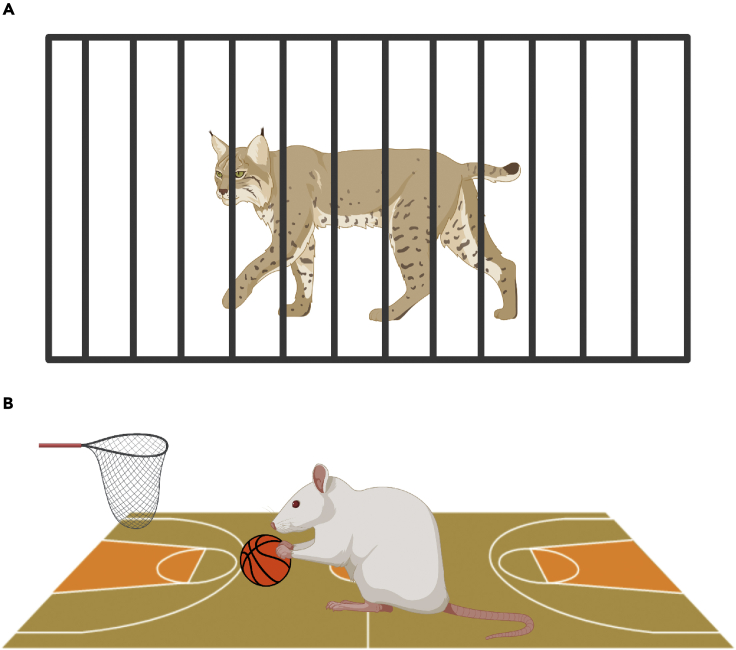
Until recently laboratory tasks for studying behavior were highly artificial, simplified, and designed without consideration for the environmental or social context. Although such an approach offers good control over behavior, it does not allow for researching either voluntary responses or individual differences. Importantly for neuroscience studies, the activity of the neural circuits involved in producing unnatural, artificial behavior is variable and hard to predict. In addition, different ensembles may be activated depending on the strategy the animal adopts to deal with the spurious problem. Thus, artificial and simplified tasks based on responses, which do not occur spontaneously entail problems with modeling behavioral impairments and underlying brain deficits. To develop valid models of human disorders we need to test spontaneous behaviors consistently engaging well-defined, evolutionarily conserved neuronal circuits. Such research focuses on behavioral patterns relevant for surviving and thriving under varying environmental conditions, which also enable high reproducibility across different testing settings.
Keywords: Behavioral neuroscience; Biological sciences; Neuroscience.
© 2022 The Authors.
Conflict of interest statement
The authors declare no competing financial interests in relation to the work described.
Figures
References
-
- Alboni S., van Dijk R.M., Poggini S., Milior G., Perrotta M., Drenth T., Brunello N., Wolfer D.P., Limatola C., Amrein I., et al. Fluoxetine effects on molecular, cellular and behavioral endophenotypes of depression are driven by the living environment. Mol. Psychiatry. 2017;22:552–561. doi: 10.1038/mp.2015.142. - DOI - PMC - PubMed
Publication types
LinkOut - more resources
Full Text Sources
