


A narrative review on sacubitril/valsartan and ventricular arrhythmias
- PMID: 35801732
- PMCID: PMC9259167
- DOI: 10.1097/MD.0000000000029456
A narrative review on sacubitril/valsartan and ventricular arrhythmias
Abstract
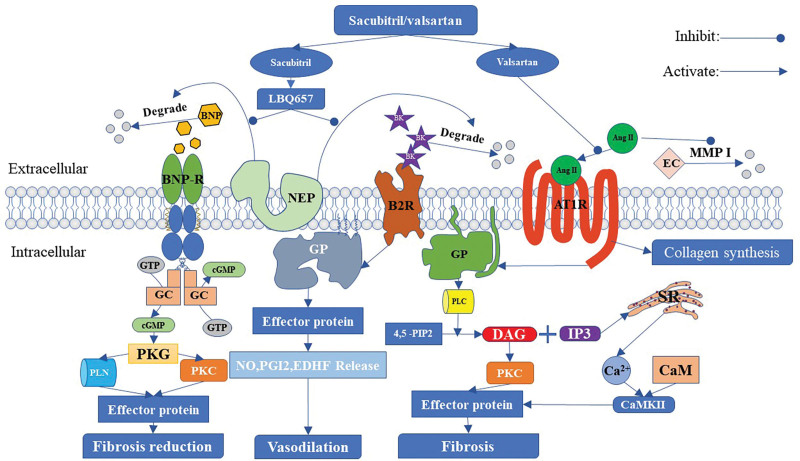
Sacubitril/valsartan, the first angiotensin receptor neprilysin inhibitor approved by the Food and Drug Administration for marketing, has been shown to reduce the risk of cardiovascular death or heart failure hospitalization and improve symptoms in patients with chronic heart failure with a reduced ejection fraction. However, some researchers have also found that sacubitril/valsartan has an antiarrhythmic effect. The mechanism by which sacubitril/valsartan reduces the mortality associated with malignant ventricular arrhythmias is not precise. Many studies have concluded that ventricular arrhythmia is associated with a reduction in myocardial fibrosis. This article reviews the current understanding of the effects of sacubitril/valsartan on the reduction of ventricular arrhythmia and explains its possible mechanisms. The results of this study suggest that sacubitril/valsartan reduces the occurrence of appropriate implantable cardioverter-defibrillator shocks. Meanwhile, sacubitril/valsartan may reduce the occurrence of ventricular arrhythmias by affecting 3 pathways of B-type natriuretic peptide, Angiotensin II, and Bradykinin. The conclusion of this study is that sacubitril/valsartan reduces the number of implantable cardioverter-defibrillator shocks and ventricular arrhythmias in heart failure with reduced ejection fraction patients.
Copyright © 2022 the Author(s). Published by Wolters Kluwer Health, Inc.
Conflict of interest statement
The authors have no conflicts of interest to disclose.
Figures
References
-
- Gu J, Noe A, Chandra P, et al. . Pharmacokinetics and pharmacodynamics of LCZ696, a novel dual-acting angiotensin receptor-neprilysin inhibitor (ARNi). J Clin Pharmacol. 2010;50:401–14. - PubMed
-
- McMurray JJ, Packer M, Desai AS, et al. . Dual angiotensin receptor and neprilysin inhibition as an alternative to angiotensin-converting enzyme inhibition in patients with chronic systolic heart failure: rationale for and design of the prospective comparison of ARNI with ACEI to determine impact on global mortality and morbidity in heart failure trial (PARADIGM-HF). Eur J Heart Fail. 2013;15:1062–73. - PMC - PubMed
-
- McMurray JJ, Packer M, Desai AS, et al. . Angiotensin-neprilysin inhibition versus enalapril in heart failure. N Engl J Med. 2014;371:993–1004. - PubMed
-
- Jhund PS, Claggett B, Packer M, et al. . Independence of the blood pressure lowering effect and efficacy of the angiotensin receptor neprilysin inhibitor, LCZ696, in patients with heart failure with preserved ejection fraction: an analysis of the PARAMOUNT trial. Eur J Heart Fail. 2014;16:671–7. - PubMed
-
- Sarrias A, Bayes-Genis A. Is sacubitril/valsartan (also) an antiarrhythmic drug? Circulation. 2018;138:551–3. - PubMed
Publication types
MeSH terms
Substances
LinkOut - more resources
Full Text Sources
Medical
