


Soil Microbial Community Composition and Tolerance to Contaminants in an Urban Brownfield Site
- PMID: 35802172
- PMCID: PMC10156844
- DOI: 10.1007/s00248-022-02061-1
Soil Microbial Community Composition and Tolerance to Contaminants in an Urban Brownfield Site
Abstract
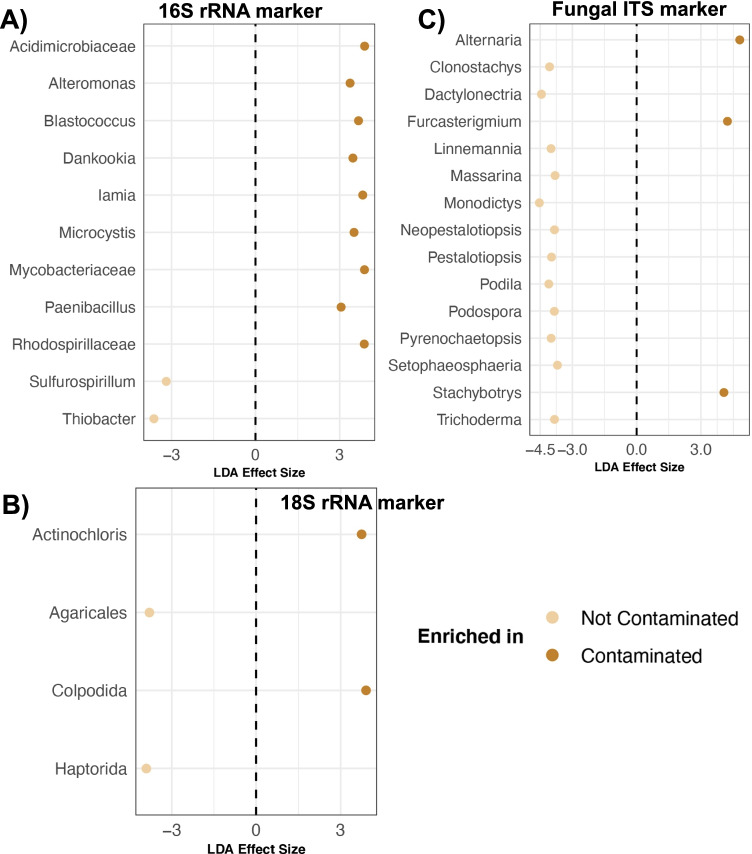
Brownfields are unused sites that contain hazardous substances due to previous commercial or industrial use. The sites are inhospitable for many organisms, but some fungi and microbes can tolerate and thrive in the nutrient-depleted and contaminated soils. However, few studies have characterized the impacts of long-term contamination on soil microbiome composition and diversity at brownfields. This study focuses on an urban brownfield-a former rail yard in Los Angeles that is contaminated with heavy metals, volatile organic compounds, and petroleum-derived pollutants. We anticipate that heavy metals and organic pollutants will shape soil microbiome diversity and that several candidate fungi and bacteria will be tolerant to the contaminants. We sequence three gene markers (16S ribosomal RNA, 18S ribosomal RNA, and the fungal internal transcribed spacer (FITS)) in 55 soil samples collected at five depths to (1) profile the composition of the soil microbiome across depths; (2) determine the extent to which hazardous chemicals predict microbiome variation; and (3) identify microbial taxonomic groups that may metabolize these contaminants. Detected contaminants in the samples included heavy metals, petroleum hydrocarbons, polycyclic aromatic hydrocarbons, and volatile organic compounds. Bacterial, eukaryotic, and fungal communities all varied with depth and with concentrations of arsenic, chromium, cobalt, and lead. 18S rRNA microbiome richness and fungal richness were positively correlated with lead and cobalt levels, respectively. Furthermore, bacterial Paenibacillus and Iamia, eukaryotic Actinochloris, and fungal Alternaria were enriched in contaminated soils compared to uncontaminated soils and represent taxa of interest for future bioremediation research. Based on our results, we recommend incorporating DNA-based multi-marker microbial community profiling at multiple sites and depths in brownfield site assessment standard methods and restoration.
Keywords: 16S rRNA; 18S rRNA; Brownfields; Contamination; Heavy metals; ITS; Soil microbiome; eDNA.
© 2022. The Author(s).
Figures
References
-
- US EPA O (2014) Overview of EPA’s Brownfields Program. In: US EPA. https://www.epa.gov/brownfields/overview-epas-brownfields-program. Accessed 28 May 2021
-
- Jones P, Comfort D (2021) Ecosystem services and brownfield land. Town and Country Planning 90:344–348. https://eprints.glos.ac.uk/id/eprint/10343
-
- Kolosz BW, Athanasiadis IN, Cadisch G, et al. Conceptual advancement of socio-ecological modelling of ecosystem services for re-evaluating brownfield land. Ecosyst Serv. 2018;33:29–39. doi: 10.1016/j.ecoser.2018.08.003. - DOI
MeSH terms
Substances
Grants and funding
LinkOut - more resources
Full Text Sources
