Review
. 2022 Jun 24;23(13):7027.
doi: 10.3390/ijms23137027.

Human Protein Tyrosine Phosphatase 1B (PTP1B): From Structure to Clinical Inhibitor Perspectives

Affiliations
Review

Human Protein Tyrosine Phosphatase 1B (PTP1B): From Structure to Clinical Inhibitor Perspectives

Rongxing Liu et al. Int J Mol Sci. .

Abstract

Phosphorylation is an essential process in biological events and is considered critical for biological functions. In tissues, protein phosphorylation mainly occurs on tyrosine (Tyr), serine (Ser) and threonine (Thr) residues. The balance between phosphorylation and dephosphorylation is under the control of two super enzyme families, protein kinases (PKs) and protein phosphatases (PPs), respectively. Although there are many selective and effective drugs targeting phosphokinases, developing drugs targeting phosphatases is challenging. PTP1B, one of the most central protein tyrosine phosphatases (PTPs), is a key player in several human diseases and disorders, such as diabetes, obesity, and hematopoietic malignancies, through modulation of different signaling pathways. However, due to high conservation among PTPs, most PTP1B inhibitors lack specificity, raising the need to develop new strategies targeting this enzyme. In this mini-review, we summarize three classes of PTP1B inhibitors with different mechanisms: (1) targeting multiple aryl-phosphorylation sites including the catalytic site of PTP1B; (2) targeting allosteric sites of PTP1B; (3) targeting specific mRNA sequence of PTP1B. All three types of PTP1B inhibitors present good specificity over other PTPs and are promising for the development of efficient small molecules targeting this enzyme.

Keywords: PTP1B; challenge; crystal structure; inhibitors; specificity.


Conflict of interest statement

The authors declare no conflict of interest.

Figures
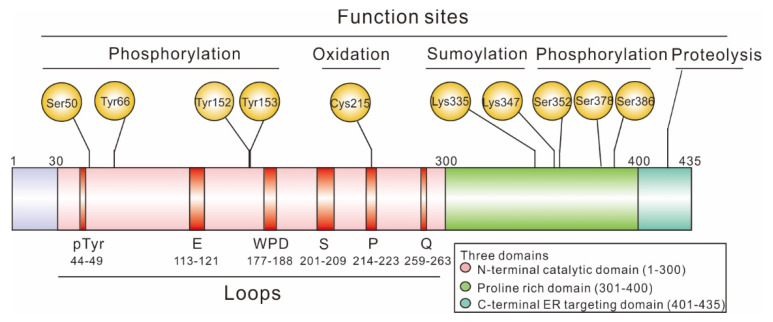
Figure 1
Figure 1
Schematic representation of the domain structures of PTP1B full length. Full-length PTP1B is composed of an N-terminal catalytic domain containing several important loops (1–300) and C-terminal ER targeting domain (401–435), flanking two proline-rich domains (301–400), with multiple functions at different sites of PTP1B.
Figure 2
Figure 2
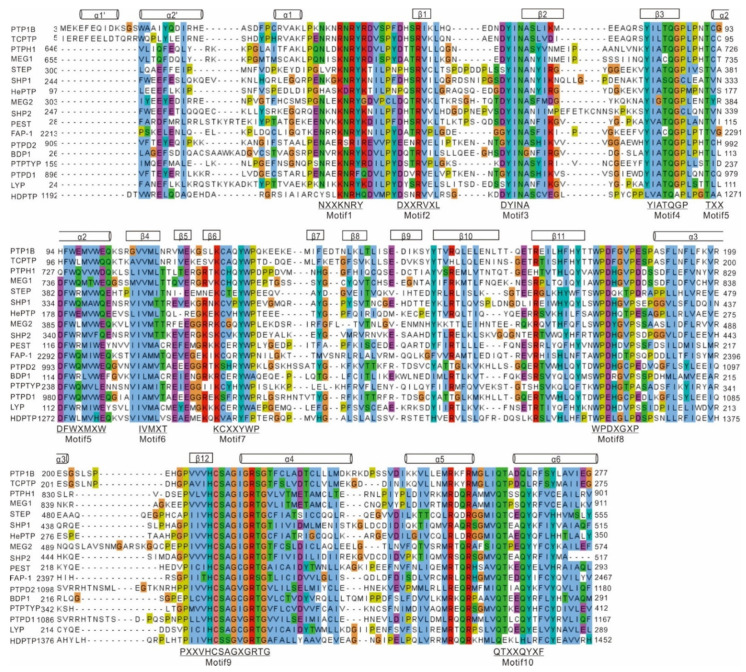
Sequence alignment of 17 human non-receptor PTPs catalytic domains. Sequences were obtained from Uniprot (https://www.uniprot.org/ (accessed on 7 August 2021)) database and aligned using EMBL-Clustal Omega (https://www.ebi.ac.uk/Tools/msa/clustalo (accessed on 8 August 2021)) database using default options. The alignment was further processed by Jalview (version 2.11.1.3) and colored with Clustal default option.
Figure 3
Figure 3
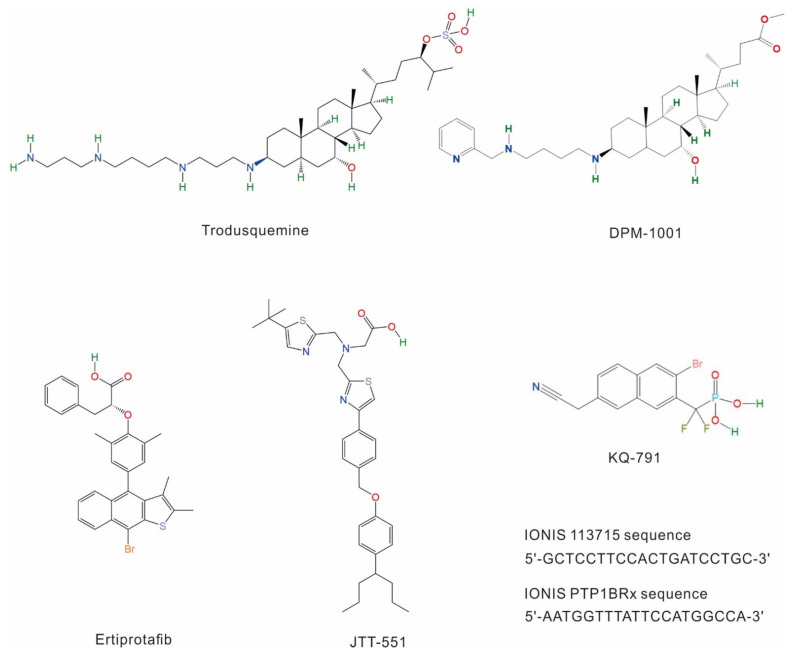
PTP1B inhibitors investigated in clinical trials.
Figure 4
Figure 4
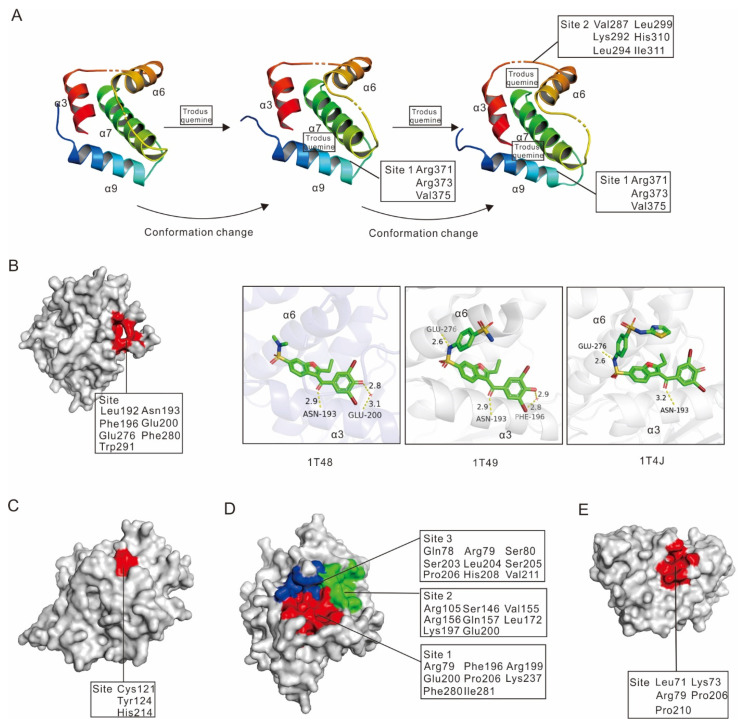
The allosteric binding sites of PTP1B inhibitors. (A) The step-by-step mechanism of PTP1B inhibition by trodusquemine. (B) (left panel) PTP1B was represented as surface structure and its allosteric binding site was highlighted in red; (right panel) structural representation of three inhibitors bound to the allosteric site of PTP1B (inhibitors are colored by elements; hydrogen bounds are depicted with distance in yellow dash). (CE) PTP1B was represented as surface structure and its allosteric binding site was highlighted in color, respectively.
Figure 5
Figure 5
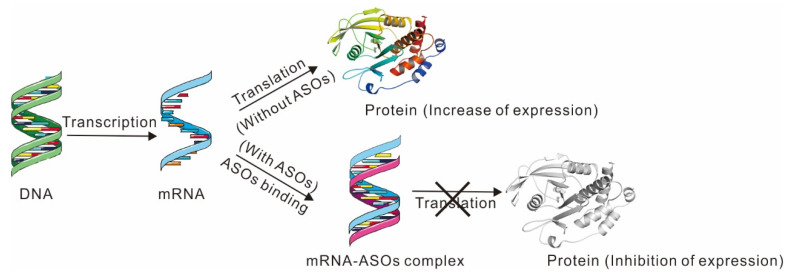
PTP1B protein expression in the presence or absence of ASOs.

References

    1. Villamar-Cruz O., Loza-Mejía M.A., Arias-Romero L.E., Camacho-Arroyo I. Recent advances in PTP1B signaling in metabolism and cancer. Biosci. Rep. 2021;41:BSR20211994. doi: 10.1042/BSR20211994. - DOI - PMC - PubMed
    1. Simoncic P.D., McGlade C.J., Tremblay M.L. PTP1B and TC-PTP: Novel roles in immune-cell signalingThis paper is one of a selection of papers published in this Special issue, entitled Second Messengers and Phosphoproteins—12th International Conference. Can. J. Physiol. Pharmacol. 2006;84:667–675. doi: 10.1139/y06-012. - DOI - PubMed
    1. Pike K.A., Tremblay M.L. TC-PTP and PTP1B: Regulating JAK-STAT signaling, controlling lymphoid malignancies. Cytokine. 2016;82:52–57. doi: 10.1016/j.cyto.2015.12.025. - DOI - PubMed
    1. Yip S.-C., Saha S., Chernoff J. PTP1B: A double agent in metabolism and oncogenesis. Trends Biochem. Sci. 2010;35:442–449. doi: 10.1016/j.tibs.2010.03.004. - DOI - PMC - PubMed
    1. Haj F.G., Zabolotny J.M., Kim Y.B., Kahn B.B., Neel B.G. Liver-specific protein-tyrosine phosphatase 1B (PTP1B) re-expression alters glucose homeostasis of PTP1B-/-mice. J. Biol. Chem. 2005;280:15038–15046. doi: 10.1074/jbc.M413240200. - DOI - PubMed

MeSH terms

Substances

LinkOut - more resources