


Plant Responses to Herbivory, Wounding, and Infection
- PMID: 35806046
- PMCID: PMC9266417
- DOI: 10.3390/ijms23137031
Plant Responses to Herbivory, Wounding, and Infection
Abstract
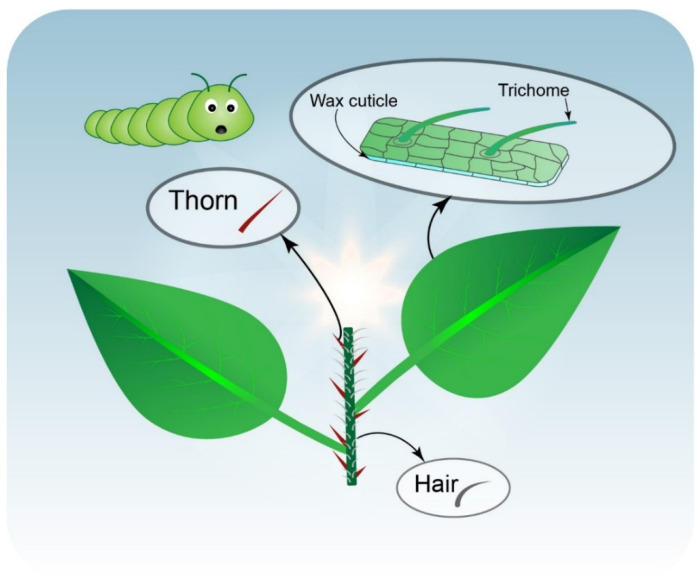
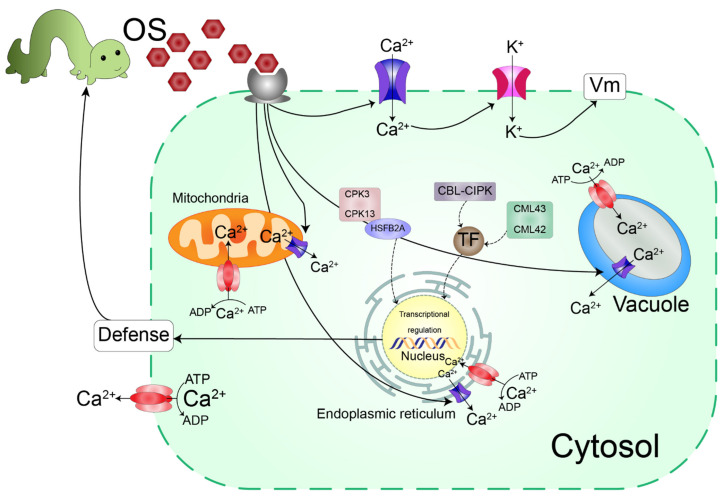
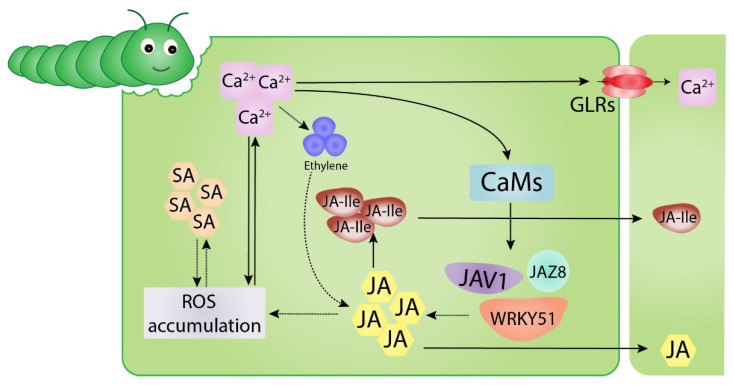
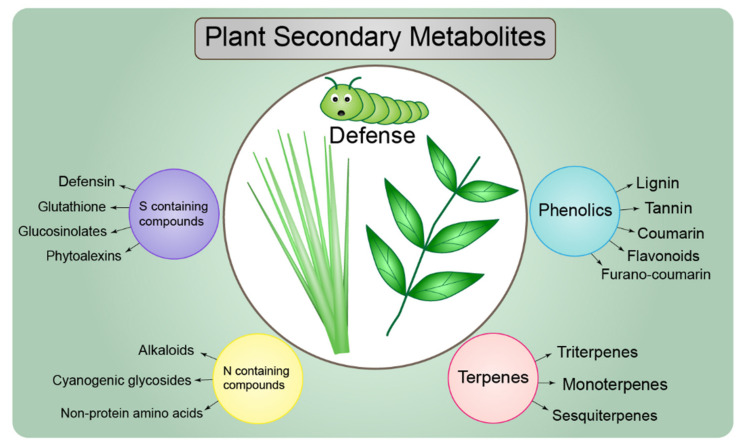
Plants have various self-defense mechanisms against biotic attacks, involving both physical and chemical barriers. Physical barriers include spines, trichomes, and cuticle layers, whereas chemical barriers include secondary metabolites (SMs) and volatile organic compounds (VOCs). Complex interactions between plants and herbivores occur. Plant responses to insect herbivory begin with the perception of physical stimuli, chemical compounds (orally secreted by insects and herbivore-induced VOCs) during feeding. Plant cell membranes then generate ion fluxes that create differences in plasma membrane potential (Vm), which provokes the initiation of signal transduction, the activation of various hormones (e.g., jasmonic acid, salicylic acid, and ethylene), and the release of VOCs and SMs. This review of recent studies of plant-herbivore-infection interactions focuses on early and late plant responses, including physical barriers, signal transduction, SM production as well as epigenetic regulation, and phytohormone responses.
Keywords: airborne signaling; epigenetic regulation; intracellular signaling; physical barrier; plant–herbivore interaction; secondary metabolite; signal transduction.
Conflict of interest statement
The authors declare no conflict of interest.
Figures
References
-
- Belete T. Defense mechanisms of plants to insect pests: From morphological to biochemical approach. Trends Tech. Sci. Res. 2018;2:555584. doi: 10.19080/TTSR.2018.02.555584. - DOI
Publication types
MeSH terms
Substances
LinkOut - more resources
Full Text Sources
