Review
. 2022 Jun 24;23(13):7055.
doi: 10.3390/ijms23137055.

Stem Cell Models for Cancer Therapy

Affiliations
Review

Stem Cell Models for Cancer Therapy

Nitin Telang. Int J Mol Sci. .

Abstract

Metastatic progression of female breast and colon cancer represents a major cause of mortality in women. Spontaneous/acquired resistance to conventional and targeted chemo-endocrine therapy is associated with the emergence of drug-resistant tumor-initiating cancer stem cell populations. The cancer-initiating premalignant stem cells exhibit activation of select cancer cell signaling pathways and undergo epithelial-mesenchymal transition, leading to the evolution of a metastatic phenotype. The development of reliable cancer stem cell models provides valuable experimental approaches to identify novel testable therapeutic alternatives for therapy-resistant cancer. Drug-resistant stem cell models for molecular subtypes of clinical breast cancer and for genetically predisposed colon cancer are developed by selecting epithelial cells that survive in the presence of cytostatic concentrations of relevant therapeutic agents. These putative stem cells are characterized by the expression status of select cellular and molecular stem cell markers. The stem cell models are utilized as experimental approaches to examine the stem-cell-targeted growth inhibitory efficacy of naturally occurring dietary phytochemicals. The present review provides a systematic discussion on (i) conceptual and experimental aspects relevant to the chemo-endocrine therapy of breast and colon cancer, (ii) molecular/cellular aspects of cancer stem cells and (iii) potential stem-cell-targeting lead compounds as testable alternatives against the progression of therapy-resistant breast and colon cancer.

Keywords: breast and colon cancer; stem cells; testable therapeutic alternatives.


Conflict of interest statement

The author declares no conflict of interest.

Figures
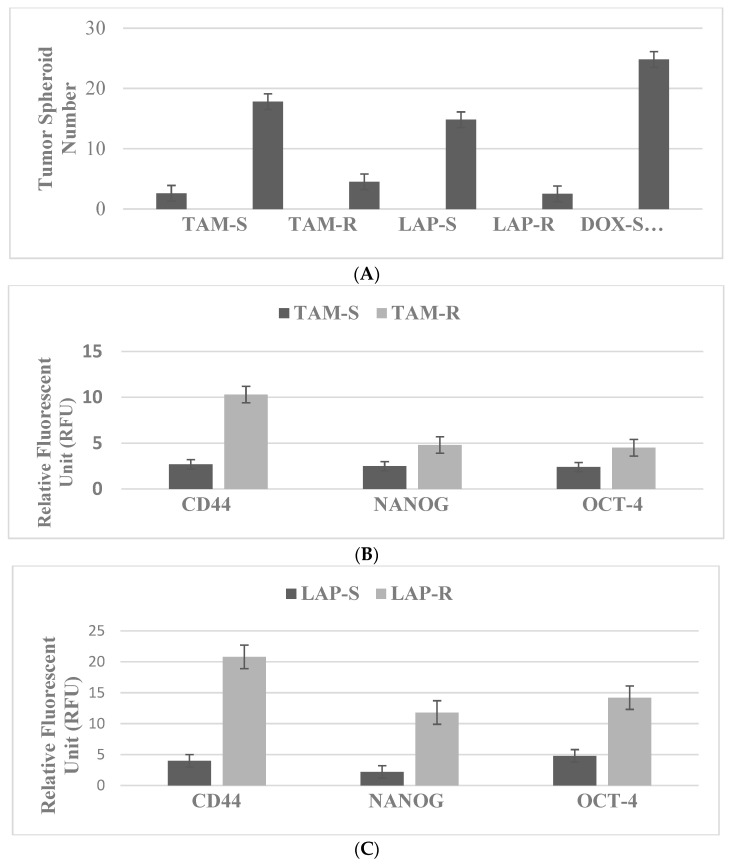
Figure 1
Figure 1
(A) Status of tumor spheroid formation. In the presence of cytotoxic drugs, the drug-resistant (R) phenotypes exhibit increased numbers of tumor spheroids relative to their respective drug-sensitive (S) counterparts. TAM, tamoxifen; LAP, lapatinib; DOX, doxorubicin. Status of stem cell markers in drug-resistant phenotypes. (B) The expression of CD44, NANOG and OCT-4 in the resistant TAM-R phenotype is increased relative to the sensitive TAM-S phenotype. (C) The expression of CD44, NANOG and OCT-4 is increased in the resistant LAP-R phenotype relative to the sensitive LAP-S phenotype. (D) The expression of CD44, NANOG and OCT-4 is increased in the resistant DOX-R phenotype relative to the sensitive DOX-S phenotype. CD44, cluster of differentiation 44; NANOG, homeobox transcription factor; OCT-4, octamer-binding transcription factor-4; TAM, tamoxifen; LAP, lapatinib; DOX, doxorubicin.
Figure 1
Figure 1
(A) Status of tumor spheroid formation. In the presence of cytotoxic drugs, the drug-resistant (R) phenotypes exhibit increased numbers of tumor spheroids relative to their respective drug-sensitive (S) counterparts. TAM, tamoxifen; LAP, lapatinib; DOX, doxorubicin. Status of stem cell markers in drug-resistant phenotypes. (B) The expression of CD44, NANOG and OCT-4 in the resistant TAM-R phenotype is increased relative to the sensitive TAM-S phenotype. (C) The expression of CD44, NANOG and OCT-4 is increased in the resistant LAP-R phenotype relative to the sensitive LAP-S phenotype. (D) The expression of CD44, NANOG and OCT-4 is increased in the resistant DOX-R phenotype relative to the sensitive DOX-S phenotype. CD44, cluster of differentiation 44; NANOG, homeobox transcription factor; OCT-4, octamer-binding transcription factor-4; TAM, tamoxifen; LAP, lapatinib; DOX, doxorubicin.
Figure 2
Figure 2
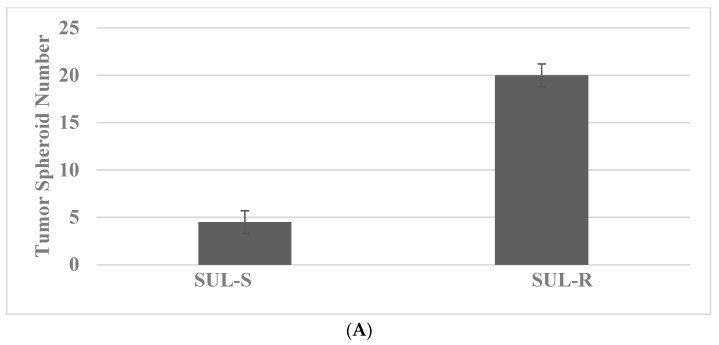
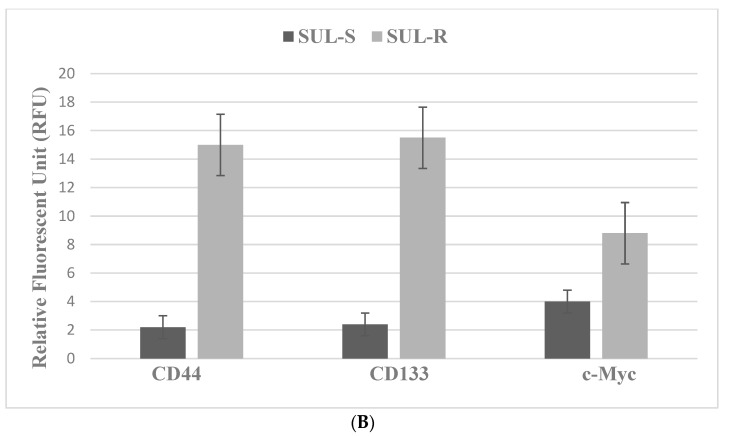
Status of tumor spheroid formation and stem cell marker expression in 850MIN COL model. (A) The tumor spheroid number is increased in the resistant SUL-R phenotype relative to the sensitive SUL-S phenotype. (B) The expression of CD44, CD133 and c-Myc is increased in the resistant SUL-R phenotype relative to the sensitive SUL-S phenotype. SUL, sulindac; CD44, cluster of differentiation 44; CD133, cluster of differentiation 133; c-Myc, cellular Myc.
Figure 2
Figure 2
Status of tumor spheroid formation and stem cell marker expression in 850MIN COL model. (A) The tumor spheroid number is increased in the resistant SUL-R phenotype relative to the sensitive SUL-S phenotype. (B) The expression of CD44, CD133 and c-Myc is increased in the resistant SUL-R phenotype relative to the sensitive SUL-S phenotype. SUL, sulindac; CD44, cluster of differentiation 44; CD133, cluster of differentiation 133; c-Myc, cellular Myc.
Figure 3
Figure 3
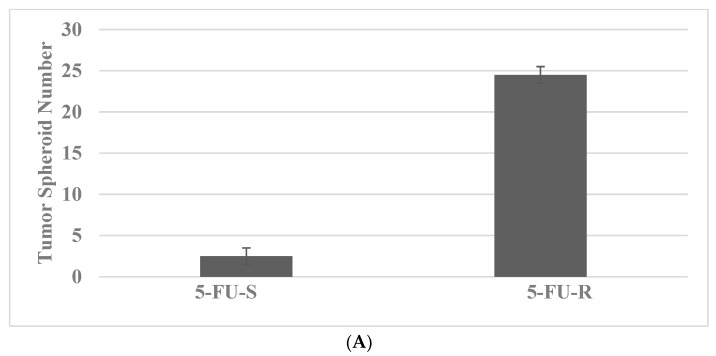
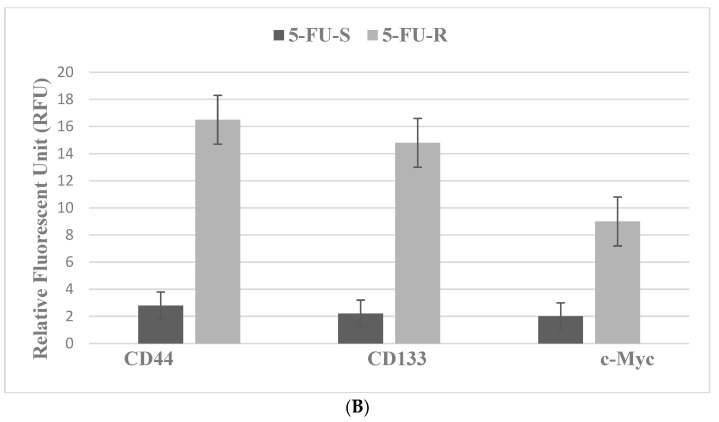
Status of tumor spheroid formation and stem cell marker expression in Mlh1/1638N COL model. (A) The tumor spheroid number is increased in the resistant 5-FU-R phenotype relative to the sensitive 5-FU-S phenotype. (B) The expression of CD44, CD133 and c-Myc is increased in the resistant 5-FU-R phenotype relative to the sensitive 5-FU-S phenotype. 5-FU, 5-fluro-uracil; CD44, cluster of differentiation 44; CD133, cluster of differentiation 133; c-Myc, cellular Myc.
Figure 3
Figure 3
Status of tumor spheroid formation and stem cell marker expression in Mlh1/1638N COL model. (A) The tumor spheroid number is increased in the resistant 5-FU-R phenotype relative to the sensitive 5-FU-S phenotype. (B) The expression of CD44, CD133 and c-Myc is increased in the resistant 5-FU-R phenotype relative to the sensitive 5-FU-S phenotype. 5-FU, 5-fluro-uracil; CD44, cluster of differentiation 44; CD133, cluster of differentiation 133; c-Myc, cellular Myc.
Figure 4
Figure 4
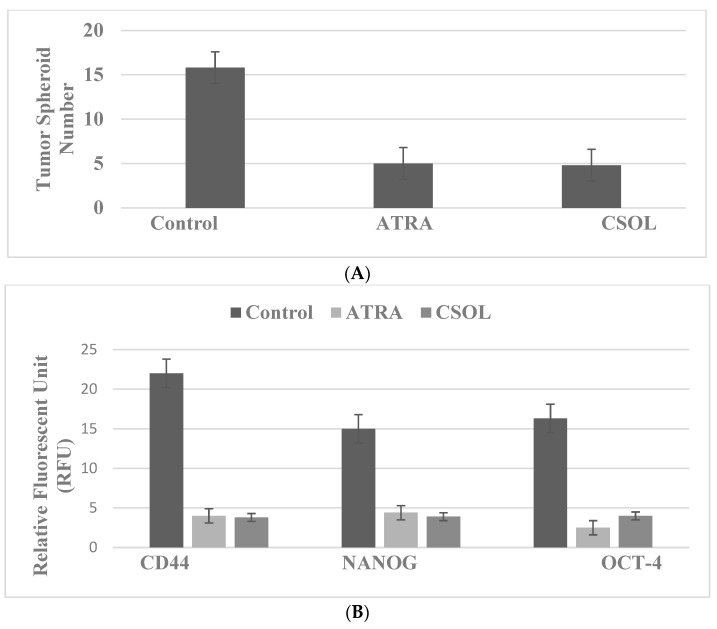
Inhibition of stem cell marker expression in the LAP-R 184-B5/HER model. (A) Treatment with ATRA and CSOL decreased tumor spheroid number relative to the solvent control. (B) Treatment with ATRA and CSOL decreased the expression of CD44, NANOG and OCT-4 relative to the solvent control. ATRA, all-trans retinoic acid; CSOL, carnosol; CD44, cluster of differentiation 44; NANOG, homeobox transcription factor; OCT-4, octamer-binding transcription factor-4.
Figure 5
Figure 5
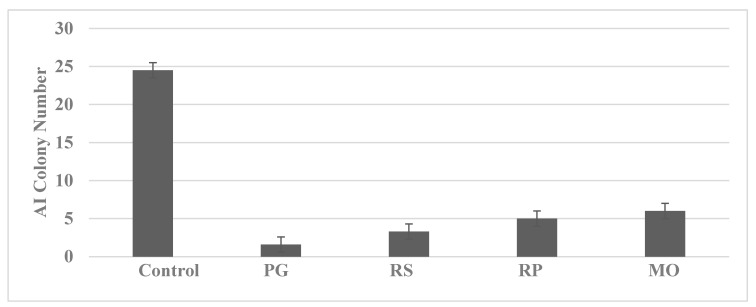
Inhibition of AI colony formation by nutritional herbs. PG, Pseudo ginseng; RS, Radix salviae; RP, Radix paeoniae; MO, Morinda officinalis.
Figure 6
Figure 6
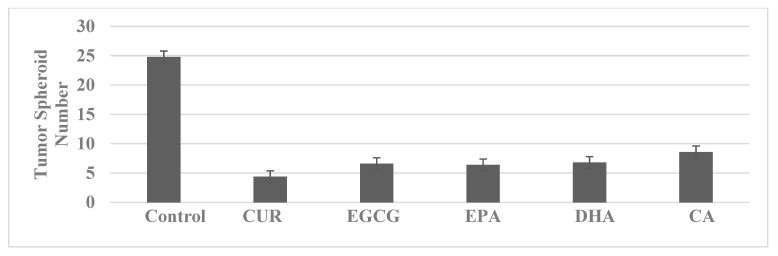
Inhibition of tumor spheroid formation by phytochemicals. CUR, curcumin; EGCG, epigallocatechin gallate; EPA, eicosapentaenoic acid; DHA, docosahexaenoic acid; CA, carnosic acid.
Figure 7
Figure 7
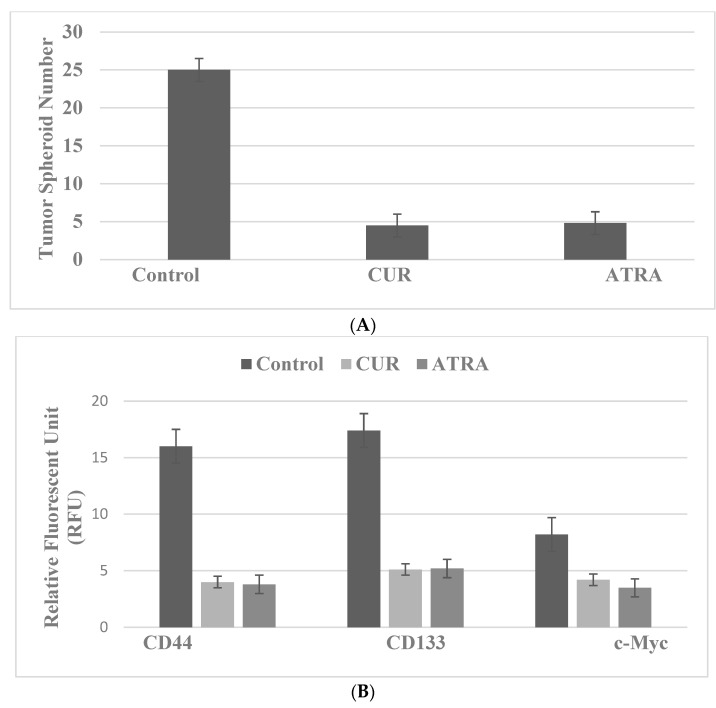
Inhibition of stem cell markers in the SUL-R 850MIN COL model. (A) Treatment with CUR and ATRA decreased tumor spheroid number relative to the solvent control. (B) Treatment with CUR and ATRA inhibited the expression of CD44, CD133 and c-Myc relative to the solvent control. CUR, curcumin; ATRA, all-trans retinoic acid; CD44, cluster of differentiation 44; CD133, cluster of differentiation 133; c-Myc, cellular Myc.

References

    1. American Cancer Society . Cancer Facts & Figures 2021. American Cancer Society; Atlanta, GA, USA: 2021.
    1. National Comprehensive Cancer Network. 2010. [(accessed on 10 April 2022)]. Available online: http://www.nccn.org.NCCN.
    1. Li Y., Zhang T., Korkaya H., Liu S., Lee H.-F., Newman B., Yu Y., Clouthier S.G., Schwartz S.J., Wicha M.S., et al. Sulforaphane, a dietary component of broccoli/broccoli sprouts, inhibits breast cancer stem cells. Clin. Cancer Res. 2010;16:2580–2590. doi: 10.1158/1078-0432.CCR-09-2937. - DOI - PMC - PubMed
    1. Li Y., Wicha M.S., Schwartz S.J., Sun D. Implication of cancer stem theory for cancer chemoprevention by natural dietary compounds. J. Nutr. Biochem. 2011;22:799–806. doi: 10.1016/j.jnutbio.2010.11.001. - DOI - PMC - PubMed
    1. Moy B., Goss P.E. Estrogen receptor pathway: Resistance to endocrine therapy and new therapeutic approaches. Clin. Cancer Res. 2006;12:4790–4793. doi: 10.1158/1078-0432.CCR-06-1535. - DOI - PubMed