


A Hybrid Deep Transfer Learning of CNN-Based LR-PCA for Breast Lesion Diagnosis via Medical Breast Mammograms
- PMID: 35808433
- PMCID: PMC9269713
- DOI: 10.3390/s22134938
A Hybrid Deep Transfer Learning of CNN-Based LR-PCA for Breast Lesion Diagnosis via Medical Breast Mammograms
Abstract
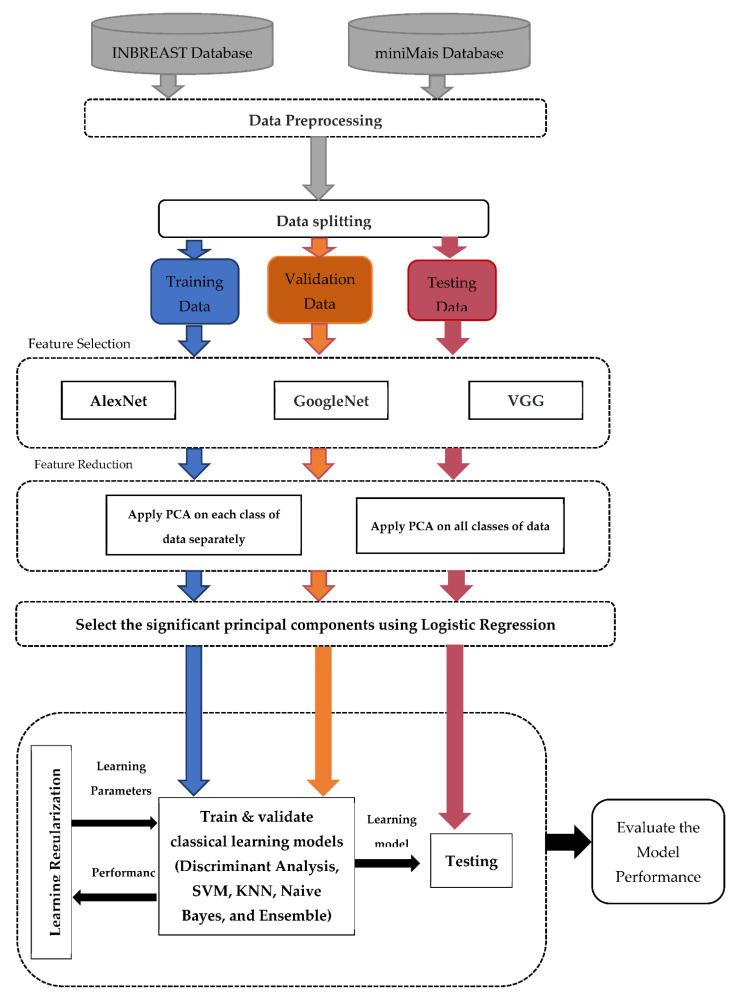
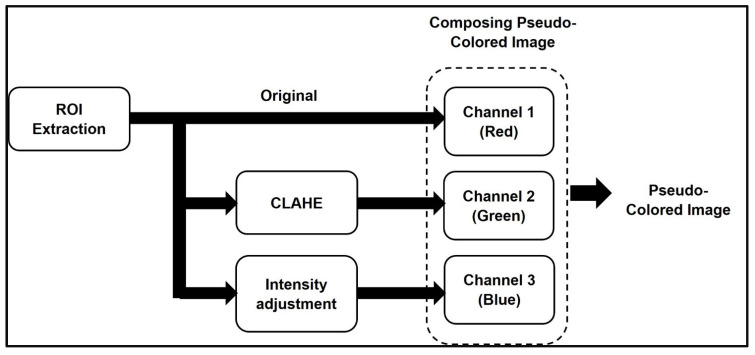
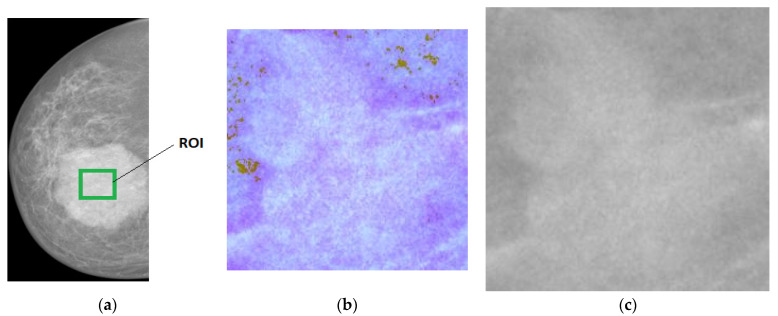
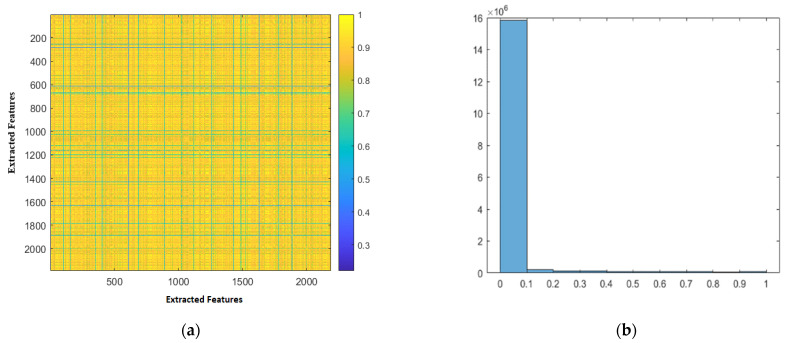
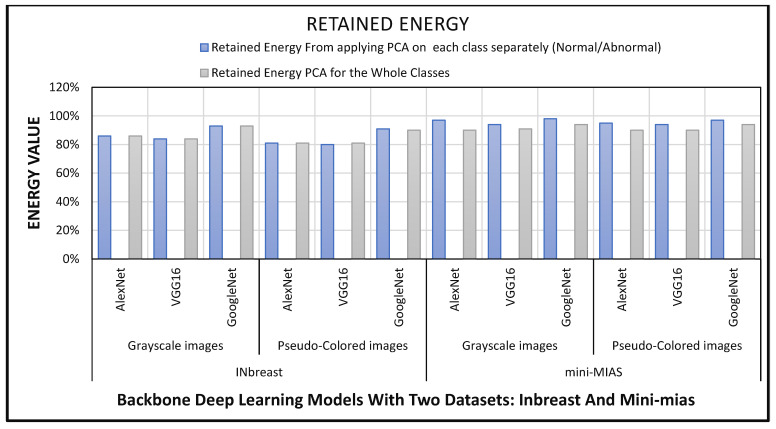
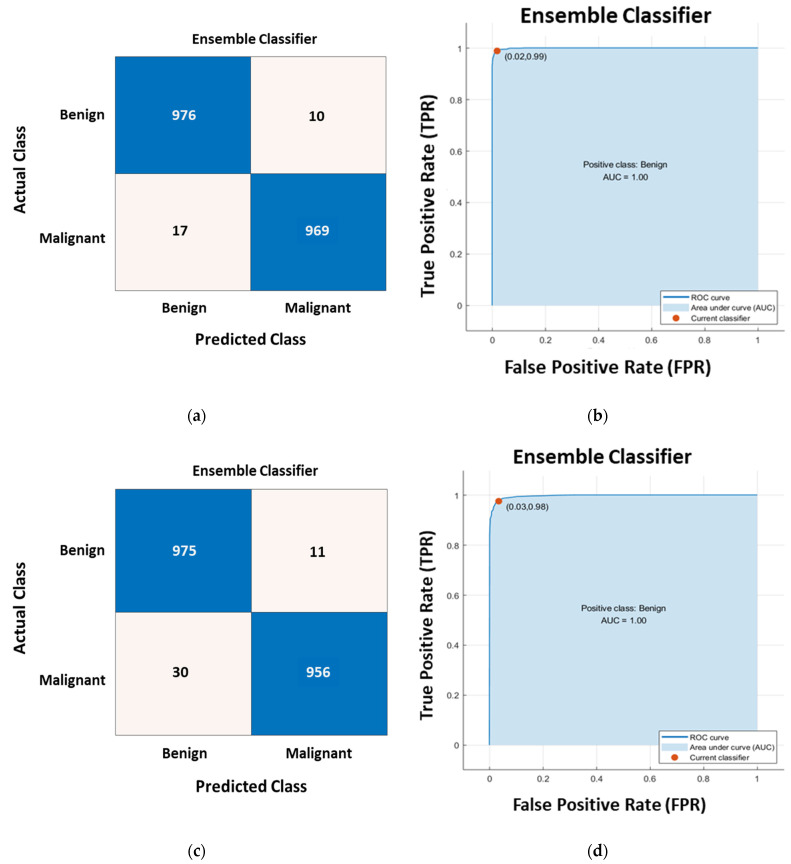
One of the most promising research areas in the healthcare industry and the scientific community is focusing on the AI-based applications for real medical challenges such as the building of computer-aided diagnosis (CAD) systems for breast cancer. Transfer learning is one of the recent emerging AI-based techniques that allow rapid learning progress and improve medical imaging diagnosis performance. Although deep learning classification for breast cancer has been widely covered, certain obstacles still remain to investigate the independency among the extracted high-level deep features. This work tackles two challenges that still exist when designing effective CAD systems for breast lesion classification from mammograms. The first challenge is to enrich the input information of the deep learning models by generating pseudo-colored images instead of only using the input original grayscale images. To achieve this goal two different image preprocessing techniques are parallel used: contrast-limited adaptive histogram equalization (CLAHE) and Pixel-wise intensity adjustment. The original image is preserved in the first channel, while the other two channels receive the processed images, respectively. The generated three-channel pseudo-colored images are fed directly into the input layer of the backbone CNNs to generate more powerful high-level deep features. The second challenge is to overcome the multicollinearity problem that occurs among the high correlated deep features generated from deep learning models. A new hybrid processing technique based on Logistic Regression (LR) as well as Principal Components Analysis (PCA) is presented and called LR-PCA. Such a process helps to select the significant principal components (PCs) to further use them for the classification purpose. The proposed CAD system has been examined using two different public benchmark datasets which are INbreast and mini-MAIS. The proposed CAD system could achieve the highest performance accuracies of 98.60% and 98.80% using INbreast and mini-MAIS datasets, respectively. Such a CAD system seems to be useful and reliable for breast cancer diagnosis.
Keywords: CAD system; breast cancer; breast lesion classification; deep feature extraction and reduction; hybrid CNN-based LR-PCA.
Conflict of interest statement
The authors declare no conflict of interest.
Figures
References
-
- Albeshan S.M., Alashban Y.I. Incidence Trends of Breast Cancer in Saudi Arabia: A Joinpoint Regression Analysis (2004–2016) J. King Saud Univ. Sci. 2021;33:101578. doi: 10.1016/j.jksus.2021.101578. - DOI
MeSH terms
Grants and funding
LinkOut - more resources
Full Text Sources
Medical
Miscellaneous
