


Baseline anxiety-sensitivity to estradiol fluctuations predicts anxiety symptom response to transdermal estradiol treatment in perimenopausal women - A randomized clinical trial
- PMID: 35809362
- PMCID: PMC9716440
- DOI: 10.1016/j.psyneuen.2022.105851
Baseline anxiety-sensitivity to estradiol fluctuations predicts anxiety symptom response to transdermal estradiol treatment in perimenopausal women - A randomized clinical trial
Abstract
Background: The menopausal transition (perimenopause) is associated with an increased risk of major depression, characterized by anxiety and anhedonia phenotypes. Greater estradiol (E2) variability predicts the development of perimenopausal depression, especially within the context of stressful life events (SLEs). While transdermal E2 (TE2) reduces perimenopausal depressive symptoms, the mechanisms underlying TE2 efficacy and predictors of TE2 treatment response remain unknown. This study aimed at determining relationships between E2 fluctuations, mood symptoms, and physiologic stress-reactivity (cortisol and interleukin-6) and whether differences in mood-sensitivity to E2 fluctuations predict mood responses to TE2 treatment.
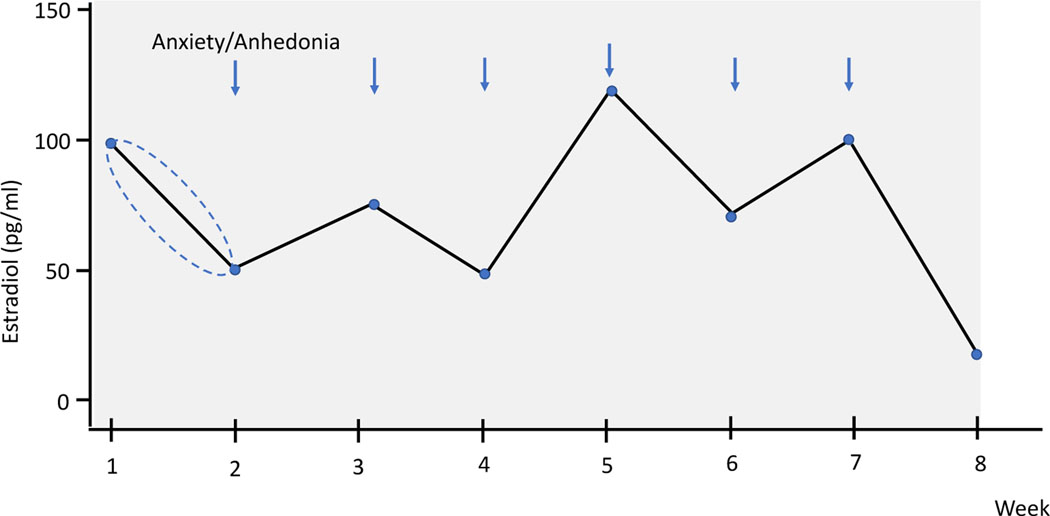
Methods: This randomized, double-blind, placebo-controlled trial investigated medically healthy women (46-60 years) in the early or late menopause transition. Baseline E2-sensitivity strength was calculated from eight weekly individual correlations between week-to-week E2 change and index week anxiety (State-Trait Anxiety Inventory) and anhedonia (Snaith-Hamilton Pleasure Scale). Women then received eight weeks of TE2 or transdermal placebo.
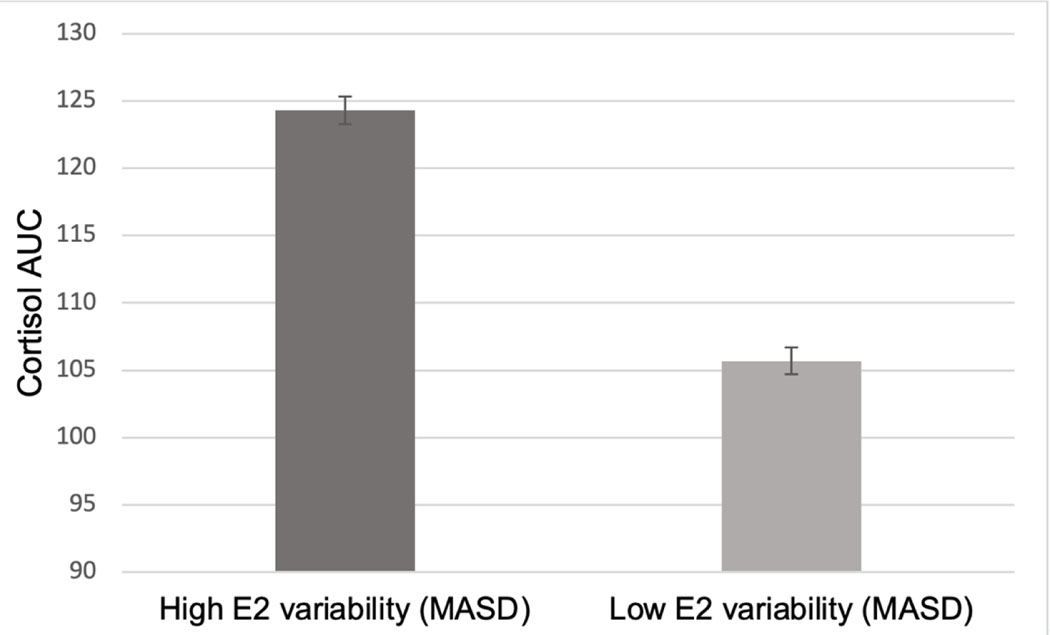
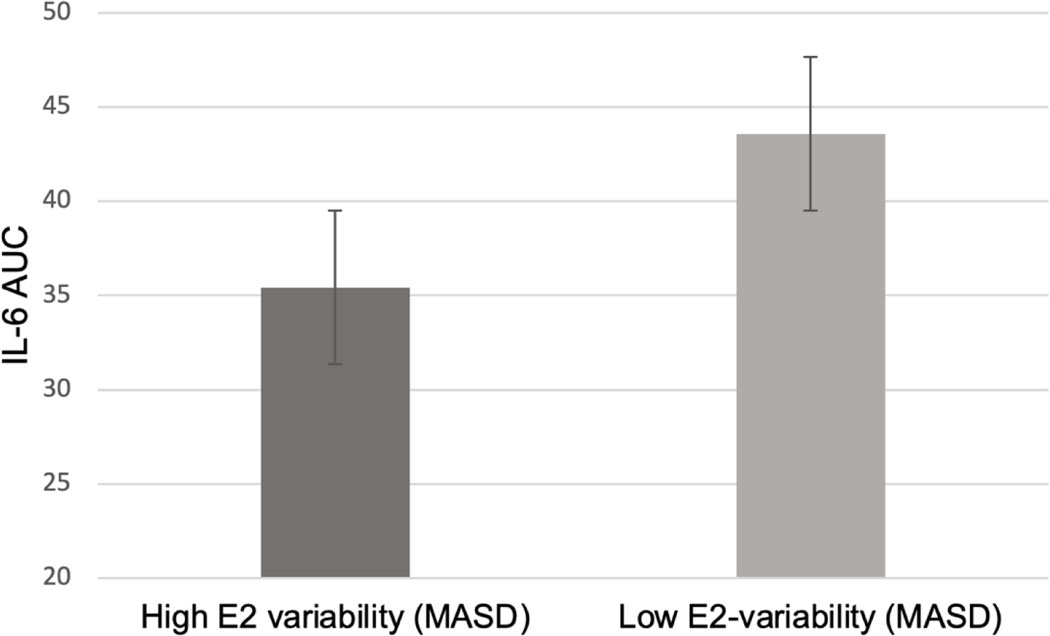
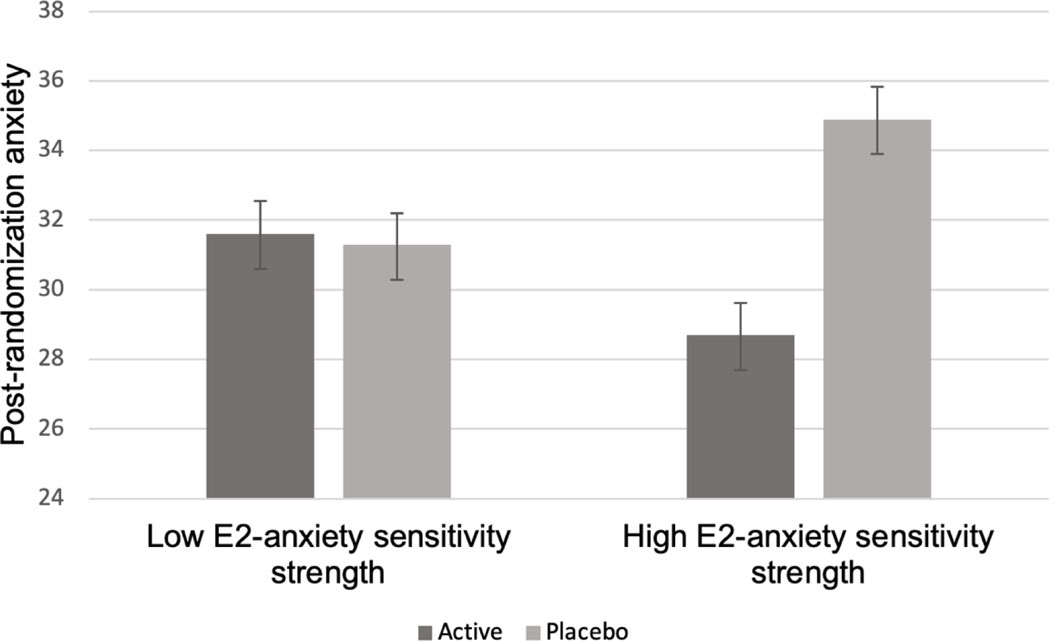
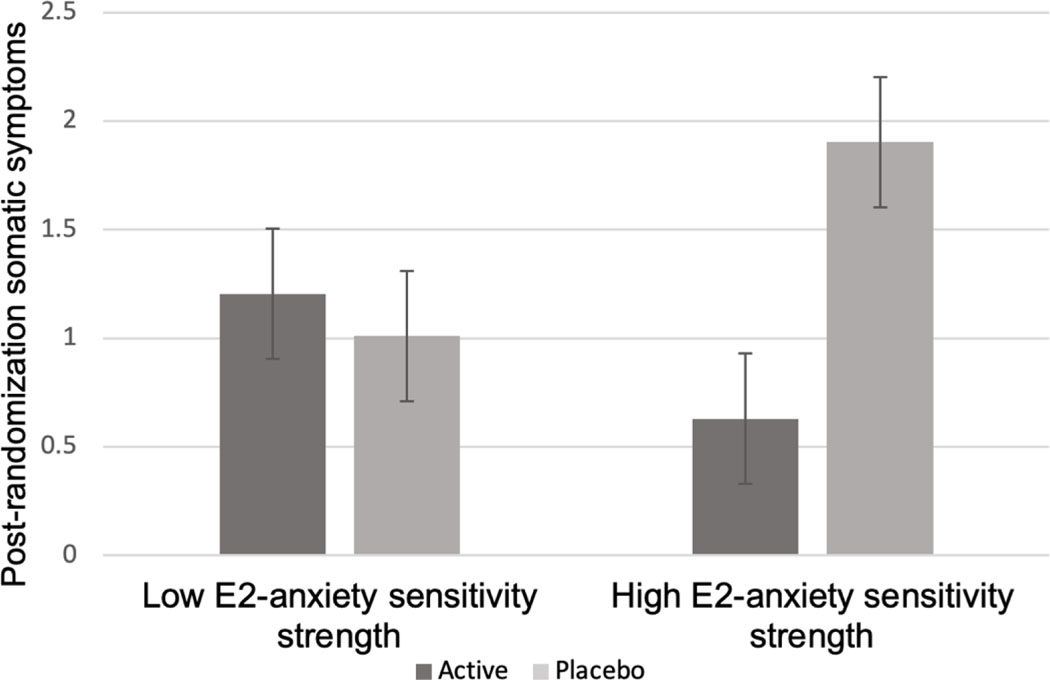
Results: Analyses included 73 women (active TE2 n = 35). Greater baseline E2 fluctuations predicted greater anhedonia (p = .002), particularly in women with more SLEs. Greater E2 fluctuations also predicted higher cortisol (p = .012) and blunted interleukin-6 (p = .02) stress-responses. Controlling for baseline symptoms, TE2 was associated with lower post-treatment anxiety (p < .001) and anhedonia (p < .001) versus placebo. However, the efficacy of TE2 for anxiety (p = .007) and also for somatic complaints (p = .05) was strongest in women with greater baseline E2 sensitivity strength.
Conclusions: TE2 treatment reduced perimenopausal anxiety and anhedonia. The ability of baseline mood-sensitivity to E2 fluctuations to predict greater TE2 efficacy has implications for individualized treatment of perimenopausal anxiety disorders.
Trial registration: ClinicalTrials.gov NCT03003949.
Keywords: Anhedonia; Anxiety; Differential sensitivity; Estradiol fluctuations; Perimenopause; Transdermal estradiol.
Copyright © 2022 Elsevier Ltd. All rights reserved.
Figures
References
-
- Anderson D, Yoshizawa T, Gollschewski S, Atogami F, & Courtney M. (2004). Relationship between menopausal symptoms and menopausal status in Australian and Japanese women: preliminary analysis. Nursing & health sciences, 6(3), 173–180. - PubMed
-
- Avis NE, Stellato R, Crawford S, Bromberger J, Ganz P, Cain V, & Kagawa-Singer M. (2001). Is there a menopausal syndrome? Menopausal status and symptoms across racial/ethnic groups. Social science & medicine, 52(3), 345–356. - PubMed
-
- Ayers B, Forshaw M, & Hunter MS (2010). The impact of attitudes towards the menopause on women’s symptom experience: a systematic review. Maturitas, 65(1), 28–36. - PubMed
Publication types
MeSH terms
Substances
Associated data
Grants and funding
LinkOut - more resources
Full Text Sources
Medical
