Microbiologic pattern and clinical outcome of non-ICU-acquired pneumonia: Korean HAP registry analysis
- PMID: 35811368
- PMCID: PMC9271727
- DOI: 10.3904/kjim.2021.348
Microbiologic pattern and clinical outcome of non-ICU-acquired pneumonia: Korean HAP registry analysis
Erratum in
-
Microbiologic pattern and clinical outcome of non-ICU-acquired pneumonia: Korean HAP registry analysis.Korean J Intern Med. 2023 May;38(3):450. doi: 10.3904/kjim.2021.348.e1. Epub 2023 Apr 24. Korean J Intern Med. 2023. PMID: 37089057 Free PMC article. No abstract available.
Abstract
Background/aims: Most studies on hospital-acquired pneumonia (HAP) have been conducted in intensive care unit (ICU) settings. This study aimed to investigate the microbiological and clinical characteristics of non-ICU-acquired pneumonia (NIAP) and to identify the factors affecting clinical outcomes in Korea.
Methods: This multicenter retrospective cohort study was conducted in patients admitted to 13 tertiary hospitals between July 1, 2019 and December 31, 2019. Patients diagnosed with NIAP were included in this study. To assess the prognostic factors of NIAP, the study population was classified into treatment success and failure groups.
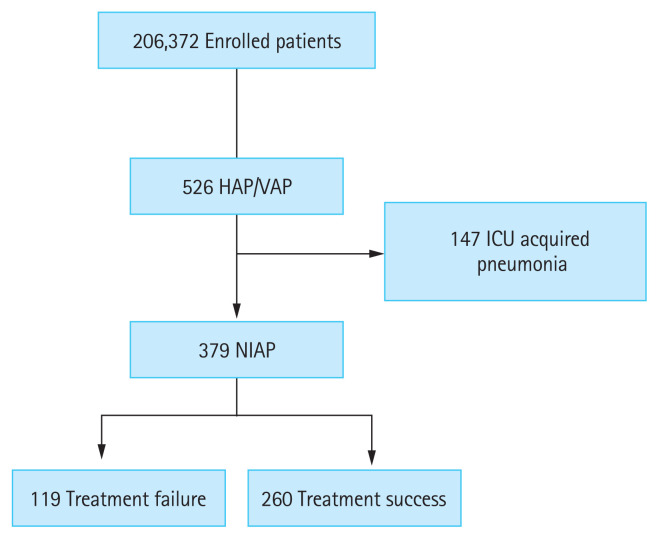
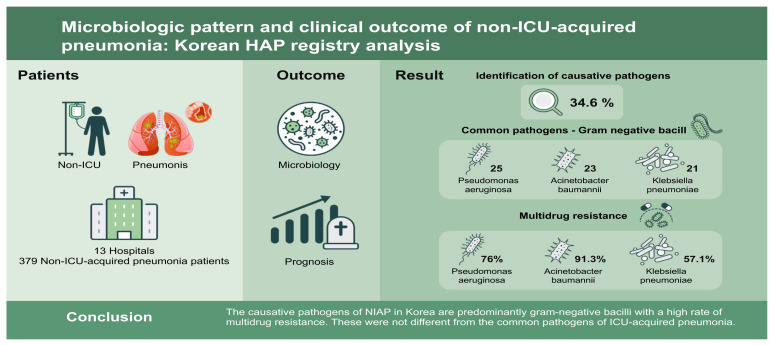
Results: Of 526 patients with HAP, 379 were diagnosed with NIAP. Overall, the identified causative pathogen rate was 34.6% in the study population. Among the isolated organisms (n = 113), gram-negative bacilli were common pathogens (n = 91), such as Pseudomonas aeruginosa (n = 25), Acinetobacter baumannii (n = 23), and Klebsiella pneumoniae (n = 21). The multidrug resistance rates of A. baumannii, P. aeruginosa, and K. pneumoniae were 91.3%, 76.0%, and 57.1%, respectively. Treatment failure was significantly associated with K. pneumoniae (odds ratio [OR], 3.50; 95% confidence interval [CI], 1.35 to 9.05; p = 0.010), respiratory viruses (OR, 3.81; 95% CI, 1.34 to 10.82; p = 0.012), hematological malignancies (OR, 3.54; 95% CI, 1.57 to 8.00; p = 0.002), and adjunctive corticosteroid treatment (OR, 2.40; 95% CI, 1.27 to 4.52; p = 0.007).
Conclusion: The causative pathogens of NIAP in Korea are predominantly gram-negative bacilli with a high rate of multidrug resistance. These were not different from the common pathogens of ICU-acquired pneumonia.
Keywords: General ward; Healthcare-associated pneumonia; Korea; Microbiology; Prognosis.
Conflict of interest statement
No potential conflict of interest relevant to this article was reported.
Figures
References
-
- American Thoracic Society; Infectious Diseases Society of America Guidelines for the management of adults with hospital-acquired, ventilator-associated, and healthcare-associated pneumonia. Am J Respir Crit Care Med. 2005;171:388–416. - PubMed
-
- Flanders SA, Collard HR, Saint S. Nosocomial pneumonia: state of the science. Am J Infect Control. 2006;34:84–93. - PubMed
-
- Sopena N, Heras E, Casas I, et al. Risk factors for hospital-acquired pneumonia outside the intensive care unit: a case-control study. Am J Infect Control. 2014;42:38–42. - PubMed
-
- Herer B, Fuhrman C, Gazevic Z, Cabrit R, Chouaid C. Management of nosocomial pneumonia on a medical ward: a comparative study of outcomes and costs of invasive procedures. Clin Microbiol Infect. 2009;15:165–172. - PubMed
Publication types
MeSH terms
Substances
LinkOut - more resources
Full Text Sources
Medical