


Central sensitization in opioid use disorder: a novel application of the American College of Rheumatology Fibromyalgia Survey Criteria
- PMID: 35812839
- PMCID: PMC9263499
- DOI: 10.1097/PR9.0000000000001016
Central sensitization in opioid use disorder: a novel application of the American College of Rheumatology Fibromyalgia Survey Criteria
Abstract
Introduction: Central sensitization (CS) involves dysfunctional central nervous system pain modulation resulting in heightened pain perception. Central sensitization is not commonly assessed among patients with opioid use disorder (OUD), despite the fact that pain has been implicated in the development, maintenance, and relapse of OUD and chronic opioid use may produce opioid-induced hyperalgesia. Central sensitization is a plausibly important mechanism underlying the complex relationship between OUD and chronic pain. However, this premise is largely untested.
Methods: Participants with OUD (n = 141) were recruited from an academic addiction treatment center in Columbus, Ohio. An established surrogate measure of CS, the American College of Rheumatology 2011 Fibromyalgia Survey Criteria, was administered using electronic survey. Participants also responded to questions about pain interference (Brief Pain Inventory), quality of life (RAND-36), and items regarding pain beliefs and expectations of pain and addiction treatment. Descriptive analyses, Spearman rho correlations, and Mann-Whitney U tests were performed.
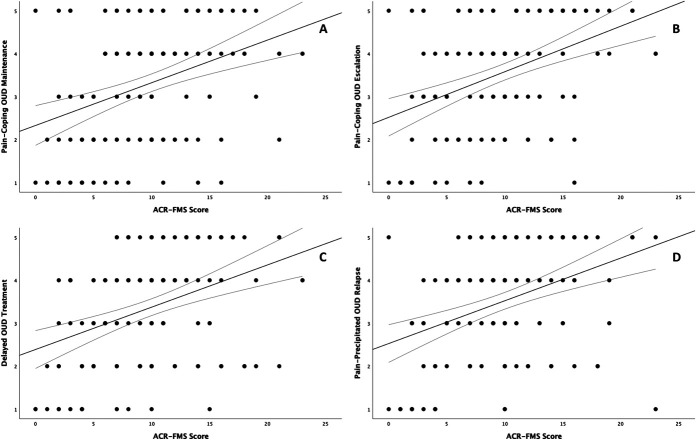
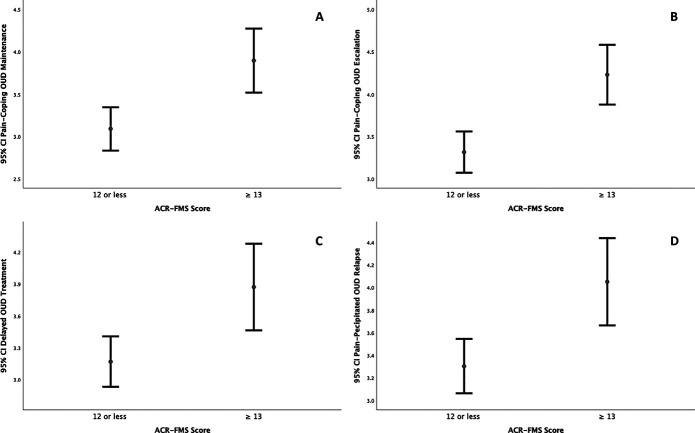
Results: Hypothesized relationships were confirmed between degree of CS, pain interference, and health-related quality of life. Degree of CS was also positively correlated with greater endorsement of pain as a reason for the onset, maintenance, and escalation of OUD; treatment delay; and OUD relapse. Participants with the American College of Rheumatology 2011 Fibromyalgia Survey Criteria ≥13 had significantly greater endorsement of pain as a reason for delaying OUD treatment, continuing and increasing opioid use, and precipitating OUD relapse.
Conclusions: This study provides early evidence CS may underlie previously observed connections between clinically salient features of chronic pain and OUD, potentially informing future mechanistic research and precision treatment.
Keywords: Central nervous system sensitization; Chronic pain; Fibromyalgia; Opioid-related disorders.
Copyright © 2022 The Author(s). Published by Wolters Kluwer Health, Inc. on behalf of The International Association for the Study of Pain.
Conflict of interest statement
D.J. Clauw has testified in state lawsuits against opioid manufacturers for their role in the opioid overdose crisis. The remaining authors have no conflicts of interest to declare. Funding was provided by the Care Innovation and Community Improvement Plan (CICIP), a program of the Ohio Department of Medicaid. The views expressed in this publication do not necessarily reflect the official policies of the Ohio Department of Medicaid nor does mention of trade names, commercial practices, or organizations imply endorsement by the government of Ohio.Sponsorships or competing interests that may be relevant to content are disclosed at the end of this article.
Figures
References
-
- American Psychiatric Association. Diagnostic and statistical manual of mental disorders: DSM-5: Washington: American Psychiatric Association, 2013.
-
- Athanasos P, Smith CS, White JM, Somogyi AA, Bochner F, Ling W. Methadone maintenance patients are cross-tolerant to the antinociceptive effects of very high plasma morphine concentrations. PAIN 2006;120:267–75. - PubMed
-
- Basu N, Kaplan CM, Ichesco E, Larkin T, Harris RE, Murray A, Waiter G, Clauw DJ. Neurobiologic features of fibromyalgia are also present among rheumatoid arthritis patients. Arthritis Rheumatol 2018;70:1000–7. - PubMed
LinkOut - more resources
Full Text Sources