


Epidemiological Investigation of Canine Mammary Tumors in Mainland China Between 2017 and 2021
- PMID: 35812867
- PMCID: PMC9257276
- DOI: 10.3389/fvets.2022.843390
Epidemiological Investigation of Canine Mammary Tumors in Mainland China Between 2017 and 2021
Abstract
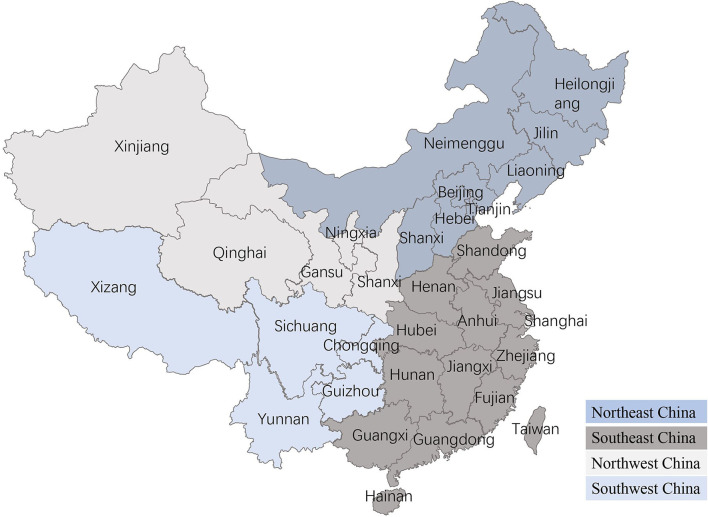
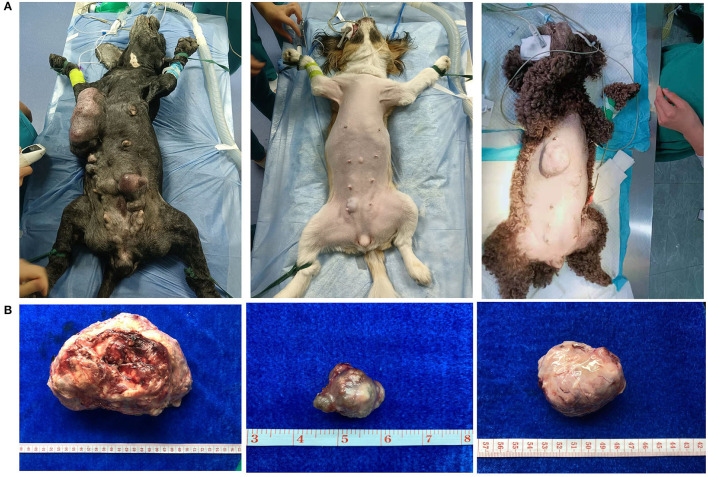
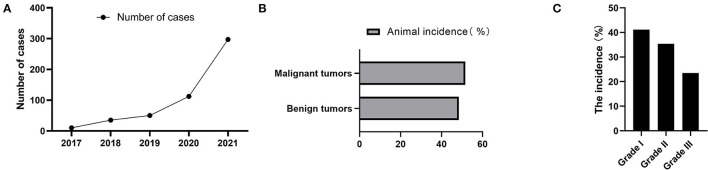
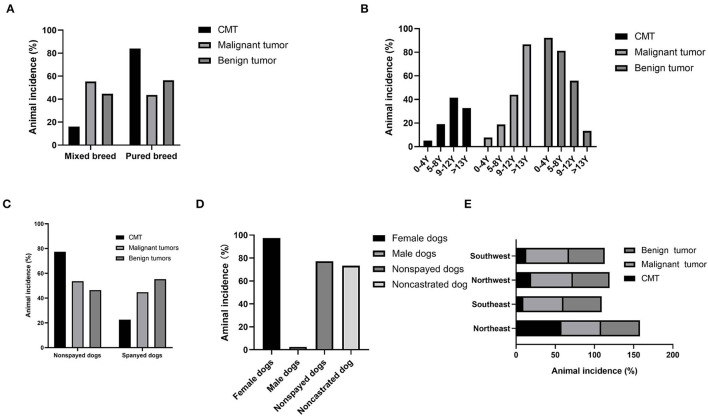
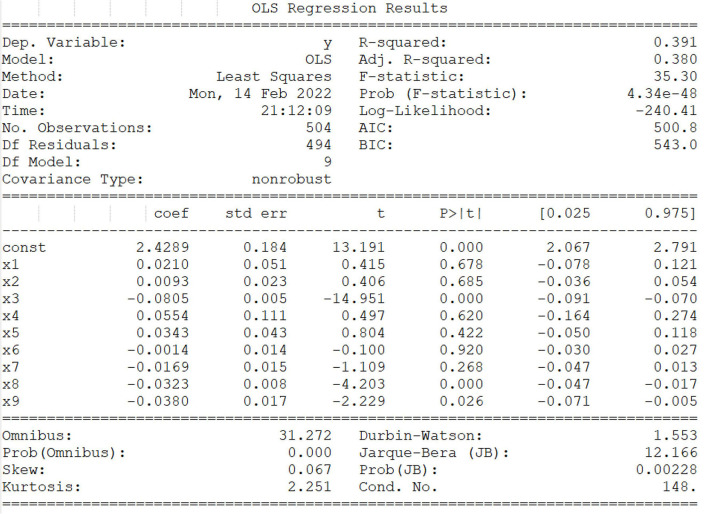
Epidemiological studies enable us to analyze disease behavior, define risk factors, and establish fundamental prognostic criteria. This study aimed to determine the epidemiological and clinical characteristics of canine tumors diagnosed during the years 2017-2021. The results showed that canine mammary tumors were the most common tumors, and their relative incidence for 5-years-total was 46.71% (504/1,079), with 48.41% (244/504) of benign, and 51.59% (260/504) of malignant. Pure breeds accounted for 84.13% (424/504) of submissions, and adult female dogs (9-12 years old) were most frequently involved, followed by 5-8-year-old females. Remarkably, 2.58% (13/504) occurred in the male dogs. In addition, a high prevalence of mammary tumors (77.38%, 390/504) was diagnosed in unneutered dogs, and different incidence rates were observed in different regions (Northeast, Southeast, Northwest and Southwest China). For clinical factors, the tumor size ranged from 0.5 to 28 cm, with the 0-5 cm being the most common tumor size (47.82%, 241/504), and malignant tumors (4.33 ± 2.88 cm, mean ± SD) were bigger than benign ones (3.06 ± 1.67 cm, mean ± SD) (p < 0.001). The incidence of single tumor (55.36%, 279/504) was higher than that of multiple tumors in dogs, while the latter had a higher incidence of malignant tumors (74.67%, 168/225). According to this study, we also found that canine mammary tumors were more common in the last two pairs of mammary glands. In addition, multiple linear regression analysis showed that there was linear significant relationship between three independent variables (age, tumor size, and tumor number) and histological properties of canine mammary tumor [(p>|t|) < 0.05]. This is the first retrospective statistical analysis of such a large dataset in China to reveal the link between epidemiological clinical risks and histological diagnosis. It aids in the improvement of the host's knowledge of canine tumor disorders and the early prevention of canine mammary tumors.
Keywords: benign; canine mammary tumors; clinical; epidemiology; malignant.
Copyright © 2022 Zheng, Du, Yu, Zhang, Huang, Tang and Xie.
Conflict of interest statement
The authors declare that the research was conducted in the absence of any commercial or financial relationships that could be construed as a potential conflict of interest.
Figures
References
-
- Reddy GBM, Kumar P, Kumar R, Pawaiya R, Ravindran R. Histopathological classification and incidence of canine mammary tumours. Indian J Vet Pathol. (2009) 33:152–55.
LinkOut - more resources
Full Text Sources
