


Prevalence, Risk Factors, Pathophysiology, Potential Biomarkers and Management of Feline Idiopathic Cystitis: An Update Review
- PMID: 35812890
- PMCID: PMC9257190
- DOI: 10.3389/fvets.2022.900847
Prevalence, Risk Factors, Pathophysiology, Potential Biomarkers and Management of Feline Idiopathic Cystitis: An Update Review
Abstract
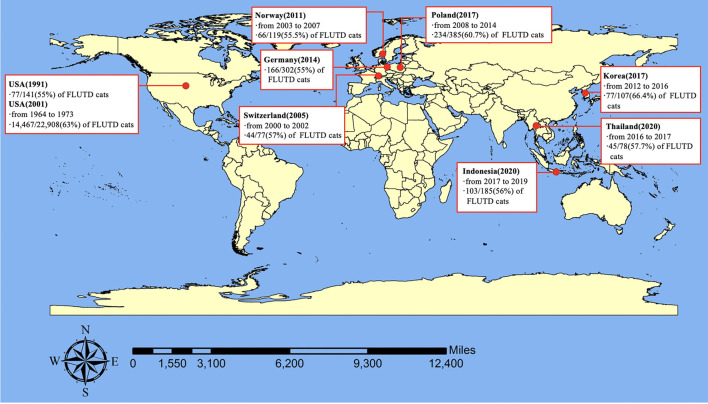
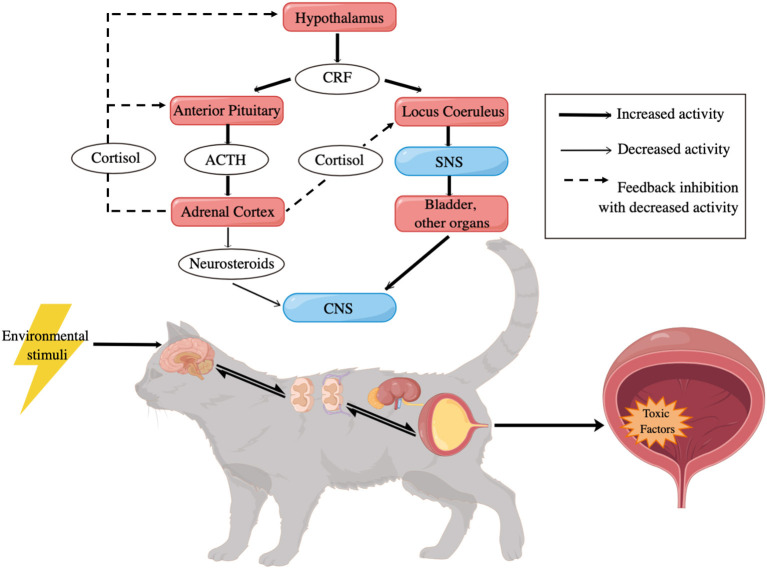
Feline idiopathic cystitis is a widespread disease in small animal clinics, which mainly presents with urinary signs like dysuria, stranguria, hematuria, pollakiuria, and periuria. The etiopathogenesis of the disease may involve interactions between the environmental stressors, neuroendocrine system and bladder of affected cats. Diagnostic biomarkers have not been tested in clinical studies though they are theoretically feasible, and since the clinical signs of the disease assemble those of other feline lower urinary diseases, its diagnosis is a procedure of exclusion. The primary treatment of the disease is long-term multimodal environmental modification (or enrichment) while anti-anxiety drugs and nutritional supplements are recommended for chronic recurrent cases. Still, many medicines need to be evaluated for their efficacy and safety. This review aims to provide readers with a comprehensive understanding of feline idiopathic cystitis by summarizing and updating studies concerning the prevalence, risk factors, etiological hypotheses, diagnostic procedures, possible treatments, and prognosis of the disease.
Keywords: biomarkers; etiopathogenesis; feline idiopathic cystitis; multimodal environmental modification; stress.
Copyright © 2022 He, Fan, Hao, Tang, Li and Wang.
Conflict of interest statement
The authors declare that the research was conducted in the absence of any commercial or financial relationships that could be construed as a potential conflict of interest.
Figures
References
Publication types
LinkOut - more resources
Full Text Sources
Miscellaneous
