Consumption of industrial processed foods and risk of premenopausal breast cancer among Latin American women: the PRECAMA study
- PMID: 35814719
- PMCID: PMC9237890
- DOI: 10.1136/bmjnph-2021-000335
Consumption of industrial processed foods and risk of premenopausal breast cancer among Latin American women: the PRECAMA study
Abstract
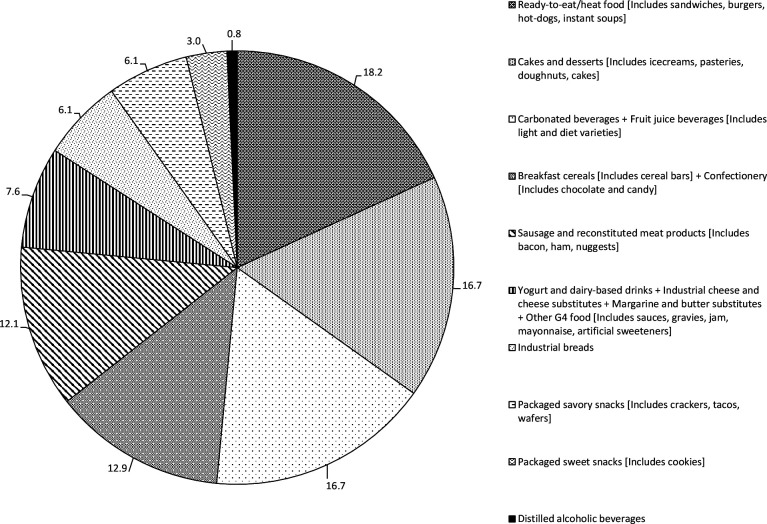
Ultra-processed food intake has been linked to an increased risk of breast cancer in Western populations. No data are available in the Latin American population although the consumption of ultra-processed foods is increasing rapidly in this region. We evaluated the association of ultra-processed food intake to breast cancer risk in a case-control study including 525 cases (women aged 20-45 years) and 525 matched population-based controls from Chile, Colombia, Costa Rica and Mexico. The degree of processing of foods was classified according to the NOVA classification. Overall, the major contributors to ultra-processed food intake were ready-to-eat/heat foods (18.2%), cakes and desserts (16.7%), carbonated and industrial fruit juice beverages (16.7%), breakfast cereals (12.9%), sausages and reconstituted meat products (12.1%), industrial bread (6.1%), dairy products and derivatives (7.6%) and package savoury snacks (6.1%). Ultra-processed food intake was positively associated with the risk of breast cancer in adjusted models (OR T3-T1=1.93; 95% CI=1.11 to 3.35). Specifically, a higher risk was observed with oestrogen receptor positive breast cancer (ORT3-T1=2.44, (95% CI=1.01 to 5.90, P-trend=0.049), while no significant association was observed with oestrogen receptor negative breast cancer (ORT3-T1=1.87, 95% CI=0.43 to 8.13, P-trend=0.36). Our findings suggest that the consumption of ultra-processed foods might increase the risk of breast cancer in young women in Latin America. Further studies should confirm these findings and disentangle specific mechanisms relating ultra-processed food intake and carcinogenic processes in the breast.
Keywords: nutrition assessment.
© Author(s) (or their employer(s)) 2022. Re-use permitted under CC BY-NC. No commercial re-use. See rights and permissions. Published by BMJ.
Conflict of interest statement
Competing interests: None declared.
Figures

References
Grants and funding
LinkOut - more resources
Full Text Sources