


Comparison of Flexible Nasopharyngoscopy with Plain Radiograph in the Assessment of Children with Adenoid Hypertrophy
- PMID: 35814967
- PMCID: PMC9267043
- DOI: 10.4103/jwas.jwas_37_22
Comparison of Flexible Nasopharyngoscopy with Plain Radiograph in the Assessment of Children with Adenoid Hypertrophy
Abstract
Background: Obstructive adenoid hypertrophy is one of the commonest disorder seen in paediatric otorhinolaryngology clinics. It has a wide range of complications that can lead to cardiopulmonary and developmental problems; hence, early diagnosis and treatment are paramount in preventing the complications. Several modalities for the assessment of adenoid hypertrophy have been described in the literature, of which plain radiograph and flexible nasopharyngoscopy are the most popular. In this study, traditional method of evaluating adenoid hypertrophy (plain radiograph) has been compared with newer flexible nasopharyngoscopy.
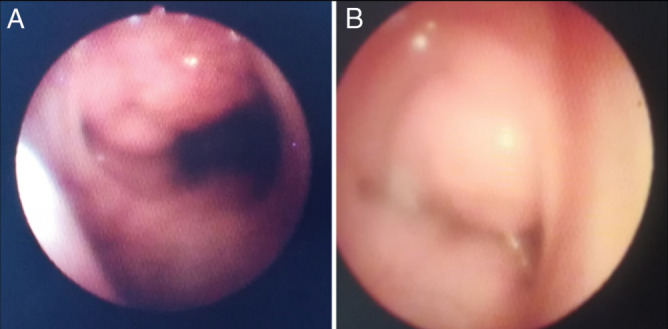
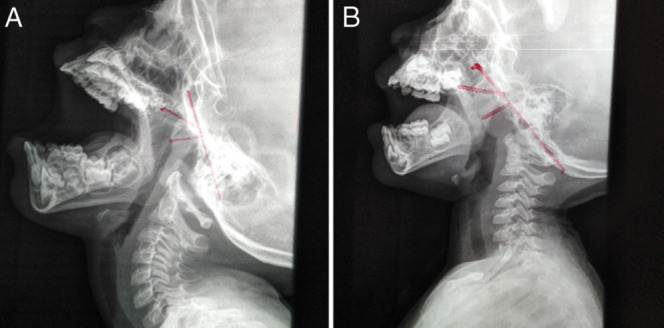
Materials and methods: This is a cross-sectional study of randomly selected children with clinical diagnosis of obstructive adenoid disease. All eligible participants underwent clinical examinations, flexible nasopharyngoscopy and postnasal space X-ray. The findings were compared using the chi-square test and Pearson's correlation test.
Results: The age of the participants ranged between 2 and 10 years with mean of 4.5 ± 2.5 years. There were 79 (56.4%) males and 61 (43.6%) females. The adenoid hypertrophy observed using flexible nasopharyngoscopy among the participants ranged between 20 and 90% with mean of 67.4 ± 15.4%. The adenoid enlargement measured using adenoidal-nasopharyngeal ratio on plain radiograph ranged between 0.40 and 0.96 with mean of 0.7 ± 0.09. The Pearson's correlation test revealed strong correlation between flexible nasopharyngoscopy and plain radiograph (r = 0.858, P = .000), and there was statistically significant association between the two methods (χ 2 = 148.8, P = .000).
Conclusion: There was a strong correlation between flexible nasopharyngoscopy and plain radiograph of the postnasal space in the assessment of obstructive adenoid disease in children.
Keywords: Adenoid hypertrophy; comparison; flexible nasopharyngoscopy; postnasal space X-ray.
Copyright: © 2022 Journal of the West African College of Surgeons.
Conflict of interest statement
There are no conflicts of interest.
Figures
References
-
- Marseglia GL, Caimmi D, Pagella F, Matti E, Labó E, Licari A, et al. Adenoids during childhood: The facts. Int J Immunopathol Pharmacol. 2011;24:1–5. - PubMed
-
- Ibekwe MU, Mbalaso OC. Pattern of paediatric ear, nose and throat diseases in Port Harcourt, South-South, Nigeria. The Nigerian Health Journal. 2015;15:48–52.
-
- Eziyi JA, Amusa YB, Nwawolo C. The prevalence of nasal diseases in Nigerian school children. J Med Med Sci. 2014;5:71–7.
LinkOut - more resources
Full Text Sources