Factors Correlated With Physical Function 1 Year After Total Knee Arthroplasty in Patients With Knee Osteoarthritis: A Systematic Review and Meta-analysis
- PMID: 35816307
- PMCID: PMC9274324
- DOI: 10.1001/jamanetworkopen.2022.19636
Factors Correlated With Physical Function 1 Year After Total Knee Arthroplasty in Patients With Knee Osteoarthritis: A Systematic Review and Meta-analysis
Abstract
Importance: More than 1 in 5 patients do not experience improved physical function after total knee arthroplasty (TKA). Identification of factors associated with physical function may be warranted to improve outcomes in these patients.
Objective: To identify preoperative and intraoperative factors associated with physical function at 12 months after TKA in a systematic review and meta-analysis.
Data sources: Data from January 2000 to October 2021 were searched in Medline, Embase, Cumulative Index to Nursing and Allied Health Literature (CINAHL), Cochrane Library, and Physiotherapy Evidence Database (PEDro). No language restrictions were applied.
Study selection: Prospective observational studies or randomized clinical trials on factors associated with physical function after TKA in adult patients with osteoarthritis were selected. A prespecified peer-reviewed protocol was followed.
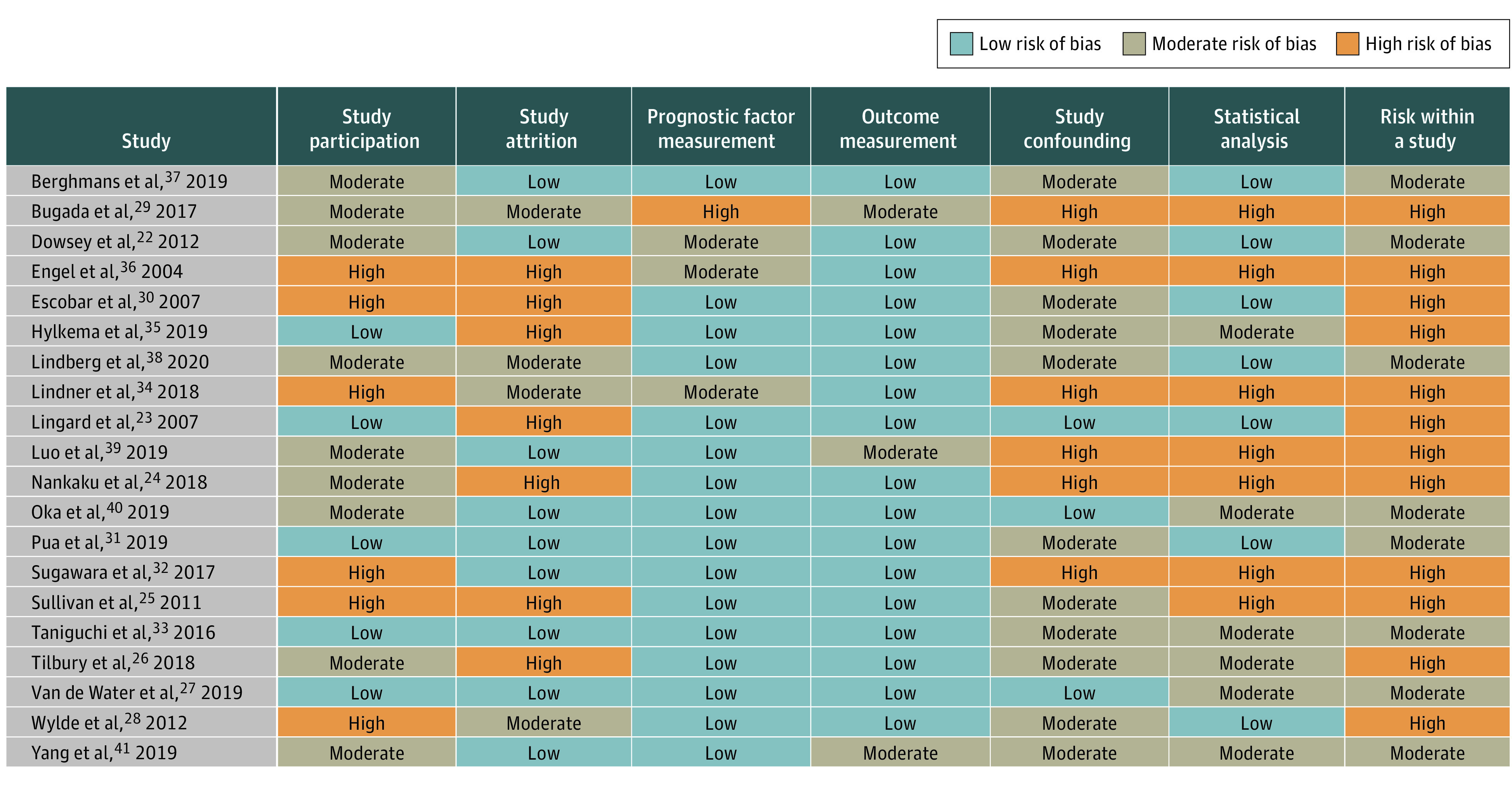
Data extraction and synthesis: Following the Preferred Reporting Items for Systematic Reviews and Meta-analyses guideline, 2 reviewers independently screened titles and abstracts and judged risk of bias using Quality in Prognosis Studies (QUIPS). Multivariate random-effects meta-analyses were performed to estimate mean correlations between factors and physical function with 95% CIs. Sensitivity analyses were conducted for each QUIPS domain. Certainty of evidence was evaluated using Grading of Recommendations, Assessment, Development and Evaluations (GRADE). This study was registered with the International Prospective Register of Systematic Reviews (PROSPERO).
Main outcomes and measures: The primary outcome was physical function 12 months after TKA. Secondary outcomes were physical function 3 and 6 months after TKA. All estimates are mean correlations between factors and postoperative function. Positive correlations correspond to better function.
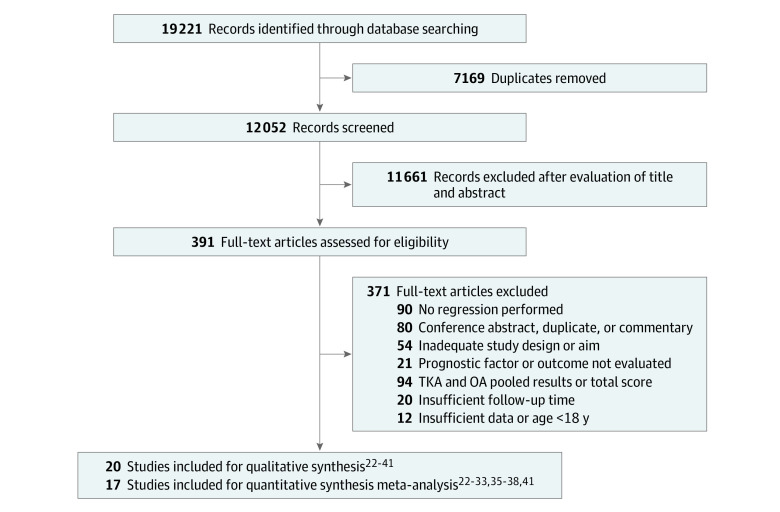
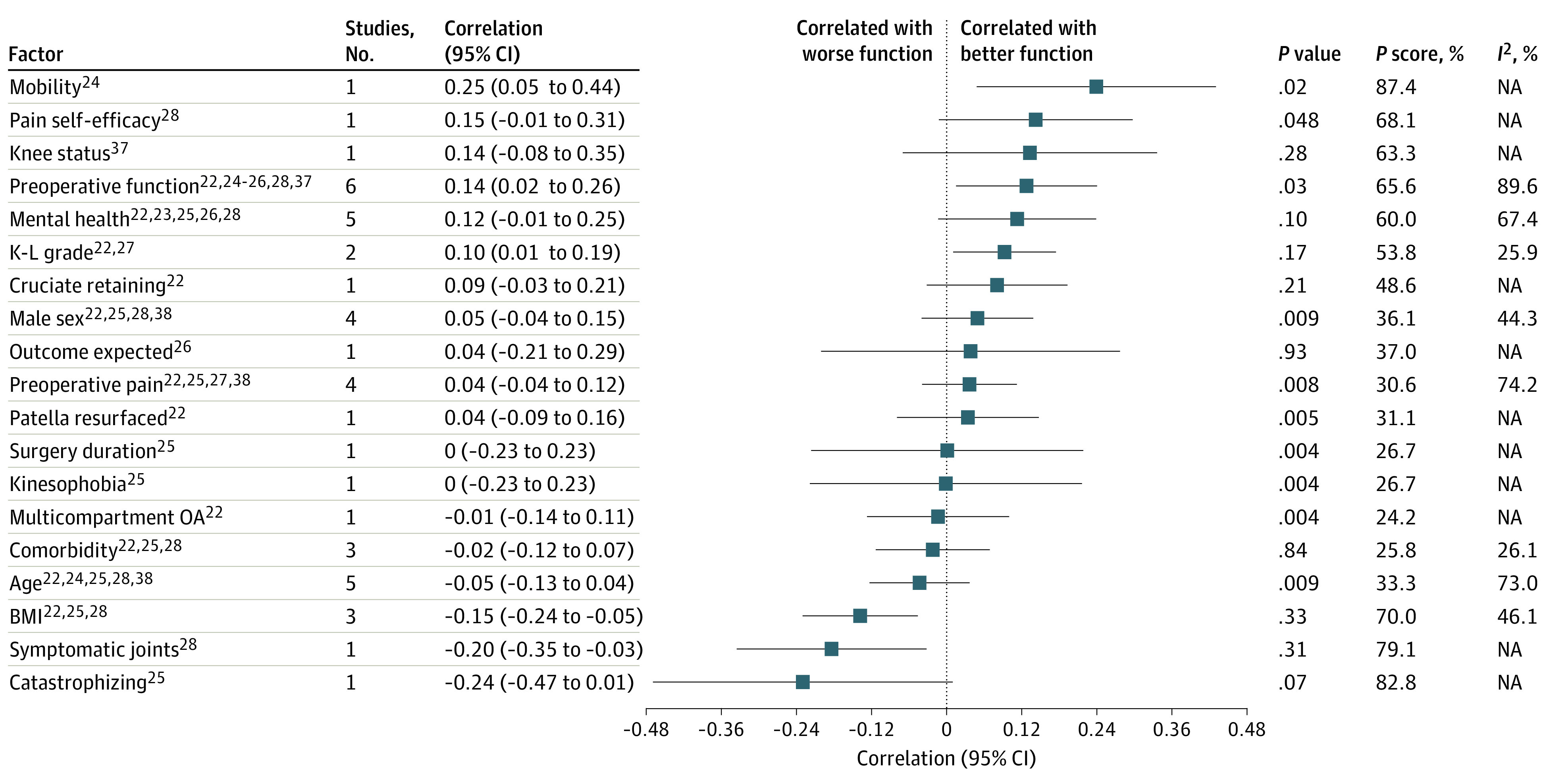
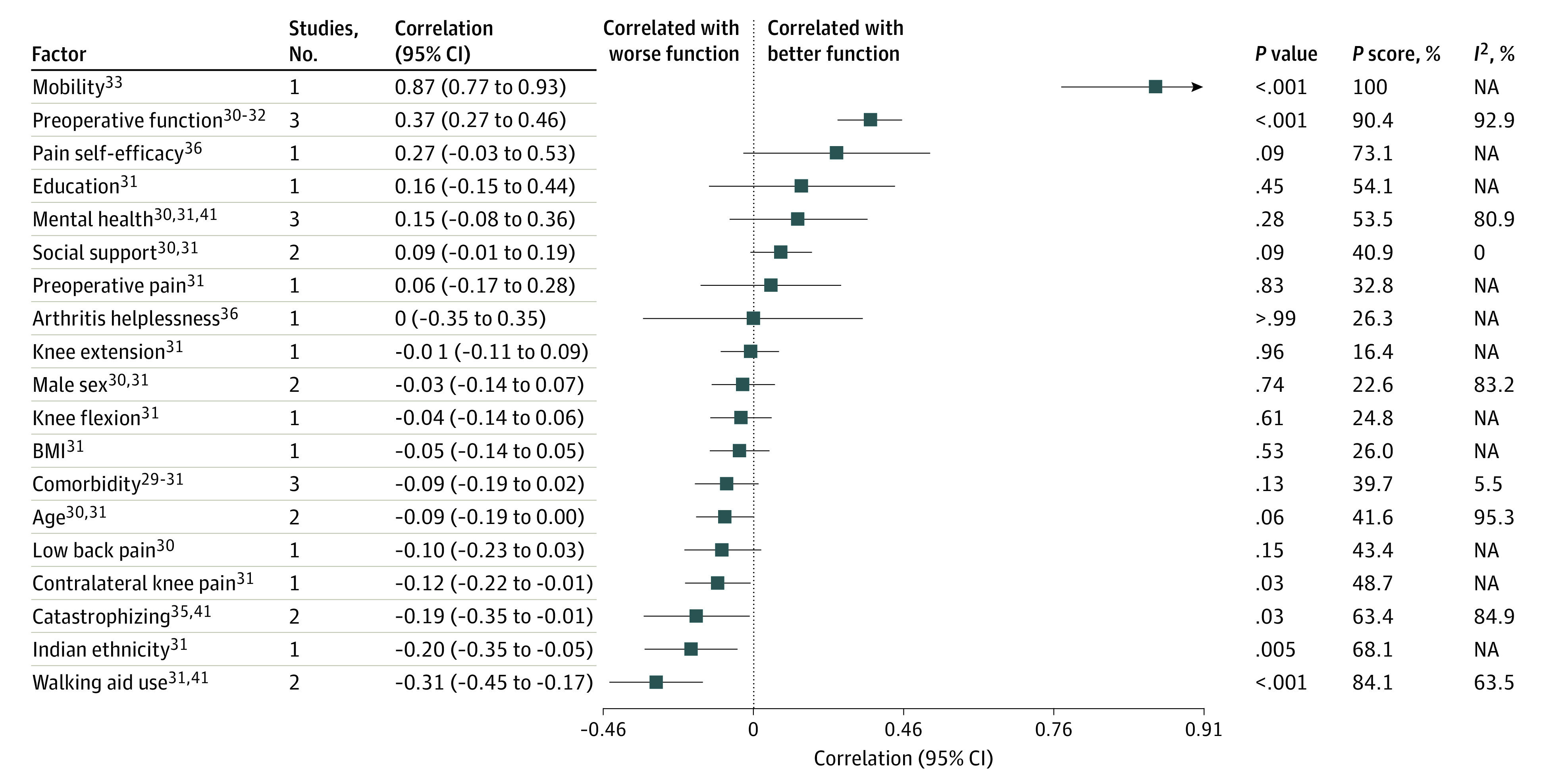
Results: Among 12 052 articles, 20 studies (including 11 317 patients and 37 factors) were analyzed. Mean correlation with higher BMI was estimated to be -0.15 (95% CI, -0.24 to -0.05; P = .33; moderate-certainty evidence), while mean correlation with better physical function was estimated to be 0.14 (95% CI, 0.02 to 0.26; P = .03; low-certainty evidence) and mean correlation with more severe osteoarthritis was estimated to be 0.10 (95% CI, 0.01 to 0.19; P = .17; high-certainty evidence). In sensitivity analyses, mean correlation with better physical function was estimated to be 0.20 (95% CI, 0.04 to 0.36; P = .02), and so perhaps a larger coefficient than in the main analysis, while mean correlations were estimated to be similar for other factors (BMI: -0.17; 95% CI, -0.28 to -0.06; P < .001; osteoarthritis severity: 0.10; 95% CI, -0.01 to 0.20; P = .05).
Conclusions and relevance: This study found that higher presurgical BMI was correlated with worse physical function (with moderate certainty) and that better physical function (low certainty) and osteoarthritis severity (high certainty) were correlated with better physical function after TKA. These findings suggest that these factors should be included when testing predictive models of TKA outcomes.
Conflict of interest statement
Figures
References
-
- Agency for Healthcare Research and Quality . Healthcare cost and utilization project (HCUP). Accessed June 21, 2022. http://www.hcup-us.ahrq.gov - PubMed
Publication types
MeSH terms
LinkOut - more resources
Full Text Sources
Medical