


GENESISS 2-Generating Standards for In-Situ Simulation project: a systematic mapping review
- PMID: 35818052
- PMCID: PMC9272657
- DOI: 10.1186/s12909-022-03401-y
GENESISS 2-Generating Standards for In-Situ Simulation project: a systematic mapping review
Abstract
Background: In-situ simulation is increasingly employed in healthcare settings to support learning and improve patient, staff and organisational outcomes. It can help participants to problem solve within real, dynamic and familiar clinical settings, develop effective multidisciplinary team working and facilitates learning into practice. There is nevertheless a reported lack of a standardised and cohesive approach across healthcare organisations. The aim of this systematic mapping review was to explore and map the current evidence base for in-situ interventions, identify gaps in the literature and inform future research and evaluation questions.
Methods: A systematic mapping review of published in-situ simulation literature was conducted. Searches were conducted on MEDLINE, EMBASE, AMED, PsycINFO, CINAHL, MIDIRS and ProQuest databases to identify all relevant literature from inception to October 2020. Relevant papers were retrieved, reviewed and extracted data were organised into broad themes.
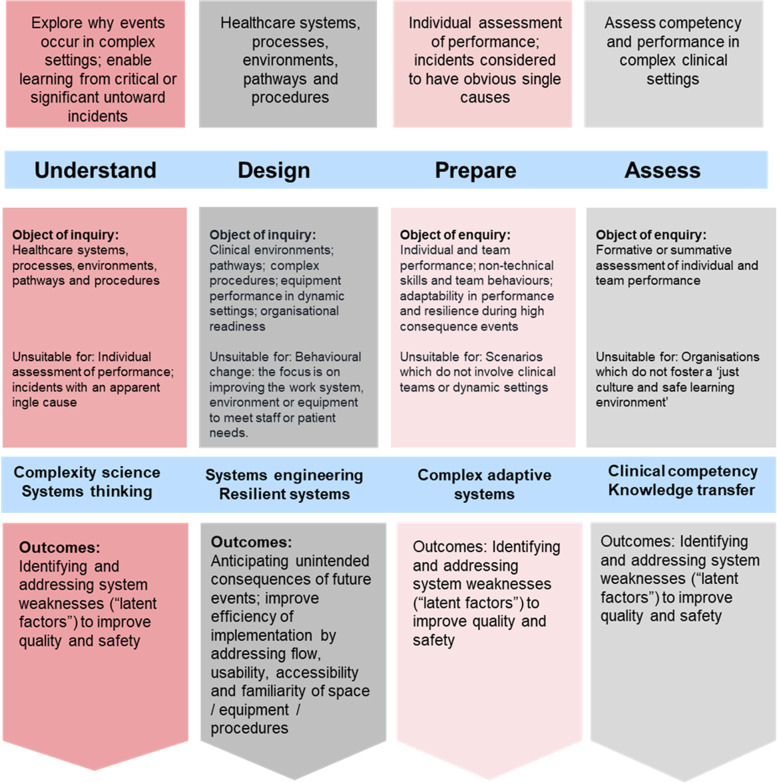
Results: Sixty-nine papers were included in the mapping review. In-situ simulation is used 1) as an assessment tool; 2) to assess and promote system readiness and safety cultures; 3) to improve clinical skills and patient outcomes; 4) to improve non-technical skills (NTS), knowledge and confidence. Most studies included were observational and assessed individual, team or departmental performance against clinical standards. There was considerable variation in assessment methods, length of study and the frequency of interventions.
Conclusions: This mapping highlights various in-situ simulation approaches designed to address a range of objectives in healthcare settings; most studies report in-situ simulation to be feasible and beneficial in addressing various learning and improvement objectives. There is a lack of consensus for implementing and evaluating in-situ simulation and further studies are required to identify potential benefits and impacts on patient outcomes. In-situ simulation studies need to include detailed demographic and contextual data to consider transferability across care settings and teams and to assess possible confounding factors. Valid and reliable data collection tools should be developed to capture the complexity of team and individual performance in real settings. Research should focus on identifying the optimal frequency and length of in-situ simulations to improve outcomes and maximize participant experience.
Keywords: Clinical training; Health professions; In-situ simulation; simulation-based education; Simulated practice.
© 2022. The Author(s).
Conflict of interest statement
The authors declare that they have no competing interests.
Figures

References
-
- Kelsey NC, Claus S. Embedded, in situ simulation improves ability to rescue. Clin Simul Nurs. 2016;12(11):522–527. doi: 10.1016/j.ecns.2016.07.009. - DOI
-
- Pucher PH, Tamblyn R, Boorman D, Dixon-Woods M, Donaldson L, Draycott T, Forster A, Nadkarni V, Power C, Sevdalis N, et al. Simulation research to enhance patient safety and outcomes: recommendations of the Simnovate Patient Safety Domain Group. BMJ Simul Technol Enhanc Learn. 2017;3(Suppl 1):S3–S7. doi: 10.1136/bmjstel-2016-000173. - DOI
Publication types
MeSH terms
LinkOut - more resources
Full Text Sources
Medical
