


Burden of female breast cancer in the Middle East and North Africa region, 1990-2019
- PMID: 35818086
- PMCID: PMC9272597
- DOI: 10.1186/s13690-022-00918-y
Burden of female breast cancer in the Middle East and North Africa region, 1990-2019
Abstract
Background: There is no region-specific publication investigating the attributable burden of breast cancer, particularly among females. This article reported the burden of female breast cancer in the Middle East and North Africa (MENA) region, and its attributable risk factors between 1990 and 2019, by age, sex, and socio-demographic index (SDI).
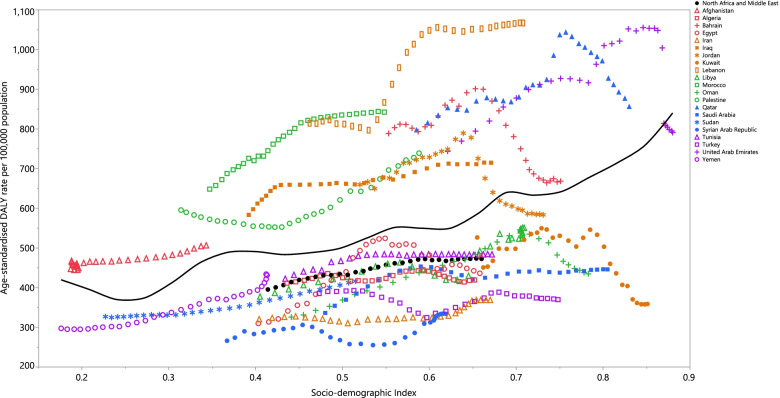
Methods: Publicly available data on the incidence, death and disability-adjusted life years (DALY) were retrieved from the Global Burden of Disease (GBD) 2019 study for the 21 countries and territories in MENA, between 1990 and 2019, along with 95% uncertainty intervals (UIs). The relationship between the burden of female breast cancer, in terms of DALYs, and the SDI were also assessed using Smoothing Spline models.
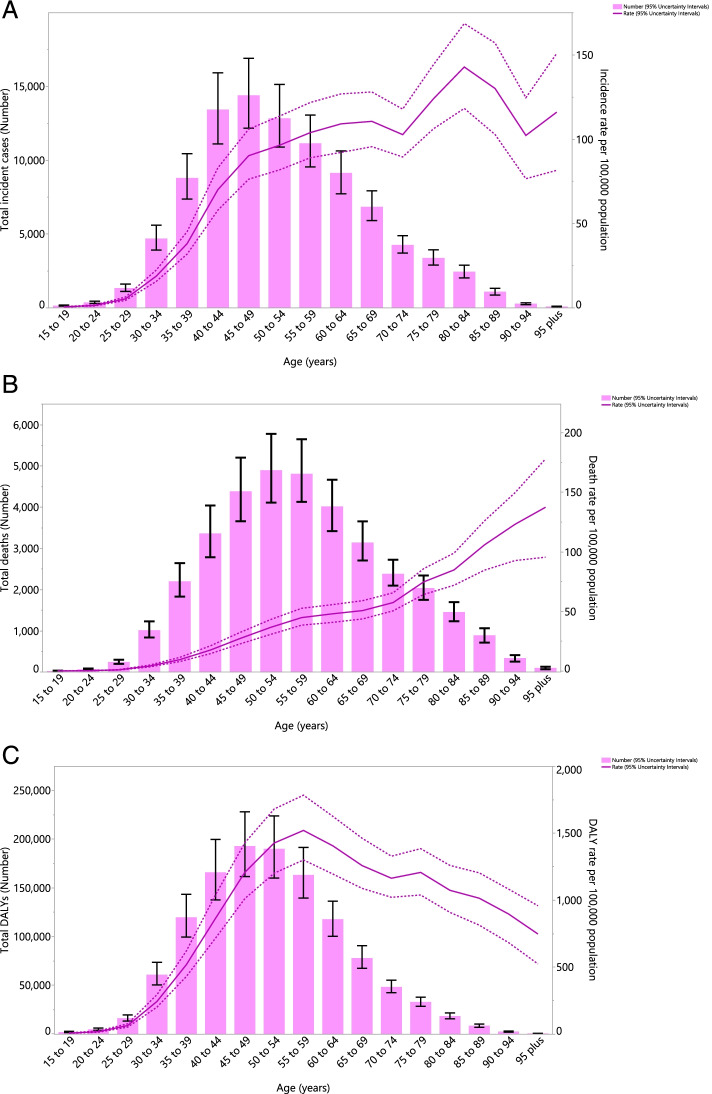
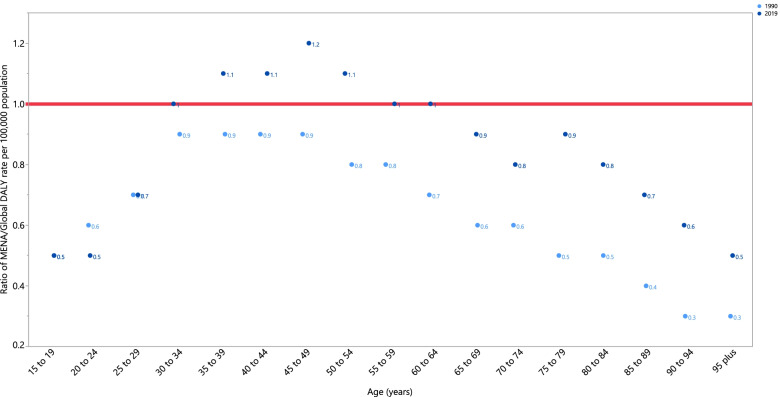
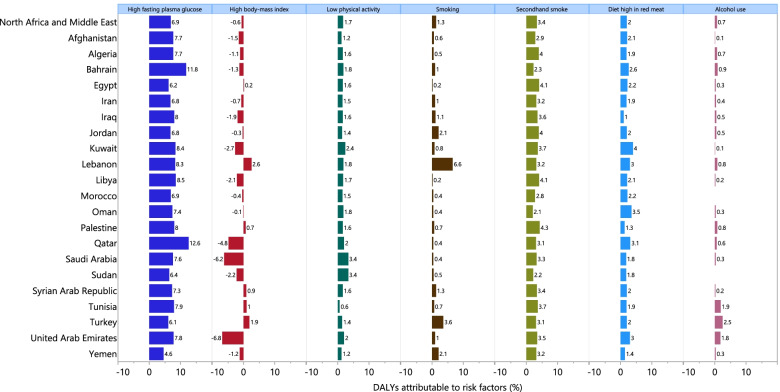
Results: In 2019, the regional age-standardised incidence and death rates of female breast cancer were 37.5 and 15.2 per 100,000, which represent a 90.9 and 24.0% increase since 1990, respectively. In addition, in 2019 the regional age-standardised DALY rate was 472.7 per 100,000, which was 19.5% higher than in 1990. In 2019, the death rate increased steadily with advancing age, while the DALY rate increased steeply with age and reached its peak in the 70-74 age group. There was a positive association between SDI and the burden of breast cancer over the period 1990 to 2019. Moreover, in 2019 high fasting plasma glucose (6.9%) contributed to the largest proportion of attributable DALYs for female breast cancer in the MENA region.
Conclusions: There was a significant increase in the incidence rate of female breast cancer in MENA over the past three decades, although the death and DALY rates were both largely unchanged. Preventive programs targeting the major risk factors should be implemented in the region.
Keywords: Breast Cancer; Epidemiology; Incidence; Middle East and North Africa; Mortality; Neoplasms.
© 2022. The Author(s).
Conflict of interest statement
None declared.
Figures
References
-
- Global burden of disease Cancer C Cancer incidence, mortality, years of life lost, years lived with disability, and disability-adjusted life years for 29 Cancer groups from 2010 to 2019: a systematic analysis for the Global burden of disease study 2019. Jama Oncol. 2022;8(3):420–444. doi: 10.1001/jamaoncol.2021.6987. - DOI - PMC - PubMed
Grants and funding
LinkOut - more resources
Full Text Sources
Research Materials
Miscellaneous
