


Comparison of efavirenz levels in blood and hair with pharmacy refills as measures of adherence and predictors of viral suppression among people living with HIV in Nigeria
- PMID: 35820913
- PMCID: PMC9277789
- DOI: 10.1186/s12981-022-00462-3
Comparison of efavirenz levels in blood and hair with pharmacy refills as measures of adherence and predictors of viral suppression among people living with HIV in Nigeria
Abstract
Background: Strategies to support adherence are constrained by the lack of tools to objectively monitor medication intake in low-resource settings. Pharmacologic measures are objective, but pharmacy refill data is more accessible and cost-efficient. This study compared short-term and long-term efavirenz (EFV) drug levels with pharmacy refill adherence data (PRA) and evaluated their ability to predict viral suppression among people living with HIV in Nigeria.
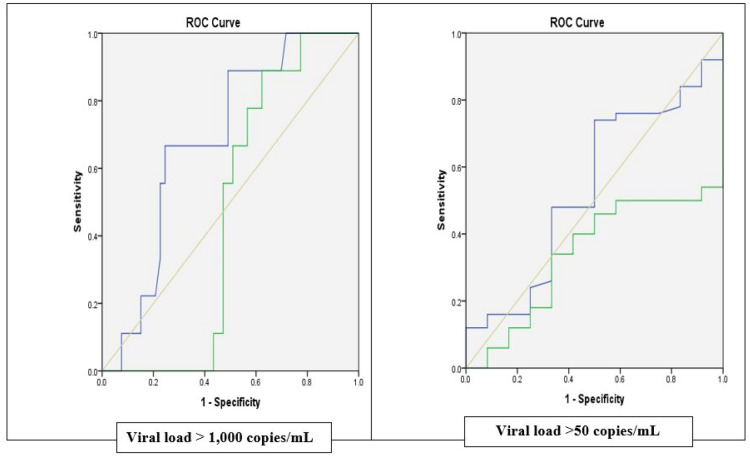
Methods: Paired hair and dried blood spot (DBS) samples were obtained from 91 adults living with HIV receiving 600 mg EFV-based antiretroviral therapy (ART) and EFV concentrations were measured via validated methods using liquid-chromatography-mass-spectrometry. PRA was estimated from pharmacy records, based on the number of days a patient collected medication before or after the scheduled pick-up date. PRA was categorized into ≤ 74%, 75-94% and ≥ 95%, defined as poor, medium and high adherence, respectively. HIV viral loads closest to the hair sampling time (within 6 months) were also abstracted. Receiver Operating Characteristics (ROC) curve analyses compared the ability of adherence metrics to predict viral suppression.
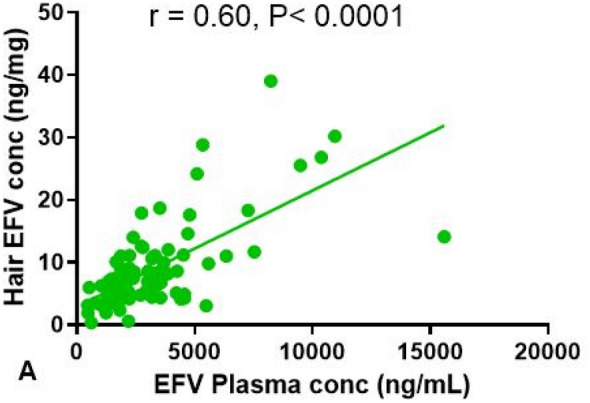
Results: Based on PRA, 81% of participants had high adherence while 11% and 8% had medium and poor adherence, respectively. The median (IQR) EFV concentrations were 6.85 ng/mg (4.56-10.93) for hair and 1495.6 ng/ml (1050.7-2365.8) for DBS. Of the three measures of adherence, hair EFV concentration had the highest Area Under Curve (AUC) to predict viral suppression. Correlations between EFV concentrations in DBS and hair with PRA were positive (r = 0.12, P = 0.27 and r = 0.21, P = 0.05, respectively) but not strong.
Conclusions: EFV concentrations in hair were the strongest predictor of viral suppression and only weakly correlated with pharmacy refill adherence data in Nigeria. This study suggests that resource-limited settings may benefit from objective adherence metrics to monitor and support adherence.
Keywords: Adherence; Dried blood spots; Efavirenz concentrations; Hair; Pharmacy refill adherence; Viral suppression.
© 2022. The Author(s).
Conflict of interest statement
The authors declare no competing interest.
Figures
References
-
- Mudhune V, Gvetadze R, Girde S, Ndivo R, Angira F, Zeh C, et al. Correlation of adherence by pill count, self-report, mems and plasma drug levels to treatment response among women receiving ARV therapy for PMTCT in Kenya. AIDS Behav. 2018;22(3):918–928. doi: 10.1007/s10461-017-1724-7. - DOI - PubMed
Publication types
MeSH terms
Substances
Grants and funding
LinkOut - more resources
Full Text Sources
Medical
Research Materials
