


Gregarine parasites are adapted to mosquito winter diapause
- PMID: 35820959
- PMCID: PMC9277866
- DOI: 10.1186/s13071-022-05365-w
Gregarine parasites are adapted to mosquito winter diapause
Abstract
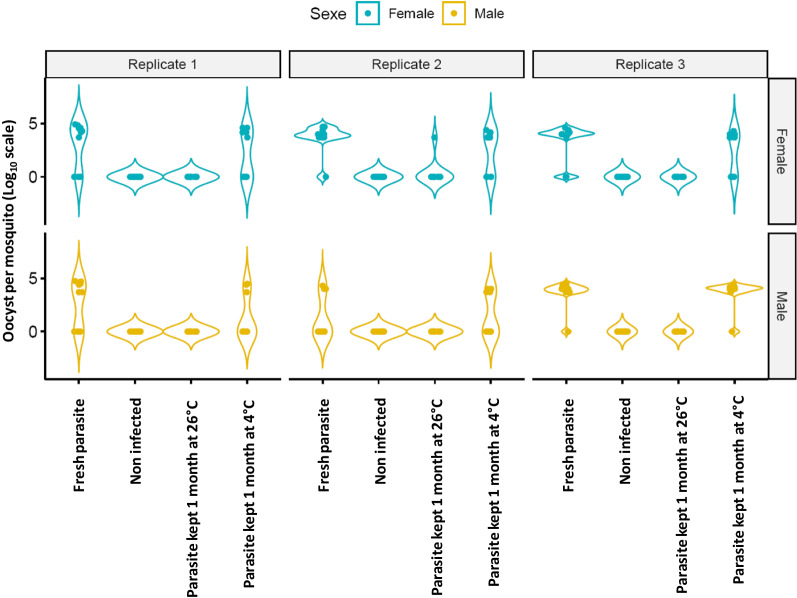
The Asian tiger mosquito Aedes albopictus is one of the most invasive species of mosquito. The prevalence of its apicomplexan gregarine parasite Ascogregarina taiwanensis is high in natural populations across both temperate and tropical regions. However, the parasite's oocysts cannot colonize the insect host during winter, when the mosquito lays diapausing eggs. It is therefore unclear if the parasite can survive outside of its insect host during the cold season in temperate regions. Oocysts stored for 1 month at a low temperature (representative of the temperatures that occur during periods of mosquito diapause) were as infectious as fresh oocysts, but those stored for the same period of time at a higher temperature (representative of the temperatures that occur during periods of mosquito activity) were uninfectious. We therefore suggest that the parasite has evolved traits that maximize its maintenance during periods of mosquito dormancy, while traits that would enable its long term survival during periods of mosquito activity have not been selected for.
Keywords: Aedes albopictus; Apicomplexa; Ascogregarina; Thermal tolerance.
© 2022. The Author(s).
Conflict of interest statement
The authors declare that they have no competing interests.
Figures
References
-
- Lantova L, Volf P. Mosquito and sand fly gregarines of the genus Ascogregarina and Psychodiella (Apicomplexa: Eugregarinorida, Aseptatorina)—overview of their taxonomy, life cycle, host specificity and pathogenicity. Infect Genet Evol. 2014;28:616–627. doi: 10.1016/j.meegid.2014.04.021. - DOI - PubMed
MeSH terms
Grants and funding
LinkOut - more resources
Full Text Sources
