. 2022 Jul 11;13(1):4001.
doi: 10.1038/s41467-022-31621-9.

Cumulative cultural evolution and mechanisms for cultural selection in wild bird songs

Affiliations

Cumulative cultural evolution and mechanisms for cultural selection in wild bird songs

Heather Williams et al. Nat Commun. .

Abstract

Cumulative cultural evolution, the accumulation of sequential changes within a single socially learned behaviour that results in improved function, is prominent in humans and has been documented in experimental studies of captive animals and managed wild populations. Here, we provide evidence that cumulative cultural evolution has occurred in the learned songs of Savannah sparrows. In a first step, "click trains" replaced "high note clusters" over a period of three decades. We use mathematical modelling to show that this replacement is consistent with the action of selection, rather than drift or frequency-dependent bias. Generations later, young birds elaborated the "click train" song form by adding more clicks. We show that the new songs with more clicks elicit stronger behavioural responses from both males and females. Therefore, we suggest that a combination of social learning, innovation, and sexual selection favoring a specific discrete trait was followed by directional sexual selection that resulted in naturally occurring cumulative cultural evolution in the songs of this wild animal population.


Conflict of interest statement

The authors declare no competing interests.

Figures
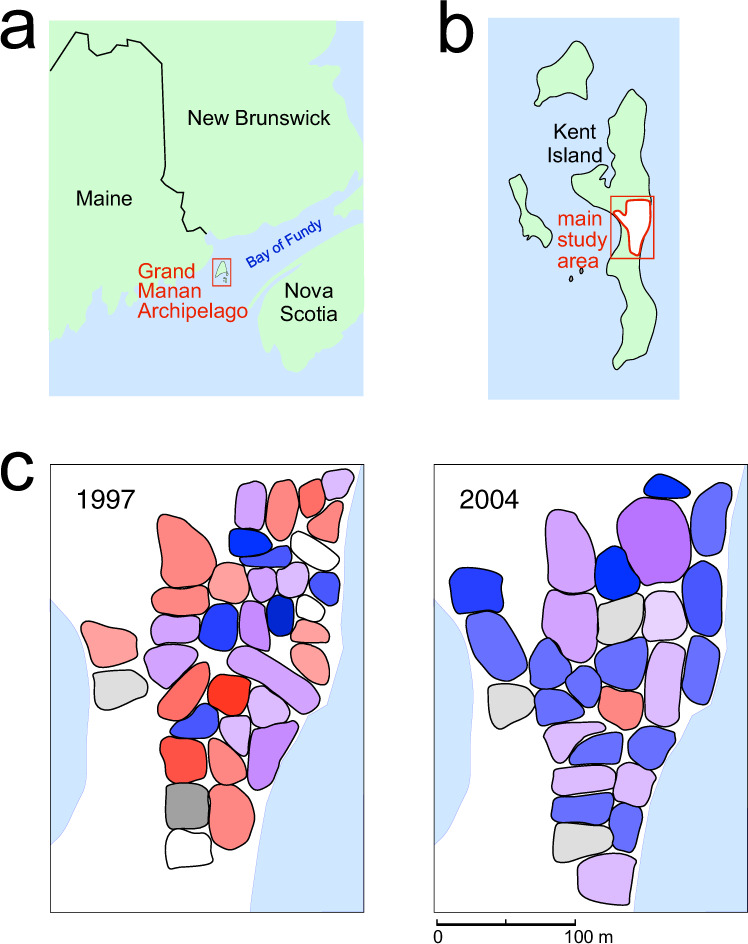
Fig. 1
Fig. 1. Study site location and distribution of click train and high note cluster singers’ territories.
a The Grand Manan Archipelago lies in the southwest Bay of Fundy; Kent Island is the southeasternmost island in the archipelago. b Kent Island and the location of the main study site, which includes the largest contiguous set of territories that were followed continuously (images in a and b modified from Google Maps). c Representative examples of territories within the main area of the study site. In 1997 click trains and high note clusters were equally represented, and in 2004 click trains were sung by the majority of males. Blue = territories of males singing click trains, red = males singing high note clusters, and purple = males singing both features. Territories of older birds are shown with darker shades. Territories of males whose songs were not recorded are shown in white and those with songs that included neither introductory feature are shown in gray. Depending upon conditions, songs can be heard from 50 to 150 m from the singer.
Fig. 2
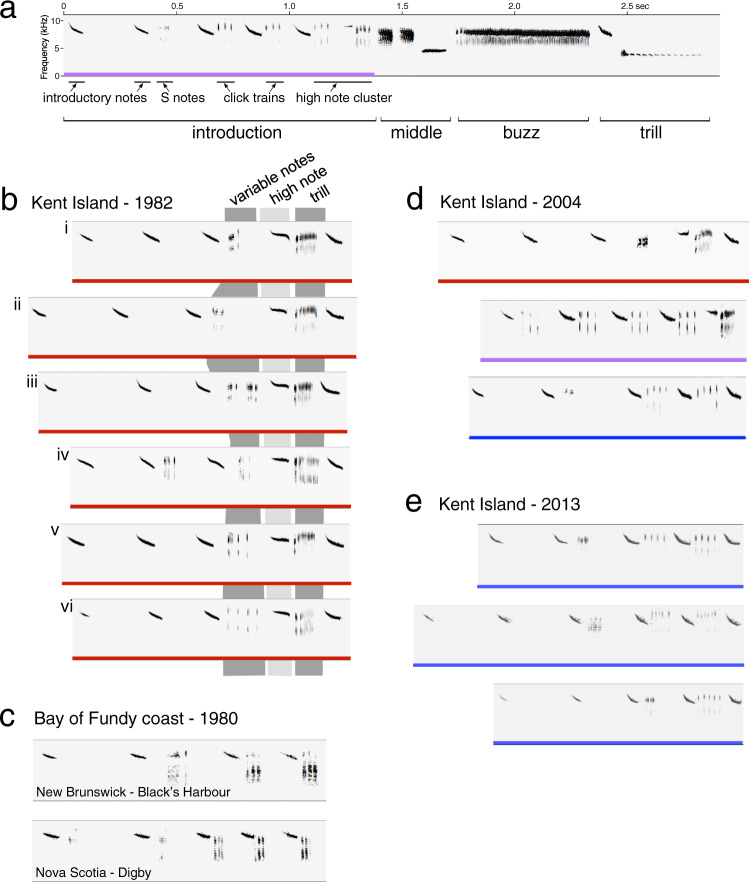
Fig. 2. Sound spectrograms of Savannah sparrow song and introductory segment features.
a Savannah sparrow song, showing all segments. The introductory segment includes softer interstitial notes after the later loud introductory notes: two click trains (sequences of identical short click notes) as well as a high note cluster with three different note types. b Introductory segments recorded on Kent Island in 1982, showing the three sections of their high note clusters (variable notes, high note, and trill). (i) The most common form (19 of 42 males recorded) with an S note and a click as the variable notes (see Supplementary Fig. 1 for a description of types of variable notes). (ii) The second most common form (n = 4) included the same variable notes. Forms iii–vi were each sung by a single male. (iv) This “stuttered” form duplicated the first part of the high note cluster in the penultimate interval between introductory notes. (vi) In this song the variable note portion consisted solely of clicks; these do not form a click train because other note types are also sung between the two introductory notes. No click trains occurred in any of the songs recorded on Kent Island in 1980 and 1982. c Two representative songs from recordings of nearby mainland populations in 1980, including triplets of a different interstitial note type (see Supplementary Fig. 1 for the differences between clicks and these “X” notes). d The three introductory segment types sung on the study site in 2004. Colour coding: red = high note cluster, blue = click train, purple= both features. e Representative introductory segments from 2013, including click trains with 4, 5, and 6 clicks.
Fig. 3
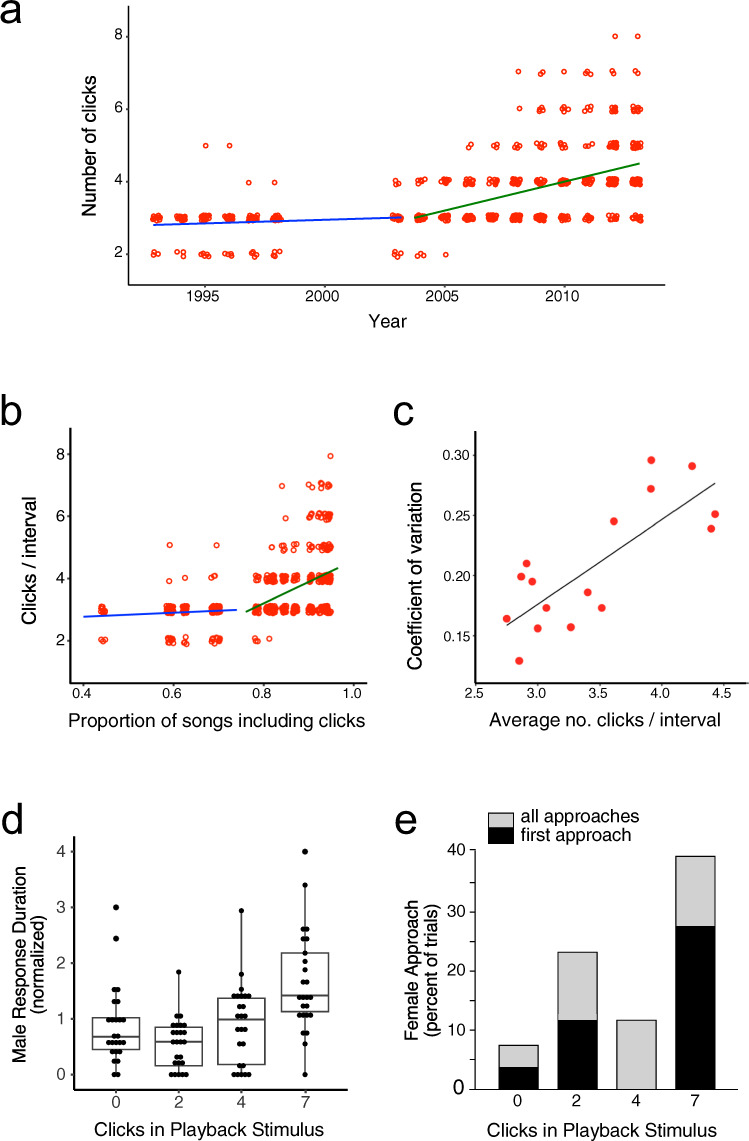
Fig. 3. Cumulative changes to click trains and responses to playbacks of click trains.
a The number of clicks in a train was stable until 2003 and increased thereafter. b The number of clicks in a train as a function of the proportion of the population’s songs that included click trains. The breakpoint (75%) corresponds to 2004; see text for details. c As the number of clicks in a train increased, so did the coefficient of variation. d Click trains with 7 clicks elicited longer-lasting aggressive responses from males (n = 25) in playback experiments (the centre bar shows the median, boxes the 25th and 75th percentiles, and the whiskers the 95th percentile). e Females that responded (n = 11) were more likely to approach click trains with 7 clicks (black portion of bars = female’s first approach to the playback speaker; gray bars = approaches to the speaker in subsequent trials). Source data are provided in the Source Data file.
Fig. 4
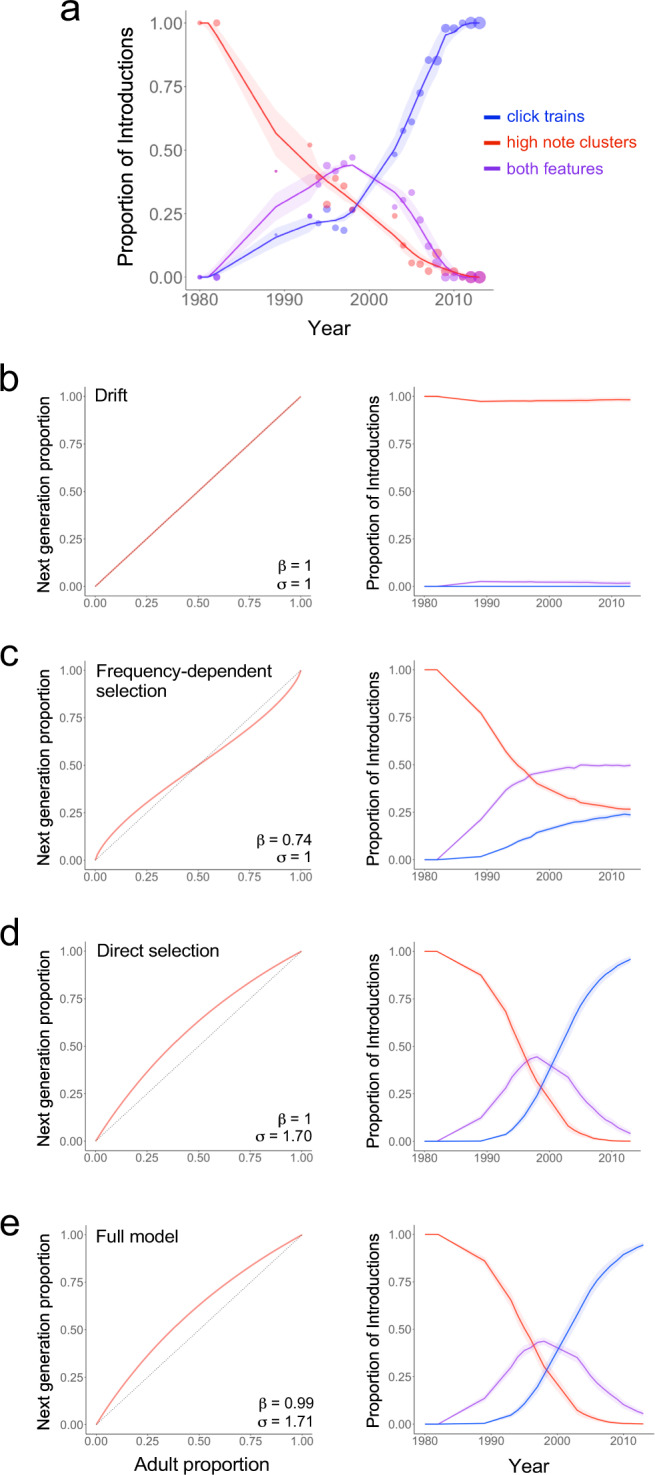
Fig. 4. Modeling replacement of high note clusters by click trains.
a Historical data showing proportions of songs with high note clusters (red), both high note clusters and click trains (purple), and click trains alone (blue). Point sizes are proportional to numbers of songs recorded in a given year, solid lines are splines fitted to each category, and shading represents the 95% confidence interval. be The learning curves (left) and outputs of model (right, with 95% confidence interval error bands) and the frequency-dependent bias and/or selection parameters that generated the best fit to the historical data for each type of model. b Cultural drift model. c Best-fitting frequency-dependent learning bias model (β=0.74 represents a moderate rare-form bias). d Best-fitting selection model (σ = 1.70 represents moderate to strong selection for click trains). e Best-fitting full model that simultaneously varied selection and frequency-dependent bias. The best version of this model is nearly identical to (d) with essentially no frequency-dependent bias (β = 0.99 ≈ 1.0 = no frequency-dependent learning) and moderate to strong selection (σ = 1.71). Source data are provided in the Source Data file.
Fig. 5
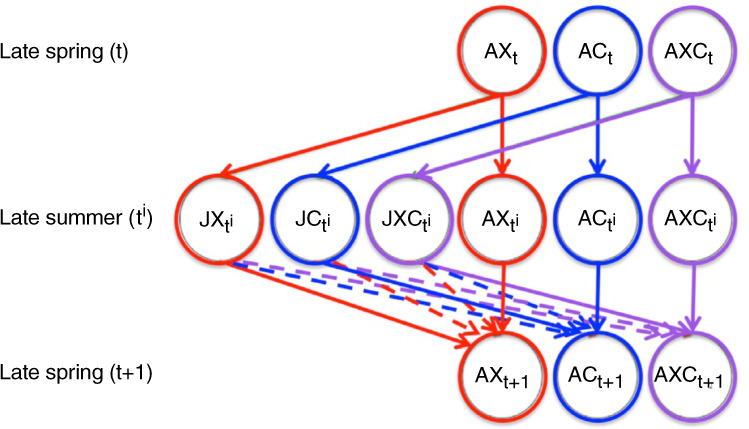
Fig. 5. Model of song development.
We used two age classes (J = juvenile and A = adult) and three classes of introductions (C = click trains, X = high note clusters, and  XC = both). In the late spring of a given year (time = t), only adult males are present. In late summer, those adults have bred and both they and juvenile males are present; at this intermediate time (ti) each male is initially allocated the same introduction type as his father (solid lines). Then, as song development progresses and juvenile males can be influenced by other tutors, they may retain their initial introduction type or switch to either of the other two types (dashed lines) before they crystallize their songs late in the following spring (time = t+1), and join the breeding cohort, which also includes adult males from the previous year who returned to breed again.

References

    1. Cavalli-Sforza, L. L. & Feldman, M. W. Cultural Transmission and Evolution. (Princeton University Press, 1981). - PubMed
    1. Boyd, R. & Richerson, P. J. Culture and the Evolutionary Process. (University of Chicago Press, 1985).
    1. Whiten, A. Cultural Evolution in Animals. Annu. Rev. Ecol. Evol. Syst. 50,27–48 (2019).
    1. Deecke V, Ford JK, Spong P. Dialect change in resident killer whales: implications for vocal learning and cultural transmission. Anim. Behav. 2000;60:629–638. doi: 10.1006/anbe.2000.1454. - DOI - PubMed
    1. Allen JA, Garland EC, Dunlop RA, Noad MJ. Cultural revolutions reduce complexity in the songs of humpback whales. Proc. R. Soc. B Biol. Sci. 2018;285:20182088. doi: 10.1098/rspb.2018.2088. - DOI - PMC - PubMed

Publication types